
Personality Mental States Inventory (PII) Test
How the Scales are Structured
Who Usually Takes This Test?
See How You Compare
Below is a preview of how scores are typically distributed across each scale.
Example Questions From the Test
- I think exactly this way and would like to work through this area.
- I think this way, but I do not consider this issue especially important for me.
- This does not apply to my life.
- I do not know; it is difficult for me to answer this question.
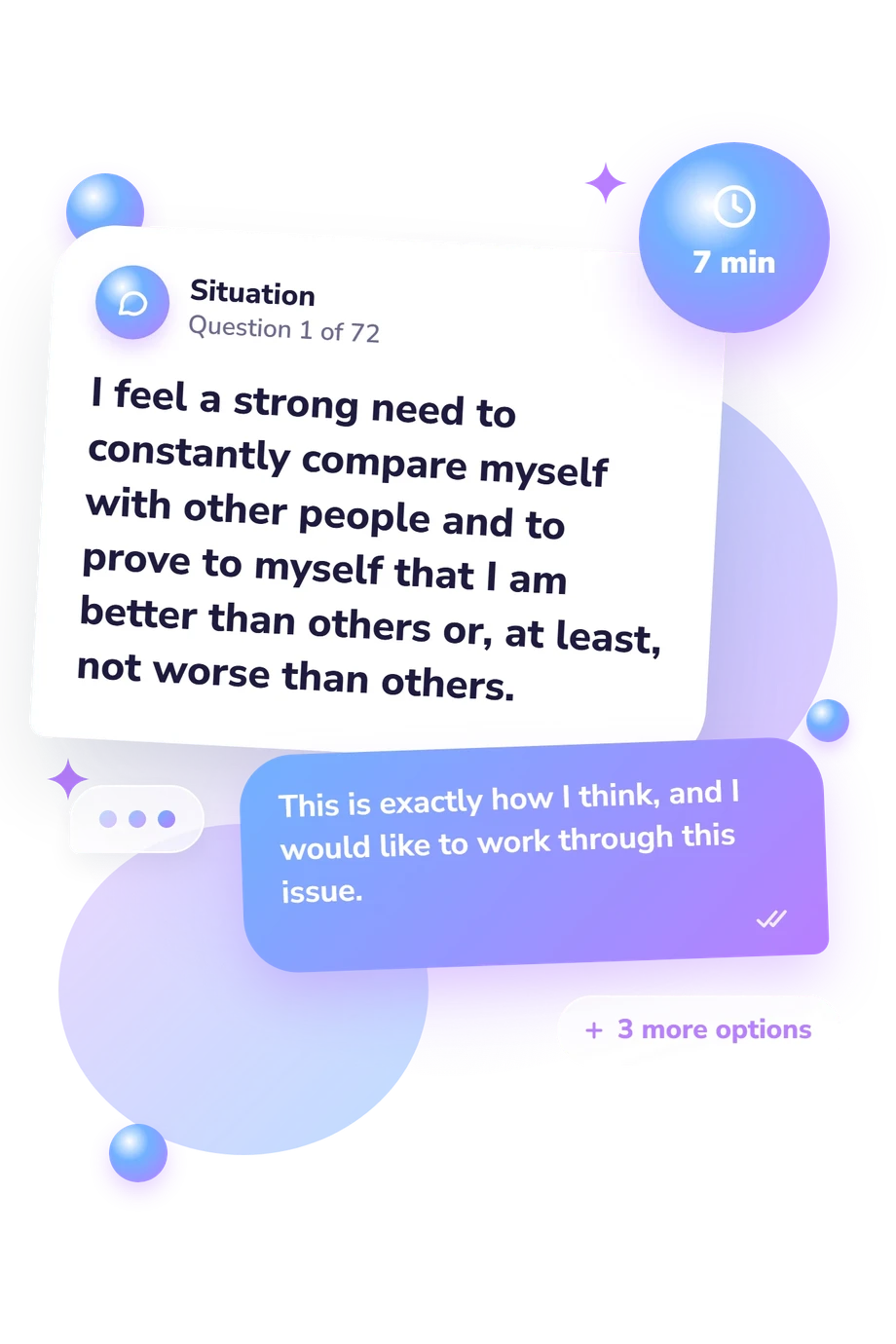
- This is exactly how I think, and I would like to work through this area.
- I think this way, but I do not consider this issue especially important for me.
- This does not relate to my life.
- I don’t know; it is difficult for me to answer this question.
- I feel this way and would like to work through this area.
- I feel this way, but I do not consider this issue especially important for me.
- This does not apply to my life.
- I do not know; it is difficult for me to answer this question.
Personality Mental States Inventory (PII) Test - Description and methodology of the test
People who want a structured way to name difficult-to-describe experiences may use the Personality Mental States Inventory (PII) Test when everyday routines leave loneliness, pressure, detachment, or self-doubt hard to sort out. This mental states questionnaire organizes those experiences into a common frame and helps respondents consider which situations feel most relevant.
What This Assessment Explores
The questionnaire examines current emotional and psychological functioning through connection, self-evaluation, autonomy, and strain. That personality inventory addresses loneliness, detachment, guilt, inadequacy, pressure, anger, and loss of meaning. The result points to current experiences or themes that may deserve closer attention, rather than assigning a fixed identity.
The sample covers these themes:
- Connection describes loneliness, not belonging, emotional distance, and lacking a trusted listener.
- Self-worth reflects inadequacy, comparison, ideals, competence, and reliance on others’ judgments.
- Autonomy captures difficulty resisting demands, asserting wishes, and handling imposed responsibilities.
- Emotional strain covers hopelessness, resentment, guilt, fear, anger, and reduced involvement in life.
Mental States (0-100) assesses current functioning through states including loneliness, hostility, and hopelessness. Its bands are Low 0-33, Moderate 34-66, and High 67-100; the result summarizes the reported pattern at completion.
Methodology and Scientific Basis
Each statement offers four responses: true and worth working through; true but not especially important; not applicable; or difficult to answer. This distinguishes personal relevance from willingness to explore an issue and preserves uncertainty. Responses form the overall result, but no item weights or reverse-scoring rule are stated, so points should not be inferred from answer labels or the score range.
Interpretation works best alongside the situations that prompted recognition. Current stress, conflict, self-awareness, memory, and willingness to disclose can influence self-report, so the outcome may vary with context.
The items are conceptually consistent with Jersild’s Personal Issues Inventory (1955), a concern-focused format, but that comparison does not establish that this online questionnaire is an adaptation of it or has been validated as that instrument. Nemov’s 1995 psychodiagnostic framework provides general context for interpreting questionnaire responses, not evidence that this questionnaire is standardized.
Because this mental states assessment has no stated norms, reliability coefficients, or clinical cutoffs, its result is best read as a structured reflection prompt rather than a diagnosis or substitute for broader assessment.
- Jersild, Arthur T. (1955). Appendix B: Personal Issues Inventory. In When Teachers Face Themselves (pp. 149-158). Teachers College Press. 10.65528/9780807776445-011
- Nemov, Robert S. (1995). Psychology, Book 3: Experimental Educational Psychology and Psychodiagnostics. Moscow: Prosveshchenie and VLADOS. ISBN 5-09-007343-0
- Baranauskiene, I., Kovalenko, A., & Leonova, I. (2020). The social-psychological factors influencing women-prisoners’ feeling of loneliness. Social Welfare: Interdisciplinary Approach, 10(1), 56-65. 10.21277/sw.v1i10.560
Updated: