
Anxiety Level Assessment Test
How the Scales are Structured
Who Usually Takes This Test?
See How You Compare
Below is a preview of how scores are typically distributed across each scale.
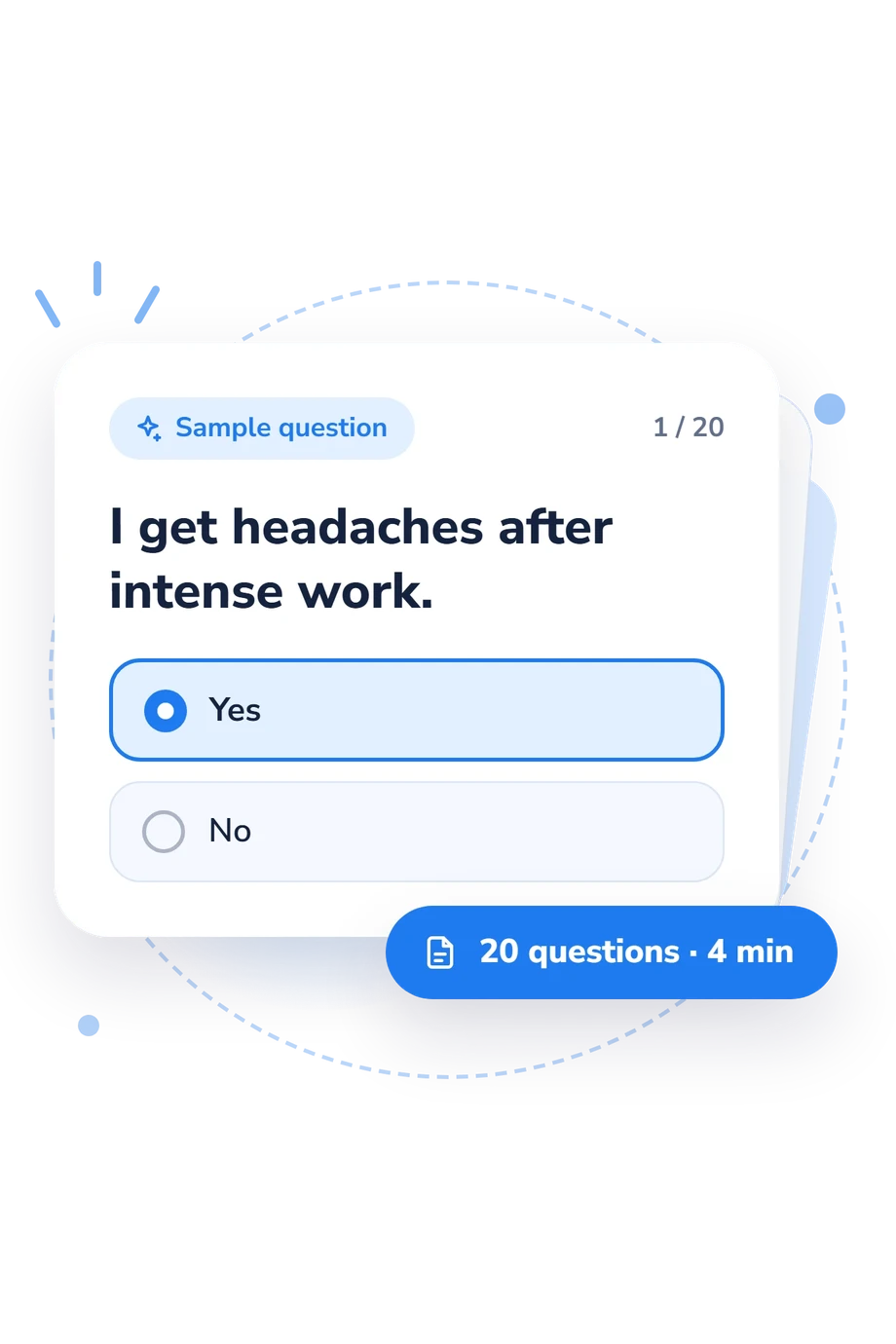
Example Questions From the Test
- Yes
- No
- Yes
- No
- Yes
- No
Anxiety Level Assessment Test - Description and methodology of the test
For students and other people who notice worry in academic or evaluative situations, the Anxiety Level Assessment Test offers a structured way to reflect on how tension affects concentration, confidence, physical comfort, and recovery after stress. Its items sample academic and interpersonal contexts, while the single result describes an overall anxiety tendency, including worry, nervousness, stress sensitivity, and internal tension across situations. This anxiety questionnaire links that broader result to everyday experiences.
What This Assessment Measures
These items place anxiety in performance situations. They cover worry before tests, concentration problems, criticism, physical signs, and slow recovery after conflict. Classroom climate connects inner tension with social context.
The themes fall into four areas:
- Academic anticipation shows how tests or failure may trigger worry.
- Concentration and performance describe difficulty staying on task or answering under pressure.
- Social-evaluative sensitivity reflects reactions to criticism, classroom climate, and speaking aloud.
- Physical and emotional recovery captures headaches, blushing, irritability, and slow calming after conflict.
Readers can use this school anxiety test to reflect on the pattern. It produces one Anxiety Level score: 0-20. Low 0-7 indicates a calm attitude and stress resilience; Moderate 8-13 is the middle band; High 14-20 may indicate greater sensitivity to stressors and internal tension. The result summarizes answers and emotional state, not separate domains.
Methodology and Evidence Base
Each item uses a yes-or-no response about whether a described experience applies. The questionnaire displays a range and result bands, but its weighting or scoring algorithm for the responses is not documented.
The exact 20-item version is an online self-report questionnaire with catalogue-specific scoring, rather than a documented adaptation of a named published instrument. Its content is consistent with the broad construct of anxiety in academic and interpersonal contexts, but thematic overlap alone does not establish derivation from a particular scale or theory. The displayed score is therefore a catalogue-specific descriptive summary rather than a published instrument score.
Because one overall result is reported, the assessment does not separate momentary state anxiety from a more enduring anxiety tendency. That separation matters because this anxiety assessment reports a combined pattern of worry, tension, concentration difficulty, physical discomfort, and recovery difficulties rather than showing which sampled context contributes most.
Interpretation remains descriptive: current workload, classroom climate, recent conflict, honesty, and self-awareness can affect responses, and no normative or clinical interpretation for these catalogue bands is supplied. Read the result as an indication of current emotional state and overall anxiety tendency, with the response pattern providing context.
- Rezapkina, Galina V. Psychology and Career Choice: A Pre-Professional Training Program. Educational and Methodological Manual for Psychologists and Teachers. Moscow: Genesis, 2005. ISBN 5-98563-048-X.
- Spielberger, Charles D., Richard L. Gorsuch, Robert E. Lushene, Peter R. Vagg, and Gerard A. Jacobs. Manual for the State-Trait Anxiety Inventory. Palo Alto, CA: Consulting Psychologists Press, 1983.
Updated: