
My Health Questionnaire Test
How the Scales are Structured
Who Usually Takes This Test?
See How You Compare
Below is a preview of how scores are typically distributed across each scale.
Example Questions From the Test
- Yes
- No
- Yes
- No
- Yes
- No
My Health Questionnaire Test - Description and methodology of the test
People who want to examine everyday strain, fatigue, bodily reactions, or demanding routines may find the My Health Questionnaire Test useful. It offers a structured health check-in about experiences that can affect ordinary functioning, helping a respondent decide which concerns merit closer reflection. The format may appeal to anyone who wants a focused prompt for considering how physical and emotional reactions fit into daily life.
What This Assessment Explores
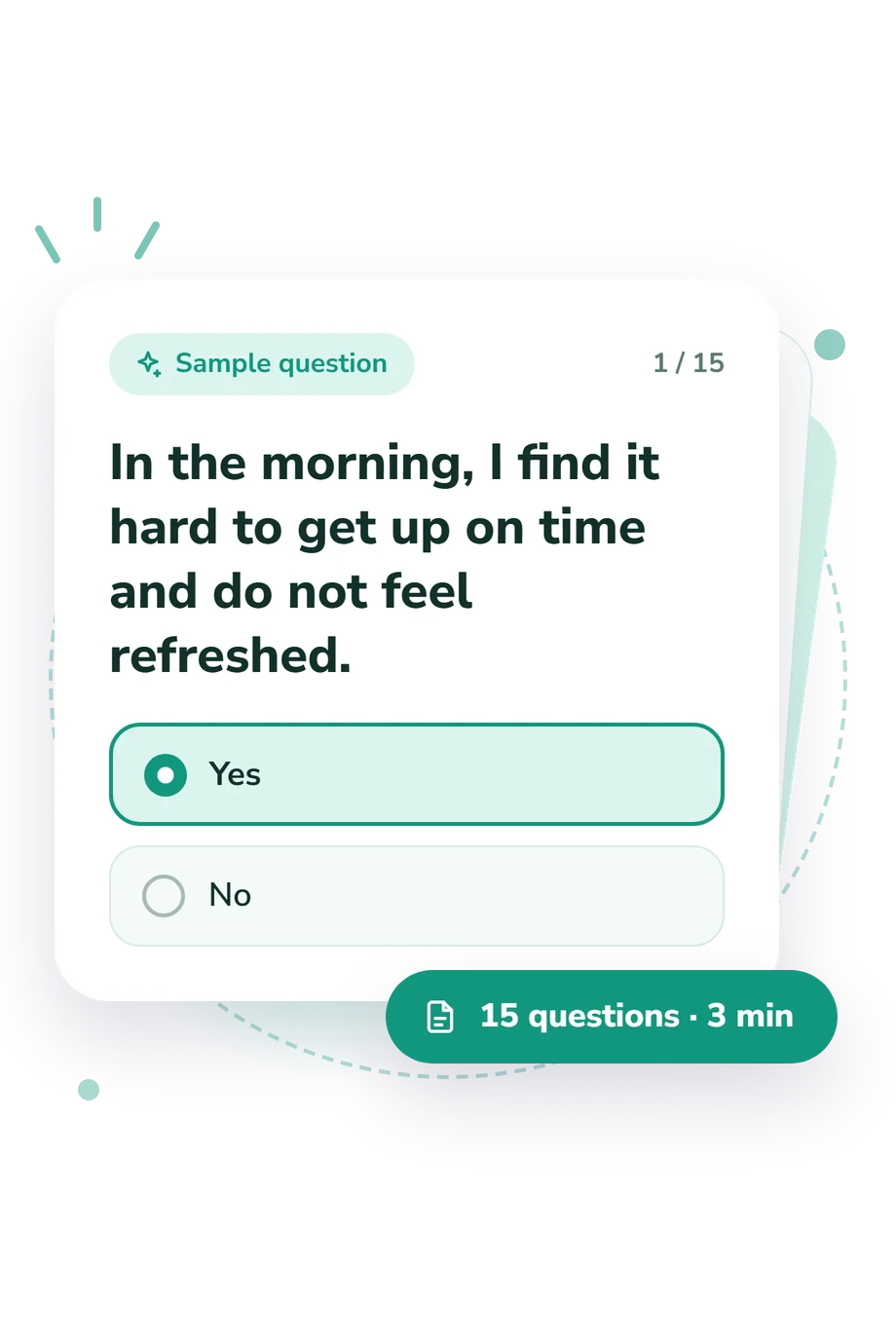
The questions focus on everyday experiences involving energy, alertness, concentration, bodily sensations, stamina, and reactions to stressful or uncomfortable situations. They suit a person who wants a structured way to reflect on recurring patterns in daily functioning. Rather than treating any single answer as decisive, the assessment brings these experiences together as an overall indicator of health status and potential lifestyle-related risks. Lower scores indicate fewer reasons for concern about one’s health.
The item themes include:
- Morning difficulty, poor refreshment, or daytime sleepiness describe how rested and alert you feel.
- Concentration problems or fidgeting show when sustained attention becomes harder.
- Headaches, coldness, dizziness, stomach discomfort, sweating, blushing, nausea, or appetite loss capture bodily reactions.
- Trouble with stairs or prolonged standing, plus unease in high or enclosed places, reflects stamina and situational comfort.
Together, the answers provide an overall indication of possible health and lifestyle-related concerns.
Methodology and Scientific Basis
The format is simple self-report: each item presents a statement or situation and asks for a Yes or No response. Topics cover routines, physical sensations, concentration, fear, pressure, and exertion. The result therefore depends on recognizing and reporting personal experience.
Responses are converted into a Total Score of 0-15. The displayed bands are Low concern (0-8) and Elevated concern (9-15). More than half of answers marked "Yes" may indicate potential health concerns and the need to review lifestyle factors, including work and rest routines. Its scoring uses the displayed total and bands, with no separate weighting or standardization procedure stated.
The closest named instrument is the Vegetative Lability Questionnaire described by Rezapkina (2005). This questionnaire is conceptually consistent with that instrument in the experiences it asks about.
When used for personal health assessment, read the band alongside current sleep, workload, stress, and physical state. Self-report answers can shift with context and self-awareness, so the result is a snapshot rather than a diagnosis.
- Rezapkina GV. Secrets of Career Choice, or A Guide for Graduates. Moscow: Genesis; 2005. 144 p.
- Chervinskikh TA, Kolesnikova MB, Naymushina ES, Zhuikova GV. Features of Social Adaptability and Autonomic Stability of Adolescents with Metabolic Syndrome. Kazan Medical Journal. 2012;93(4):647-650. 10.17816/KMJ1562
- Ganuzin VM, Baraboshin AT. The Features of Social and Autonomic Adaptation to Study Conditions Depending on Age, Gender and Socio-Pedagogical Educational Environment. Russian Bulletin of Hygiene. 2022;3:17-21. 10.24075/rbh.2022.051
Updated: