
Child Anxiety Level Assessment Test
How the Scales are Structured
Who Usually Takes This Test?
See How You Compare
Below is a preview of how scores are typically distributed across each scale.
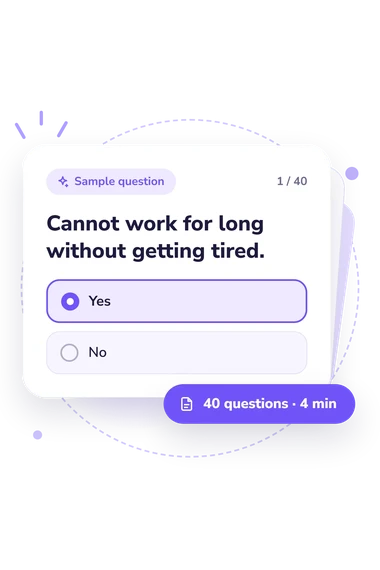
Example Questions From the Test
- Yes
- No
- Yes
- No
- Yes
- No
Child Anxiety Level Assessment Test - Description and methodology of the test
Caregivers and educators can use the Child Anxiety Level Assessment Test when a child's emotions, behavior, or daily functioning raise questions about anxiety-related experiences. This child anxiety assessment supports a measured conversation about whether closer observation, communication with school, or additional support may be useful. It offers an overall summary to guide reflection and next steps.
What This Assessment Measures
Items cover task strain, social unease, fear, emotional upset, reduced confidence, and bodily or sleep reactions. An adult can consider this cluster rather than one behavior.
When deciding whether to use an anxiety test for children, an adult sees one Anxiety Level scale from 0-20, assessing the severity of anxiety symptoms in a child. Its bands are Low (0-6), Moderate (7-14), and High (15-20); low scores correspond to a calm state and no marked anxiety, while high scores may suggest experiences affecting behavior and well-being.
The items cover four related themes that contribute to one overall result:
- Task strain reflects fatigue, concentration difficulty, worry, and tension.
- Social fear indicates embarrassment, blushing, fright, or reluctance in unfamiliar situations.
- Physical reactions include sweating, clammy hands, appetite changes, and restless sleep.
- Emotional upset and fear reflect tears, impatience, insecurity, and fear of challenges.
Methodology and Evidence Base
Each statement gets a Yes or No answer about the child. An adult marks whether a behavior or reaction is present across concentration, worry, fears, bodily sensations, sleep, appetite, and responses to demands. The answers produce the displayed band. The online form states no item-weighting method or standardization status; interpret the result as the band shown, not a norm-referenced score.
The Lavrentyeva-Titarenko anxiety questionnaire (1992) offers a conceptual comparison involving strain, emotional reactions, avoidance, and bodily signs, not the source instrument for this version. The version is attributed to Charles D. Spielberger and Philip C. Kendall, so these instrument identities should not be conflated. Mynbayeva, Batanova, and Akshalova (2020) provide related context through work with pupils and body-oriented therapy, but their findings do not establish standardization for this form.
Interpretation is strongest alongside the child’s usual behavior, family or school stress, and the observer’s knowledge. The result can be affected by what the adult notices, remembers, and interprets, and by the child’s current circumstances; it describes child anxiety symptoms but cannot determine a disorder, cause, or intervention.
- Lavrentyeva, G. P., & Titarenko, T. M. (1992). Practical Psychology for the Educator. Kyiv: Vipol.
- Mynbayeva, A., Batanova, A., & Akshalova, B. N. (2020). Diagnosing anxiety and using body-oriented therapy: A study of 5th grade pupils. The Journal of Psychology & Sociology, 71(4), 4-15. 10.26577/JPsS.2019.v71.i4.01