
Dysthymia Proneness Scale Test
How the Scales are Structured
Who Usually Takes This Test?
See How You Compare
Below is a preview of how scores are typically distributed across each scale.
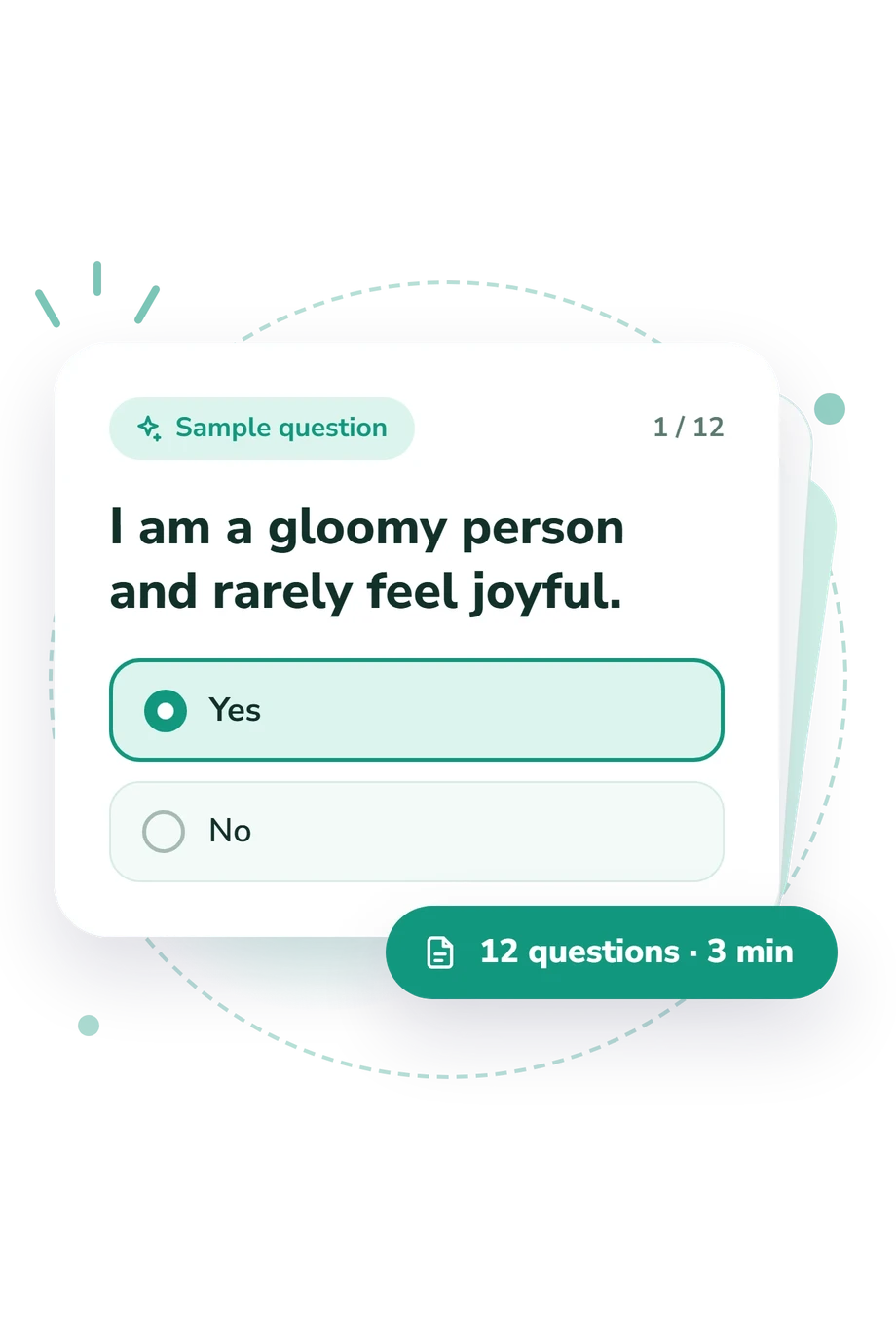
Example Questions From the Test
- Yes
- No
- Yes
- No
- Yes
- No
Dysthymia Proneness Scale Test - Description and methodology of the test
For readers examining a persistent low mood or a generally pessimistic emotional style, this questionnaire offers a focused way to organize familiar experiences. The Dysthymia Proneness Scale Test considers whether a negative emotional tone is accompanied by reduced enjoyment, quieter participation, gloomy expectations, and discomfort in lively social settings. A dysthymia self-assessment can help clarify which patterns feel most consistent and worth reflecting on.
What This Assessment Explores
The items describe persistent negative emotional tone rather than a brief reaction. They ask about cheerfulness, gloomy thoughts, future joy, pleasant surroundings, talkativeness, and lively groups. These situations examine chronic low mood, pessimistic appraisals, and reduced activity as one tendency, not separately scored constructs. Social discomfort and quieter participation are item themes; when pronounced, the pattern may become a stable style of behavior and emotional suppression that may undermine physical and psychological well-being.
Together, these questions form a low mood assessment with the following themes:
- Dysthymia Proneness runs 0-12; Low (0-4), Moderate (5-9), and High (10-12) mark prominence levels.
- Persistent low mood reflects a gloomy tone in ordinary situations.
- Pessimistic appraisal shows whether life seems difficult and future joy unlikely.
- Activity and social responsiveness show whether muted enjoyment, talkativeness, or lively-company discomfort accompany the pattern.
Methodology and Evidence Base
The format uses 12 declarative self-report statements with Yes/No responses. Although wording shifts between first and second person, the items address mood tone, pessimism, enjoyment, activity, and social ease. The result is read through the displayed bands; the questionnaire does not document how individual responses contribute to the score. Mood, recent events, and answer setting may influence self-description, while self-report can reflect selective recall or a wish to present oneself favorably.
Boyko's work on dysthymic tendencies provides the closest conceptual reference. The online questionnaire is conceptually consistent with that work, while books by Boyko and Ilyin offer broader accounts of emotional energy, feelings, and expression. These sources support reading mood, expectations, behavior, and communication as aspects of one tendency, without claiming that the digital version reproduces that method. They do not establish the online version's authorship, adaptation status, or validation. The three displayed levels are this online dysthymia questionnaire's result categories. A higher result signals greater prominence of the described tendency. Because self-awareness, honesty, and current circumstances affect answers, use the result for self-reflection rather than as a clinical diagnosis.
- Boyko, V. V. (1996). Energy of Emotions in Communication: A Look at Oneself and Others. Moscow: Informatsionno-Izdatel'skii Dom "Filin". ISBN 5-900855-60-0.
- Boyko, V. V. (2008). Psychoenergetics. Saint Petersburg: Piter. ISBN 978-5-91180-760-3.
- Ilyin, E. P. (2001). Emotions and Feelings. Saint Petersburg: Piter. ISBN 5-318-00236-6.
Updated: