
Female Sexual Distress Scale-Revised (FSDS-R) Test
How the Scales are Structured
Who Usually Takes This Test?
See How You Compare
Below is a preview of how scores are typically distributed across each scale.
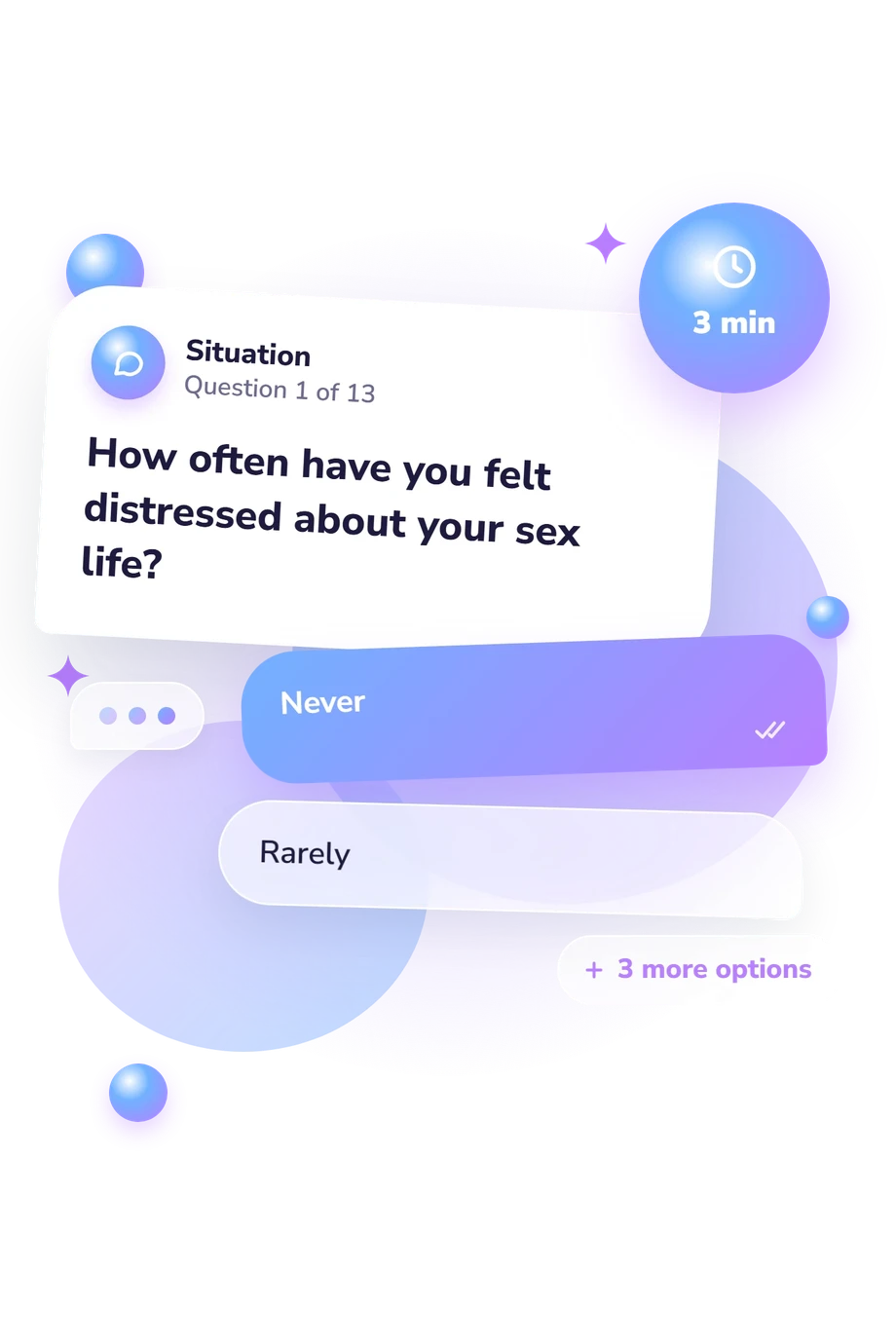
Example Questions From the Test
- Never
- Rarely
- Sometimes
- Often
- Always
- Never
- Rarely
- Occasionally
- Often
- Always
- Never
- Rarely
- Occasionally
- Often
- Always
Female Sexual Distress Scale-Revised (FSDS-R) Test - Description and methodology of the test
For women considering a focused self-report measure, the Female Sexual Distress Scale-Revised (FSDS-R) Test offers a structured way to reflect on intimate experiences. It suits people reflecting on sexual wellbeing, including concerns about satisfaction, desire, guilt, shame, anger, or inadequacy. This female sexual distress questionnaire records how often distress is experienced in these areas and contributes to the overall severity result.
What This Assessment Explores
Rather than measuring sexual function alone, this sexual distress assessment focuses on the emotional burden linked to sexuality. Items ask about dissatisfaction, guilt, regret, inadequacy, shame, anger, and distress associated with low desire. Together, they describe what sexual concerns feel like for the respondent.
These themes represent related aspects of one overall construct, not separate diagnostic subscales. They cover:
- Distress in sex life and relationships reflects how burdensome dissatisfaction feels in intimate situations.
- Guilt, shame, inadequacy, anger, and regret capture painful self-evaluations and emotional reactions to sexual difficulties.
- Desire-related distress indicates whether low sexual desire is experienced as upsetting.
The result uses one displayed scale, Female Sexual Distress Scale: 0-52. Results are labelled Low distress 0-10 and Elevated distress 11-52; scores of 11 or higher may indicate female sexual dysfunction. The result describes distress severity for self-reflection.
Methodology and Scientific Basis
Each item asks how often a sexual concern caused distress, using ordered responses such as Never, Rarely, Sometimes or Occasionally, Often, and Always. The wording centers on emotional reaction rather than every component of sexual functioning.
The result is one total distress score, not separate scores for guilt, desire, or relationship satisfaction. It presents one total score and displayed result bands, but does not document how response options contribute points; no item weights, norms, or scoring formula are stated.
The published FSDS-R (DeRogatis et al., 2008) is the closest conceptual reference for this online questionnaire; it was evaluated for sexual distress. The original FSDS validation supplies conceptual background, while a later content study examined coverage of feelings reported by women with HSDD. This questionnaire is conceptually consistent with those works, not a demonstrated adaptation or formally standardized administration of the published FSDS-R.
This online sexual distress screening score indicates reported distress and may help monitor change. Self-report can shift with mood, relationship context, self-awareness, and comfort discussing intimate experiences. The elevated band is a screening signal, not a diagnosis.
- DeRogatis L, Clayton A, Lewis-D'Agostino D, Wunderlich G, Fu Y. Validation of the Female Sexual Distress Scale-Revised for Assessing Distress in Women with Hypoactive Sexual Desire Disorder. Journal of Sexual Medicine. 2008;5(2):357-364. 10.1111/j.1743-6109.2007.00672.x
- DeRogatis LR, Rosen R, Leiblum S, Burnett A, Heiman J. The Female Sexual Distress Scale (FSDS): Initial Validation of a Standardized Scale for Assessment of Sexually Related Personal Distress in Women. Journal of Sex & Marital Therapy. 2002;28(4):317-330. 10.1080/00926230290001448
- DeRogatis L, Pyke R, McCormack J, Hunter A, Harding G. Does the Female Sexual Distress Scale-Revised Cover the Feelings of Women with HSDD? Journal of Sexual Medicine. 2011;8(10):2810-2815. 10.1111/j.1743-6109.2011.02385.x
Updated: