
Magical Ideation Scale (MIS) Test
How the Scales are Structured
Who Usually Takes This Test?
See How You Compare
Below is a preview of how scores are typically distributed across each scale.
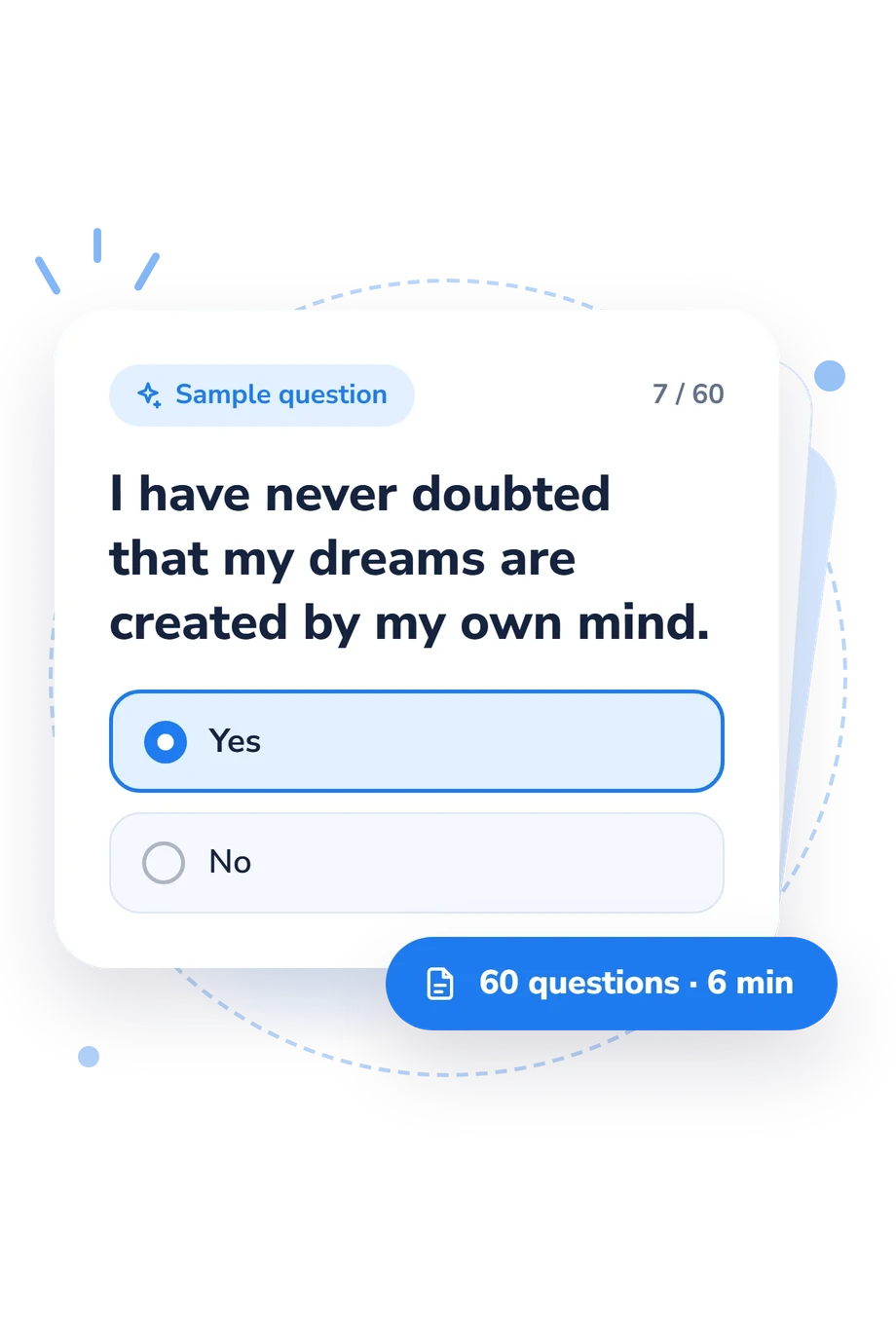
Example Questions From the Test
- Yes
- No
- Yes
- No
- Yes
- No
Magical Ideation Scale (MIS) Test - Description and methodology of the test
For readers examining unusual beliefs, perceived connections, or supernatural interpretations, the Magical Ideation Scale (MIS) Test offers a structured way to consider how these experiences appear in everyday thinking. It suits people seeking a focused self-report profile rather than a broad personality inventory. By linking these question themes to its purpose, this magical ideation test organizes experiences that may otherwise feel difficult to describe and provides a starting point for careful reflection.
What This Assessment Explores
The questionnaire examines magical ideation: a tendency to connect events, thoughts, perceptions, or coincidences through supernatural or irrational explanations. Its statements address spirits, telepathy, reincarnation, omens, hidden messages, rituals, unusual identity experiences, and events that seem personally directed. The questionnaire therefore reflects both beliefs and fleeting experiences, rather than general interest in the paranormal.
The item themes include:
- Supernatural influence reflects beliefs that unseen forces can affect ordinary life.
- Personal significance captures events or gestures that seem directed specifically at the respondent.
- Symbolic connections show whether rituals, numbers, dreams, or thoughts are treated as causally meaningful.
- Unusual perceptions cover impressions involving doubled people, mind-reading, altered identity, or a sensed presence.
This magical ideation assessment presents one displayed scale, Magical Ideation: 0-30, which measures this tendency. Results are Within typical range 0-19 or Elevated 20-30; higher scores indicate greater magical ideation.
Methodology and Evidence Base
Each of the 30 statements uses a yes-or-no response, asking whether a described experience or belief applies rather than inviting a graded frequency judgment. The questionnaire presents a result within the displayed 0-30 range. In an online magical ideation questionnaire, binary self-report makes current context and response style important, while compressing differences in intensity, certainty, and context.
The named source is Magical Ideation Scale (Eckblad & Chapman, 1983), whose framework treats magical ideation as one indicator studied in schizotypy research. This questionnaire is conceptually consistent with that published instrument, but the online presentation is not itself a new adaptation or validation study. Chapman, Chapman, and Miller (1982) examined reliability alongside psychosis-proneness measures, and Chapman and colleagues (1994) followed related measures longitudinally over ten years.
This version offers a structured self-report result rather than newly established norms. An Elevated result is not an independent diagnostic criterion and may suggest a propensity toward schizotypy only when other symptoms are also present; response bias, self-awareness, and current circumstances can affect interpretation. The score describes endorsed experiences, not their cause.
- Eckblad, Mark, and Loren J. Chapman. (1983). Magical ideation as an indicator of schizotypy. Journal of Consulting and Clinical Psychology, 51(2), 215-225. 10.1037/0022-006X.51.2.215
- Chapman, Loren J., Jean P. Chapman, and Eric N. Miller. (1982). Reliabilities and intercorrelations of eight measures of proneness to psychosis. Journal of Consulting and Clinical Psychology, 50(2), 187-195. 10.1037/0022-006X.50.2.187
- Chapman, Loren J., Jean P. Chapman, Thomas R. Kwapil, Mark Eckblad, and Michael C. Zinser. (1994). Putatively psychosis-prone subjects 10 years later. Journal of Abnormal Psychology, 103(2), 171-183. 10.1037/0021-843X.103.2.171
Updated: