
Freudly+971 508685814hello@freudly.ai
Freudly
childhood trauma

PTSD and CPTSD Test: Do I Have PTSD?
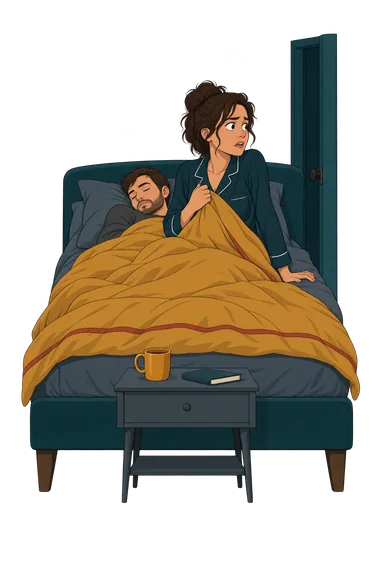
PTSD Test and CPTSD Test: Check Your Signs Free - FreudlyDo I have PTSD or complex PTSD? Get your PTSD and CPTSD signs from 0 to 100 and see which picture fits you. 30 questions, about 5 minutes.en
Something happened, and it still follows you. This free PTSD test shows how clearly your last month carries the marks of a frightening experience: two scores from 0 to 100, the picture your answers fit and your strongest signs, from flashbacks and nightmares to self-worth and closeness.
Questions: 305 minutes
PTSD and CPTSD Test: startled awake at night
October 8, 2026October 8, 2026Material has been updatedOctober 8, 2026Material has been published
18,518 views
1,955 completions
1,683 likes
Daniel HallPsychologist · Test reviewer
1,683 likes
Scale Explorer

How the Scales are Structured

PTSD signsPs
How clearly your answers match PTSD, from 0 to 100.
example score67/100
67/100Clear signsexample score
0 – 33Few signs
34 – 63Some signs
64 – 100Clear signs
Your PTSD signs score is 67 out of 100: Clear signs.
Flashbacks and nightmaresFan
How often the past comes back as if it were happening again.
example score13/20
13/20Moderateexample score
0 – 6Low
7 – 13Moderate
14 – 20High
You scored 13 out of 20: Moderate.
AvoidanceA
How much you steer clear of anything that brings it back.
example score13/20
13/20Moderateexample score
0 – 6Low
7 – 13Moderate
14 – 20High
You scored 13 out of 20: Moderate.
Constant alertnessCa
How much your body stays on guard against danger.
example score13/20
13/20Moderateexample score
0 – 6Low
7 – 13Moderate
14 – 20High
You scored 13 out of 20: Moderate.
CPTSD signsCs
How clearly your answers match complex PTSD, from 0 to 100.
example score57/100
57/100Some signsexample score
0 – 33Few signs
34 – 63Some signs
64 – 100Clear signs
Your CPTSD signs score is 57 out of 100: Some signs.
Emotional swingsEs
How much your feelings swing between numb and overwhelming.
example score13/20
13/20Moderateexample score
0 – 6Low
7 – 13Moderate
14 – 20High
You scored 13 out of 20: Moderate.
Low self-worthLsw
How harshly you judge yourself since it happened.
example score13/20
13/20Moderateexample score
0 – 6Low
7 – 13Moderate
14 – 20High
You scored 13 out of 20: Moderate.
Trouble with closenessTwc
How hard it is to trust and let people close.
example score13/20
13/20Moderateexample score
0 – 6Low
7 – 13Moderate
14 – 20High
You scored 13 out of 20: Moderate.
just completed the test
DATA-BASED USER COHORTS

Who Usually Takes This Test?

It still follows me
42%OF USERS
Something happened months or years ago, and you want to know if it is PTSD.
Is it complex PTSD?
34%OF USERS
You grew up or lived with long stress and recognise yourself in CPTSD.
Checking in
24%OF USERS
You want to see how much a recent hard experience still affects you.
BASED ON AGGREGATED, ANONYMIZED DATA FROM TENS OF THOUSANDS OF FREUDLY USERS.
Benchmarking

See How You Compare

Once you complete the test, your results are compared with real-world data from people in your country.
Below is a preview of how scores are typically distributed across each scale.
Shaded area — where most people score
Dot — the average
You — your score lands on each curve after the test— your score, after the test
PTSD signsPs
You?
Average45
Typical rangeTypical32.9 – 57.1
Possible0 – 100
Flashbacks and nightmaresFan
You?
Average8
Typical rangeTypical4.6 – 11.4
Possible0 – 20
AvoidanceA
You?
Average7
Typical rangeTypical3.6 – 10.4
Possible0 – 20
Constant alertnessCa
You?
Average9
Typical rangeTypical5.6 – 12.4
Possible0 – 20
CPTSD signsCs
You?
Average42
Typical rangeTypical28.5 – 55.5
Possible0 – 100
Emotional swingsEs
You?
Average8
Typical rangeTypical4.6 – 11.4
Possible0 – 20
Low self-worthLs
You?
Average7
Typical rangeTypical3.6 – 10.4
Possible0 – 20
Trouble with closenessTwc
You?
Average7.5
Typical rangeTypical4.1 – 10.9
Possible0 – 20
Featured On
SAMPLE QUESTIONS

Example Questions From the Test

Think of the experience that still affects you most. You do not need to describe it. Then read each statement and choose how often it was true for you over the last month, from Never to Very often. Some statements describe good days, so read each one to the end. Go with your first answer: it is usually the most accurate.
    • Never
    • Rarely
    • Sometimes
    • Often
    • Very often
    • Never
    • Rarely
    • Sometimes
    • Often
    • Very often
    • Never
    • Rarely
    • Sometimes
    • Often
    • Very often
WHAT THE TEST MEASURES

PTSD and CPTSD Test: Do I Have PTSD? - Description and methodology of the test

childhood trauma

Months or even years after a frightening experience, many people still wonder why a slammed door makes them jump, why sleep never feels safe and whether this is post-traumatic stress. The questions look at how the past comes back, what you avoid, how your body stays on guard and how the experience has changed the way you see yourself and other people. This PTSD test turns those everyday reactions into two clear numbers.

What the test measures

The first score shows your PTSD signs from 0 to 100. It combines three areas: flashbacks and nightmares, avoidance of reminders, and constant alertness, such as jumping at noises or checking every exit. The second score covers what the complex form adds on top: emotions that swing between numb and overwhelming, low self-worth with guilt that is not yours, and trouble letting people close. This split follows the ICD-11, which describes the two as separate pictures. The complex form often grows out of long or repeated hard experiences, such as a frightening childhood or an abusive relationship, rather than one event. Each of the six areas also gets its own score, so you can see exactly where the experience still shows up. If your real question is about complex PTSD, the second score is the part that answers it.

How it works and what you get

There are 30 short statements about the last month, and most people finish in about five minutes. You think of the experience that still affects you most, but you never have to describe it. For each statement you choose how often it was true, from Never to Very often. Some statements describe good days, such as feeling safe at home, which keeps the scores honest when you answer fast. Unlike a quick PTSD quiz with a handful of yes or no questions, this one separates the classic picture from the complex one. Your result includes:

  • your two scores from 0 to 100, each labelled few, some or clear signs;
  • which of four pictures your answers match;
  • the two strongest of six signs and the one that holds up best;
  • a comparison with other people who took the test.

Many people are surprised by their mix. Some expect the classic picture after one event and find that self-worth and closeness carry most of the weight, which points back to earlier years. Others see how much a single trauma test score would hide, and that the real value lies in knowing which sign to work on first.

Literature:
  • Cloitre, M., Shevlin, M., Brewin, C. R., Bisson, J. I., Roberts, N. P., Maercker, A., Karatzias, T., & Hyland, P. (2018). The International Trauma Questionnaire: Development of a self-report measure of ICD-11 PTSD and complex PTSD. Acta Psychiatrica Scandinavica, 138(6), 536-546.
  • Brewin, C. R., Cloitre, M., Hyland, P., Shevlin, M., Maercker, A., Bryant, R. A., et al. (2017). A review of current evidence regarding the ICD-11 proposals for diagnosing PTSD and complex PTSD. Clinical Psychology Review, 58, 1-15.
  • Herman, J. L. (1992). Complex PTSD: A syndrome in survivors of prolonged and repeated trauma. Journal of Traumatic Stress, 5(3), 377-391.
  • Weathers, F. W., Litz, B. T., Keane, T. M., Palmieri, P. A., Marx, B. P., & Schnurr, P. P. (2013). The PTSD Checklist for DSM-5 (PCL-5). National Center for PTSD.
  • World Health Organization (2019). International Classification of Diseases, 11th Revision (ICD-11): 6B40 Post-traumatic stress disorder, 6B41 Complex post-traumatic stress disorder.
Popular tests
Comments
Leave a Comment