
Child Subjective Self-Regulation Typology Test
How the Scales are Structured
Who Usually Takes This Test?
See How You Compare
Below is a preview of how scores are typically distributed across each scale.
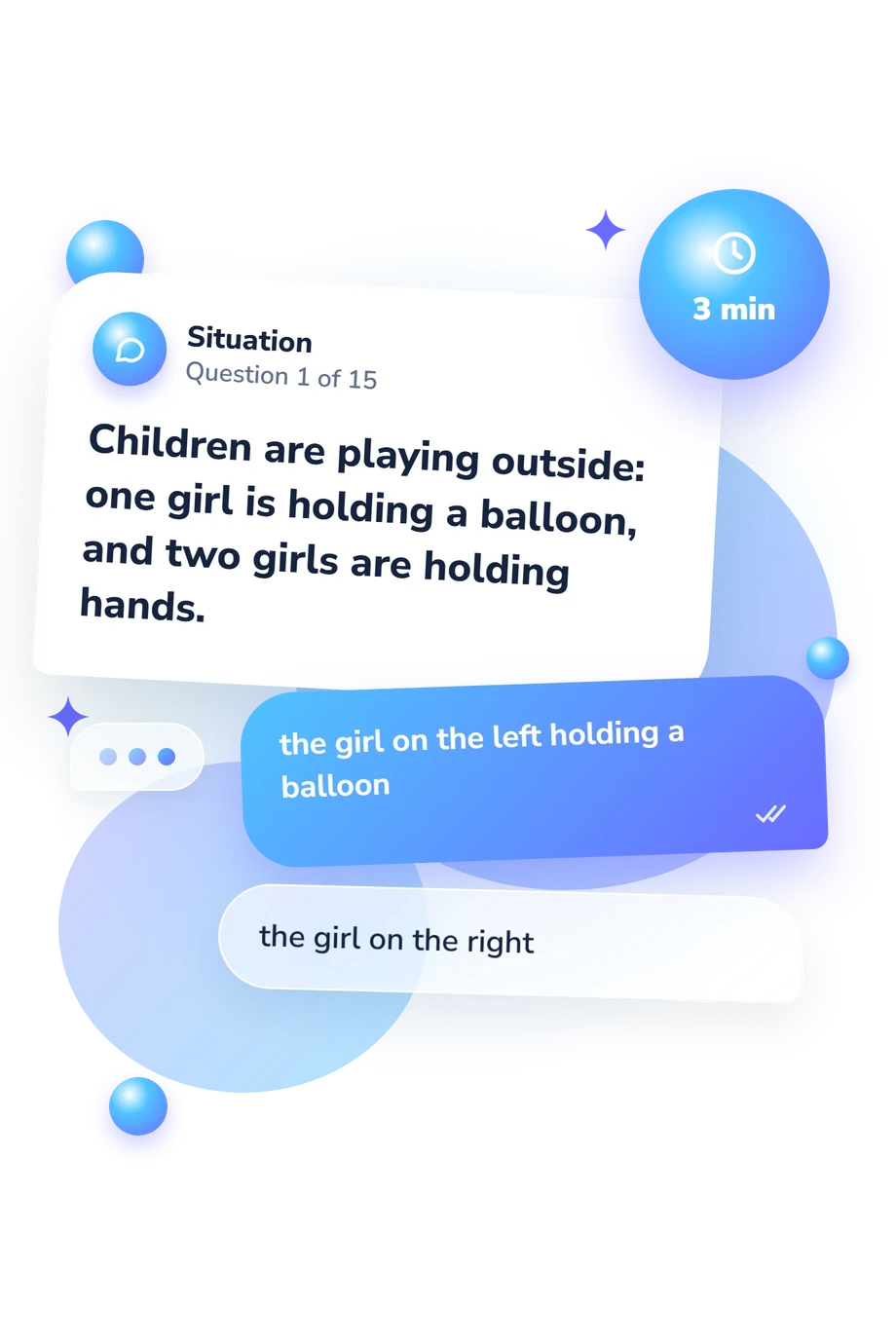
Example Questions From the Test
- the girl on the left holding a balloon
- the girl on the right
- The child playing with blocks on the left
- One of the children playing chess
- the child on the left, sharing the watermelon
- one of the two children on the right
Child Subjective Self-Regulation Typology Test - Description and methodology of the test
Parents, caregivers, and educators who want to understand a child’s everyday independence can use the Child Subjective Self-Regulation Typology Test as a structured starting point. It focuses on how the child approaches choice, initiative, and reliance on others, producing an autonomy profile rather than a single judgment. The pictorial choices explore children’s self-regulation through familiar activities and social situations.
What This Assessment Measures
This assessment explores subjective regulation of voluntary activity: how a child expresses independence when choosing, starting, organizing, or continuing an activity. It helps adults consider reliance on others, initiative, and adjustment when circumstances change.
The single displayed scale is Autonomy (0-15). Low autonomy covers 0-7, Moderate autonomy covers 8-11, and High autonomy covers 12-15. These bands show the level assigned to the result.
The result brings together three related aspects:
- Independence indicates how readily the child acts without another person’s direction or help.
- Planning and organization indicate how the child arranges actions and manages everyday demands.
- Flexibility indicates how readily the child changes approach when conditions or support shift.
Together, these themes make the result useful as a child autonomy assessment for discussing self-management.
Methodology and Evidence Base
Each item presents a brief social or activity scene with paired illustrated alternatives. The child chooses the figure that most resembles them, making the format comparative rather than an agreement rating. Adults may discuss the choices, but the child is the respondent. Scenes cover solitary and shared activity, initiative, dependence, persistence, confidence, and changing demands.
The questionnaire produces one total score; the displayed result assigns a level label, but item weighting is not specified, so no extra scoring formula should be inferred. Higher results indicate more independence, planning, organization, and flexibility; lower results indicate more dependence and difficulty with self-organization.
Its conceptual reference is Prygin’s 2009 monograph on subjective regulation and Khusainova’s 2002 dissertation on developmental regulation. The questionnaire is conceptually consistent with those works, not an adaptation or validated equivalent. Reeva’s 2023 study adds context about self-regulation and emotional relationships in developing independence but does not establish norms for this questionnaire.
Children’s choices can reflect response bias, current circumstances, and limited self-awareness, so adults should interpret the self-regulation profile through conversation and broader observation.
- Prygin, Gennady S. (2009). Psychology of Independence: Monograph. Izhevsk and Naberezhnye Chelny: Institute of Management Press. 408 pp. ISBN 978-5-93388-049-3.
- Khusainova, Svetlana V. (2002). Typological Features and Development of Self-Regulation of Behavior in Older Preschool Children [Candidate dissertation in Psychology]. Naberezhnye Chelny. 182 pp.
- Reeva, Olga Y. (2023). The Role of Maternal Emotional Attitudes in the Development of Independence in Older Preschool Children. Vestnik of Kostroma State University. Series: Pedagogy. Psychology. Sociokinetics, 29(1), 62-69. 10.34216/2073-1426-2023-29-1-62-69
Updated: