
What DnD Race Are You Quiz
How the Scales are Structured
Who Usually Takes This Test?
See How You Compare
Below is a preview of how scores are typically distributed across each scale.
Example Questions From the Test
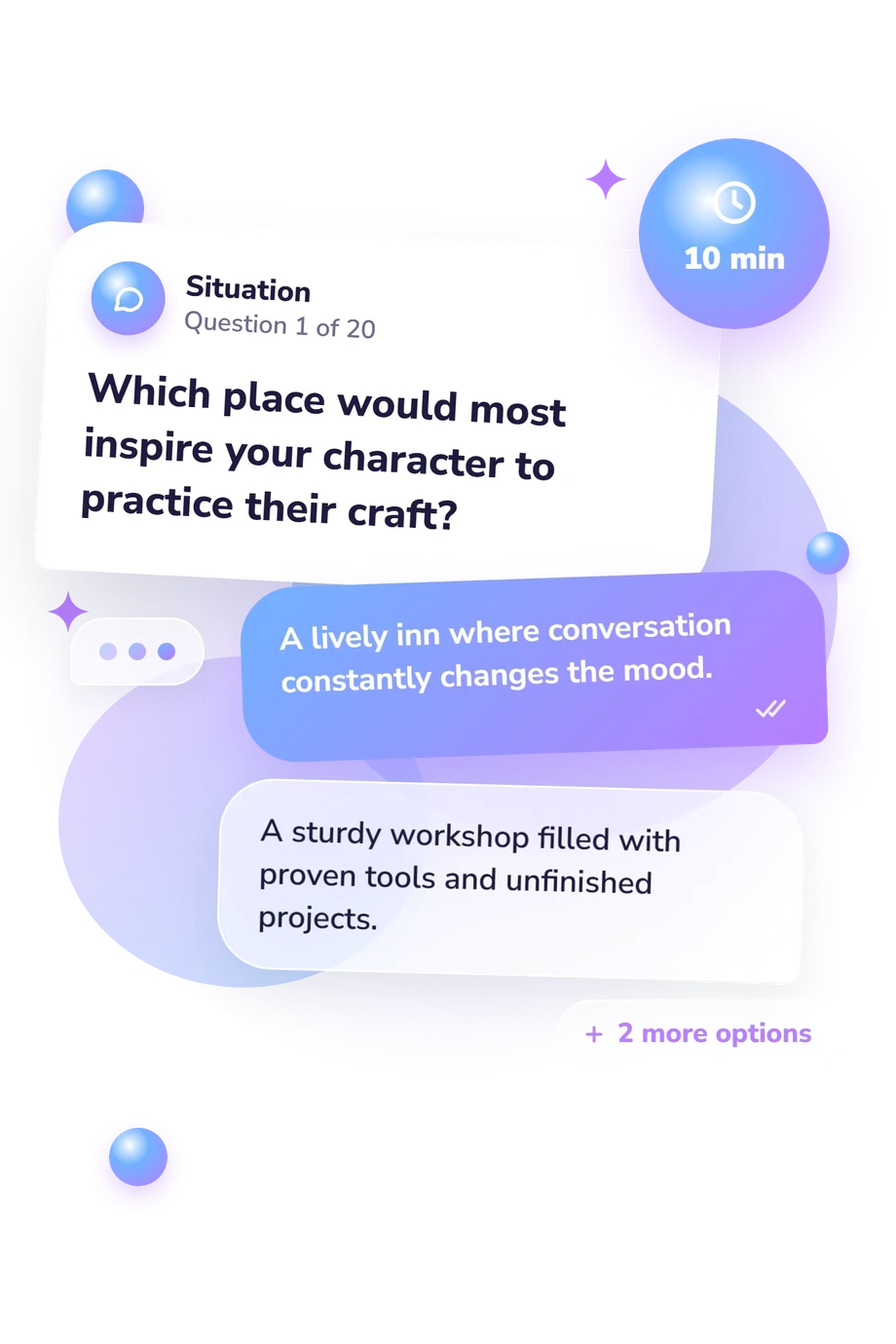
- A lively inn where conversation constantly changes the mood.
- A sturdy workshop filled with proven tools and unfinished projects.
- A secluded grove where music, starlight, and old magic seem intertwined.
- A cosmopolitan academy offering lessons from many different traditions.
- A time-honored outfit made with exceptional materials and sturdy detail.
- A comfortable ensemble designed for dancing, eating, and easy conversation.
- A dramatic silhouette with bold colors, unusual ornaments, and a hint of danger.
- A flexible costume that can be altered to suit each event of the evening.
- Seeking a new neighborhood and meeting people unlike anyone back home.
- Repairing equipment and completing useful tasks that have accumulated.
- Cooking a generous meal in anticipation of the party's return.
- Walking in a quiet natural place, then practicing an art or contemplative ritual.
What DnD Race Are You Quiz - Description and methodology of the test
Players building a character concept, choosing a roleplaying direction, or looking for a fresh fantasy identity can use the What DnD Race Are You Quiz as guided reflection. This dnd race personality quiz connects imagined choices with themes such as tradition, patience, fellowship, adaptability, and self-definition. The result offers a starting point for backstory, character voice, or party role rather than a fixed personality label.
What This Assessment Explores
Imagined situations reveal how a character approaches tradition, patience, community, flexibility, and self-definition. The What D&D Race Are You Quiz offers an imagined-character profile rather than a fixed identity. The five outcomes are:
- Dwarf (0-12) reflects craft, resilience, and tradition: Roaming Foundation (0-4), Stout Companion (5-8), Dwarven Core (9-12).
- Elf (0-12) reflects patience, refinement, and beauty: Earthier Rhythm (0-4), Touched by the Timeless (5-8), Elven Spirit (9-12).
- Halfling (0-12) reflects fellowship, comfort, and courage: Grand Horizon (0-4), Cheerful Wayfarer (5-8), Halfling Soul (9-12).
- Human (0-12) reflects adaptability, ambition, and bridge-building: Different Calling (0-4), Versatile Traveler (5-8), Human Heart (9-12).
- Tiefling (0-12) reflects self-definition, resilience, and unconventional power: Familiar Path (0-4), Defiant Spark (5-8), Tiefling Flame (9-12).
The highest total indicates the strongest affinity; a result within one point can be read as a blended result.
Methodology and Evidence Base
This self-report presents each item as an imagined situation involving work, travel, negotiation, heritage, danger, magic, or long-term purpose. Four response options offer different priorities or reactions, so the respondent selects the choice that best fits the character being imagined. This format turns narrative preferences into a comparative profile.
Players using the What DnD Race Should I Play Quiz can compare the profile with the story tone, social role, or motivations they want to explore.
Carpenter (2024), Scholte Albers and de Wit (2026), and Mearls and Crawford (2014) provide cultural, roleplay, and game-design context, helping explain why imagined ancestry, appearance, social expectations, and character choice can shape fantasy identity. The questionnaire uses its own descriptive affinity categories and is conceptually consistent with these works, but is not an adaptation or validated application of them.
Scoring is descriptive: the highest total marks the strongest affinity, while a result within one point can be interpreted as blended across the character's competing themes.
Self-report can shift with mood, experience, and the character concept chosen, so the result works best as a creative prompt rather than a definitive account of personality.
- Carpenter, Benjamin J. J. (2024). “Monstrous Adventurers”: The racecraft of the Dungeons and Dragons imaginary. Howard Journal of Communications, 35(1), 15-32. 10.1080/10646175.2023.2238194
- Scholte Albers, Maxime, and Jan de Wit (2026). Bleed in Dungeons & Dragons: A Study on the Impact of Personality Design and Character Similarity. International Journal of Role-Playing, 17, 106-138. 10.33063/ijrp.vi17.648
- Mearls, Michael, and Jeremy Crawford (2014). Dungeons & Dragons Basic Rules. Wizards of the Coast.
Updated: