
Nen Type Quiz
How the Scales are Structured
Who Usually Takes This Test?
See How You Compare
Below is a preview of how scores are typically distributed across each scale.
Example Questions From the Test
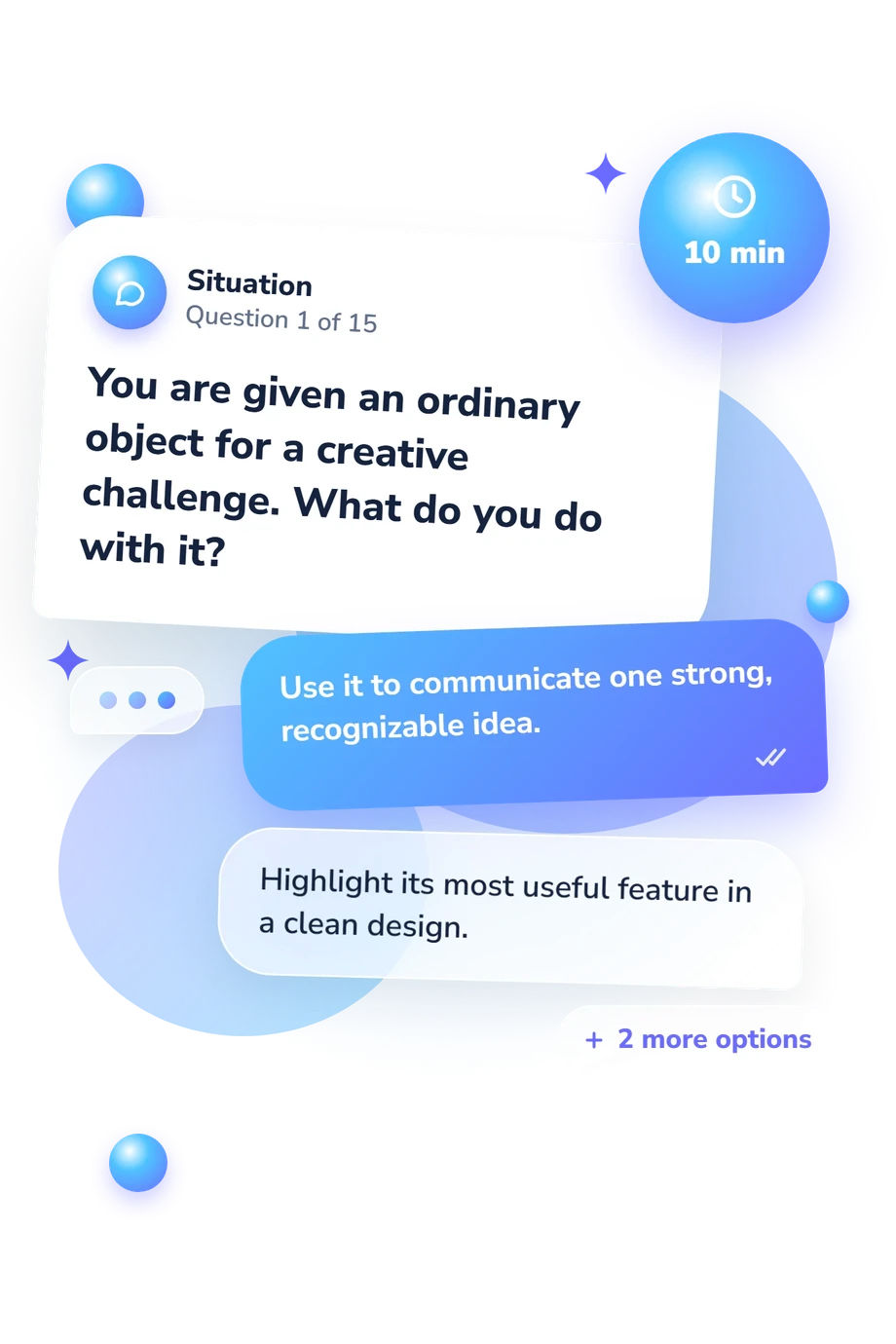
- Use it to communicate one strong, recognizable idea.
- Highlight its most useful feature in a clean design.
- Alter how it is used so it serves a surprising second purpose.
- Reimagine its apparent nature and make the transformation the heart of the piece.
- Pick a new destination quickly so the day keeps moving.
- Identify what is still possible and choose the clearest alternative.
- Combine parts of several options into a different plan.
- Treat the disruption as an invitation to invent a completely new kind of day.
- Give it clearer boundaries and a tangible form people can understand.
- Define its purpose while preserving the features that make it different.
- Accept an imperfect label if it gives me room to keep developing my vision.
- Let it remain uncategorized and follow the direction that feels uniquely meaningful to me.
Nen Type Quiz - Description and methodology of the test
Fans of Hunter x Hunter may want a structured way to reflect on fictional Nen categories without treating them as literal abilities. The Nen Type Quiz turns everyday preferences into a compact personality-style profile. This nen quiz is intended for readers who enjoy imaginative self-reflection and want language for recurring patterns in creativity, communication, independence, and action. Its result describes tendencies, not a supernatural identity.
What This Assessment Explores
Rather than assigning a supernatural identity, the questionnaire compares preferences in creative problem-solving, communication, independence, coordination, and goal pursuit. Its scenarios contrast clear structures, outward expression, flexible invention, direct effort, and strategic influence. Viewed as a nen ability quiz, it gives fan readers a way to connect fictional categories with ordinary patterns of choice.
The three displayed dimensions are:
- Conjuration-Specialization (0-15) shows whether your preferences lean toward precise, rule-based construction or a distinctive, self-defined path: Conjuration Lean (0-5), Structured Individuality (6-10), or Specialization Lean (11-15).
- Emission-Transmutation (0-15) shows whether you favor projecting energy outward or reshaping your approach through flexibility: Emission Lean (0-5), Flexible Projection (6-10), or Transmutation Lean (11-15).
- Enhancement-Manipulation (0-15) shows whether you rely more on direct commitment or indirect influence: Enhancement Lean (0-5), Tactical Balance (6-10), or Manipulation Lean (11-15).
Methodology and Evidence Base
Each item uses forced-choice format: a situation is followed by four responses, each emphasizing a different approach. Scenarios cover creativity, changing plans, explanation, roles, learning, practice, persuasion, and obstacles. Choosing the closest response creates a comparative pattern rather than a categorical identity.
Scores are organized across paired dimensions, with each band describing a lean or middle position. The exact contribution of each answer is not specified, so the ranges should be read as reported categories rather than reverse-engineered points. As a Nen personality test, it works best as a reflective profile.
The conceptual frame is named in Hisoka's Personality Analysis (Togashi, 2006), alongside category descriptions in Togashi's official guide to the Hunter world. This questionnaire is a fan-made interpretation, not an adaptation or validation study. Forced-choice research by Heggestad and colleagues (2006) helps explain why competing responses reveal trade-offs, but it does not establish norms here.
No standardization or normative sample is stated, and scores may shift with current context, self-awareness, and response style. Read them as prompts for examining recurring preferences, not evidence of supernatural ability or a fixed psychological type.
- Togashi, Yoshihiro. Hunter x Hunter, Vol. 7. VIZ Media, 2006. ISBN 978-1-4215-0332-5.
- Togashi, Yoshihiro. Hunter x Hunter: Hunter Association Official Issue-Hunter's Guide: Character and World Official Databook. Shueisha, 2004. ISBN 978-4-08-873701-0.
- Heggestad, Eric D., Morgan Morrison, Charlie L. Reeve, and Rodney A. McCloy. "Forced-Choice Assessments of Personality for Selection: Evaluating Issues of Normative Assessment and Faking Resistance." Journal of Applied Psychology 91, no. 1 (2006): 9-24. 10.1037/0021-9010.91.1.9
Updated: