
Freudly+971 508685814hello@freudly.ai
Freudly
gender

Intrapersonal Gender Role Conflict Test
Take the online Intrapersonal Gender Role Conflict Test - AI psychologist FreudlyYou can take Intrapersonal Gender Role Conflict Testhere. Online version of a simple and accurate psychological test with interpretation.en
Understand your comfort and inner tension around gender roles in about 10 minutes. Get clear, actionable insight to guide support, strengthen coping, and improve well-being.
Start Online Test
Questions: 5010 minutes
08:30
October 2, 2025
October 2, 2025
Material has been updated
October 2, 2025
Material has been published
16,881 view
1,867 completions
1,559 likes
Verified by Daniel Hall
Psychologist with 25 years of experience
Share
Scale Explorer

How the Scales are Structured

example score
37/60
Self as a Mother (SaaM)
Measures the degree of internal tension and self-doubt related to meeting one’s ideal of being a “good mother.”
Low conflict
Moderate conflict
High conflict
022: Low conflict | 2346: Moderate conflict | 4760: High conflict
A score of 37 indicates moderate conflict, suggesting noticeable but manageable worries about living up to maternal expectations that may sometimes influence parenting behavior.
example score
25/60
Self as Homemaker (SaH)
Measures guilt, rigid expectations, and compensatory behavior related to the self-image of being a “good homemaker/hostess.”
Low strain
Moderate strain
High strain
020: Low strain | 2139: Moderate strain | 4060: High strain
A score of 25 falls in the Moderate strain range, suggesting occasional guilt or self-criticism about meeting homemaker expectations with some tendency toward compensatory “proof” through household tasks.
example score
38/60
Self as a Wife (SaaW)
Measures internal tension and anxiety related to fulfilling oneself in the spouse role and the coping patterns that may arise from it.
Low conflict
Moderate conflict
High conflict
020: Low conflict | 2147: Moderate conflict | 4860: High conflict
A score of 38 falls in the Moderate conflict range, suggesting noticeable concern about meeting expectations in the wife role with some tendency toward compensatory coping (e.g., overprotectiveness or increased sensitivity to partner influence).
example score
36/60
Professional Self (PS)
Measures tension and dissatisfaction related to fulfilling one’s professional role as part of intrapersonal gender role conflict, including compensatory overwork and sensitivity to workplace pressure.
Low
Moderate
High
015: Low | 1644: Moderate | 4560: High
A score of 36 falls in the Moderate range, suggesting noticeable but not extreme tension around professional-role satisfaction, with possible compensatory patterns such as taking on extra work or being influenced by colleagues or management.
example score
30/60
Gender Self (GS)
Measures anxiety and internal tension about how well one’s lived gender self matches an internal or idealized gender image.
Low conflict
Moderate conflict
High conflict
012: Low conflict | 1347: Moderate conflict | 4860: High conflict
A score of 30 falls in the Moderate conflict range, suggesting occasional worry about gender-self fit that may sometimes prompt compensatory efforts to align with gender expectations.
example score
171/300
Overall Index of Intrapersonal Gender Role Conflict (OIoIGRC)
Measures the overall level of intrapersonal gender role conflict, reflecting internal tension between actual and ideal gender-role perceptions.
Low conflict
Moderate conflict
High conflict
0105: Low conflict | 106208: Moderate conflict | 209300: High conflict
A score of 171 falls in the Moderate conflict range, suggesting a noticeable but not extreme level of internal tension around gender-role expectations.
Start Online Test
just completed the test
DATA-BASED USER COHORTS

Who Usually Takes This Test?

People in identity transition
41%OF USERS
Those questioning or redefining their gender role take it to clarify where they feel aligned versus conflicted and what supports their self-esteem and mood.
Clients in therapy or coaching
34%OF USERS
People working on anxiety, self-worth, relationships, or motivation use it to spot how gender expectations create internal tension and coping difficulties.
Helpers and trainees
25%OF USERS
Psychologists, counselors, and students use it to structure assessment and guide conversations about personal and regulatory resources around gender roles.
BASED ON AGGREGATED, ANONYMIZED DATA FROM TENS OF THOUSANDS OF FREUDLY USERS.
Benchmarking

See How You Compare

Once you complete the test, your results are compared with real-world data from people in your country.
Below is a preview of how scores are typically distributed across each scale.
As a mother (Aam)
As a mother (Aam)
Average
29.4
Normal range
19.938.8
min.
0
max.
60
This curve shows how scores are typically distributed.
Once you complete the test, your result will appear on the scale so you can see how you compare.
Me as the hostess (Math)
Average
35.8
Normal range
2744.6
min.
0
max.
60
This curve shows how scores are typically distributed.
Once you complete the test, your result will appear on the scale so you can see how you compare.
As a wife (Aaw)
As a wife (Aaw)
Average
34.6
Normal range
24.444.7
min.
0
max.
60
This curve shows how scores are typically distributed.
Once you complete the test, your result will appear on the scale so you can see how you compare.
Professional Self (PS)
Average
38.7
Normal range
28.349.1
min.
0
max.
60
This curve shows how scores are typically distributed.
Once you complete the test, your result will appear on the scale so you can see how you compare.
Gender Self (GS)
Gender Self (GS)
Average
19.2
Normal range
11.926.6
min.
0
max.
60
This curve shows how scores are typically distributed.
Once you complete the test, your result will appear on the scale so you can see how you compare.
Integral indicator of VGRK (IioV)
Average
200.6
Normal range
144.3256.9
min.
0
max.
300
This curve shows how scores are typically distributed.
Once you complete the test, your result will appear on the scale so you can see how you compare.
Featured On
SAMPLE QUESTIONS

Example Questions From the Test

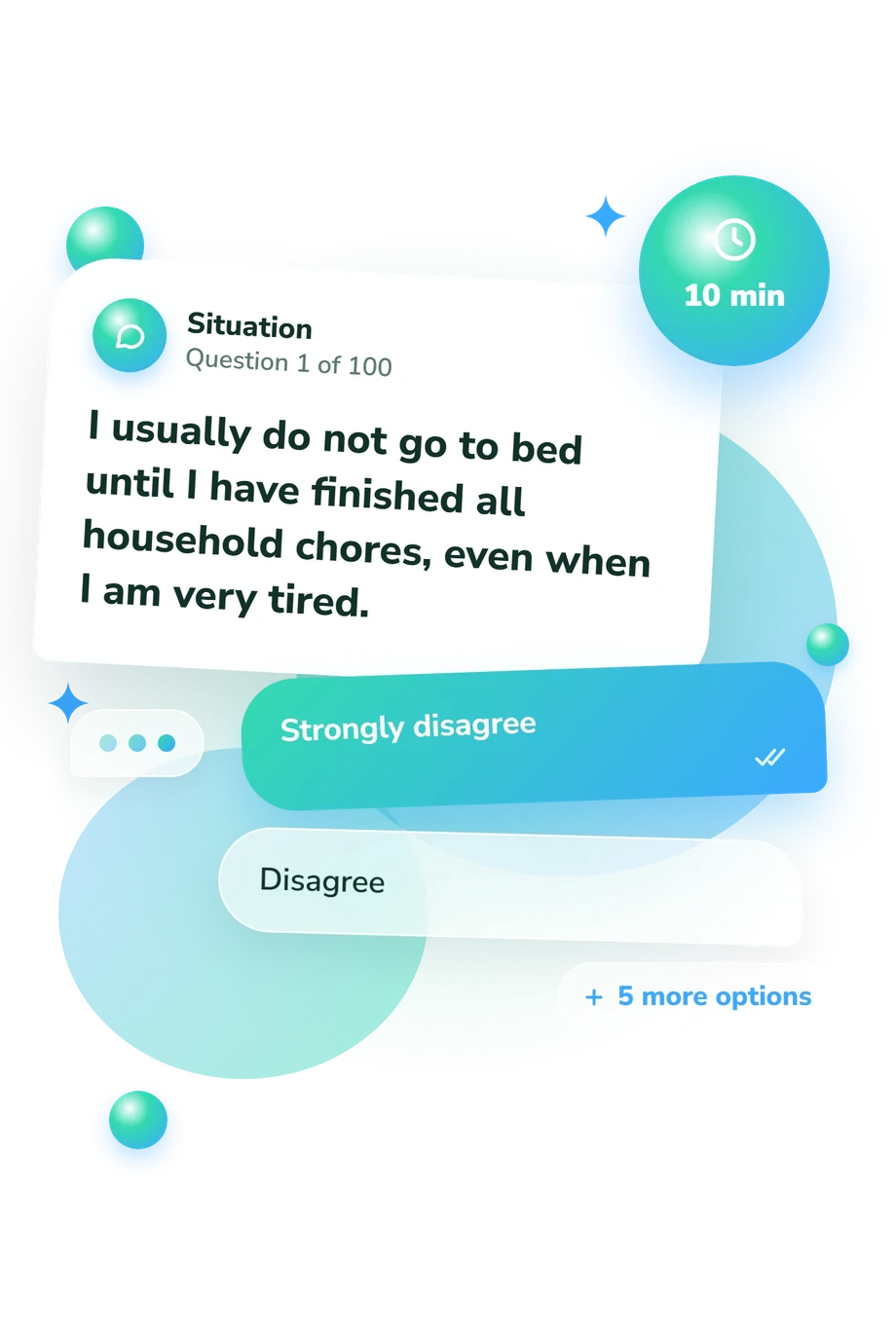
Below are statements concerning various areas of functioning and interpersonal interaction. You may agree or disagree with the extent to which each statement reflects your views and current life situation.
    • Strongly disagree
    • Disagree
    • Mostly disagree
    • No definite opinion
    • Mostly agree
    • Agree
    • Strongly agree
    • Strongly disagree
    • Disagree
    • Mostly disagree
    • No definite opinion
    • Mostly agree
    • Agree
    • Strongly agree
    • Strongly disagree
    • Disagree
    • Mostly disagree
    • No definite opinion
    • Mostly agree
    • Agree
    • Strongly agree
WHAT THE TEST MEASURES
About This Assessment
Intrapersonal Gender Role Conflict, IGRC Test

Intrapersonal Gender Role Conflict Test - Symptoms and Signs

gender
role conflict

In clinical practice, it can be useful to clarify how clients experience internal tension related to gender-role expectations. Intrapersonal Gender Role Conflict is a self-report measure designed to assess the extent of distress or inconsistency a person perceives in relation to their gender-role self-concept.

The instrument consists of 50 items and typically requires about 10 minutes to complete. It is intended to support case conceptualization by identifying areas where gender-role beliefs may be associated with discomfort, self-evaluative concerns, or difficulties managing internal stress. As described by James M. O'Neil, Intrapersonal Gender Role Conflict can be used as an adjunct to broader clinical assessment to inform treatment planning and track themes relevant to coping and adjustment.

Author: James M. O'Neil
Literature: O’Neil, J. M. Gender role conflict: Psychological costs, consequences, and an agenda for change. American Psychologist. 2008.
Popular tests
Comments
Leave a Comment