
Generation Z Quiz
How the Scales are Structured
Who Usually Takes This Test?
See How You Compare
Below is a preview of how scores are typically distributed across each scale.
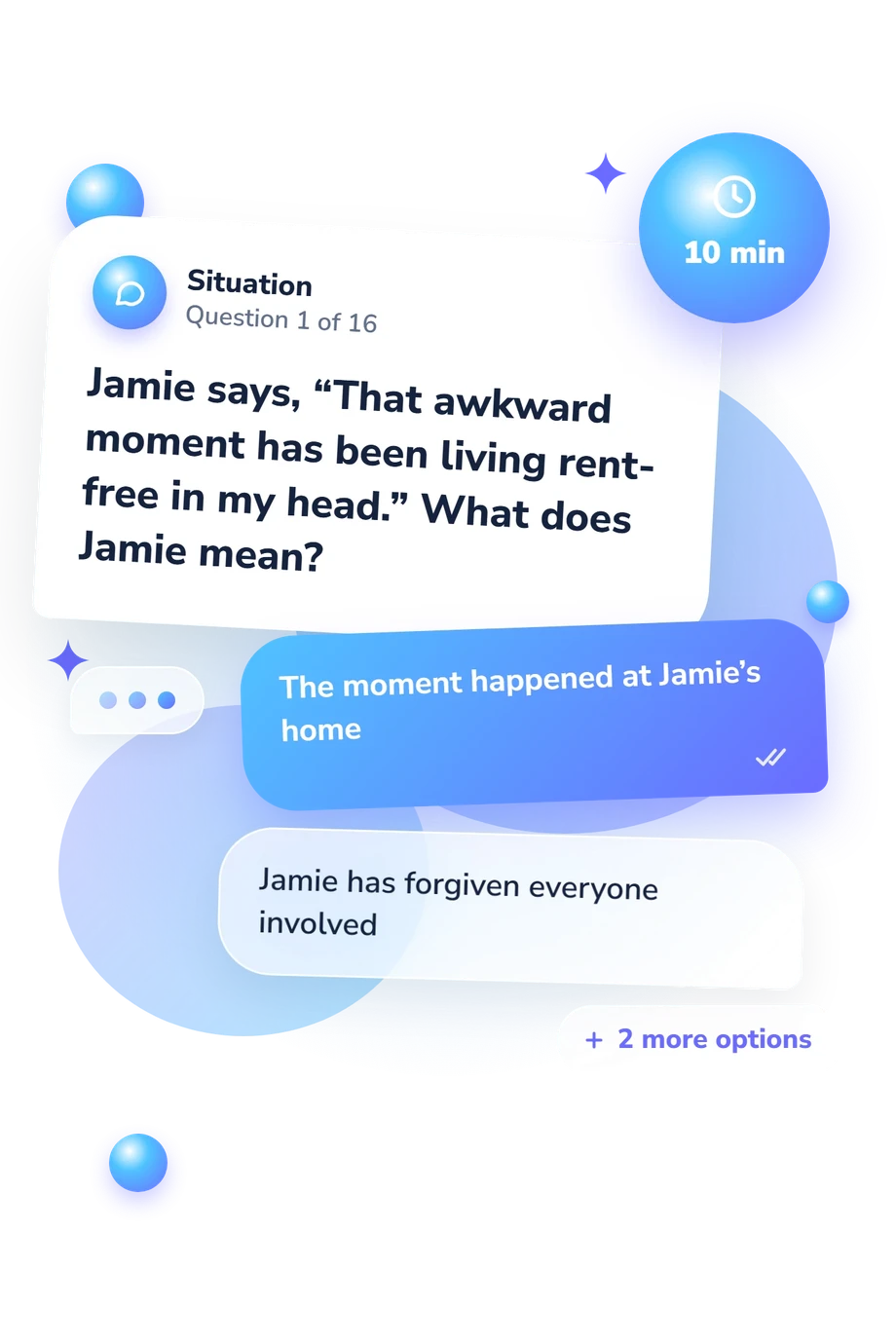
Example Questions From the Test
- The moment happened at Jamie’s home
- Jamie has forgiven everyone involved
- Jamie keeps thinking about it without wanting to
- Jamie plans to turn it into a story
- Keep the information secret
- Honestly, with no exaggeration
- Stop talking about the subject
- There is no limit
- You looked unusually confident
- You did exceptionally well
- You took the event too seriously
- You finished before everyone else
Generation Z Quiz - Description and methodology of the test
Curious readers who encounter slang online can use this generation z quiz to check whether they understand expressions in the situations where people actually use them. It suits anyone comparing familiar language with newer digital vocabulary by taking this online slang quiz. The result describes slang knowledge, not identity or belonging.
What This Assessment Explores
The questionnaire measures recognition and interpretation of informal expressions associated with Gen Z and online culture. Items test meaning in context: praise, suspicion, exaggeration, social withdrawal, approval, and intense amusement. They suit anyone who encounters digital conversation, including people comparing familiar language with newer vocabulary; the result is a focused measure of slang familiarity, not general communication ability, age, or identity.
The questions group into three practical areas:
- Word meaning shows whether an expression matches its usual definition.
- Context reading shows whether surrounding events clarify an ambiguous phrase.
- Online interaction shows whether language for praise, disagreement, evidence, absence, or reaction is understood.
Completing this Gen Z vocabulary quiz lets readers see which broad vocabulary level best describes their recognition. Generation Z Slang Knowledge runs from 0 to 16: Foundation (0-6), Conversational (7-12), and Slang Fluent (13-16).
Methodology and Scientific Basis
Each item presents an online expression or situation with four answer choices. The task is contextual recognition, so this is a multiple-choice knowledge assessment rather than a personality inventory. The questionnaire returns one overall result for the tested vocabulary rather than separate trait scores.
The evidence base supplies context, not authorship, for this online form. The closest comparative reference is the study by Vacalares and colleagues, which examines internet-slang intelligibility between Millennials and Gen Zers. Linuwih and Handayani connect language input, social-media exposure, and recency with knowledge of Gen Z slang. Tagliamonte and Denis describe instant messaging as a structured hybrid register, supporting the view that digital expressions are meaningful language practices rather than random errors. This slang recognition test is conceptually consistent with those studies, but it is not an adaptation or standardized reproduction of them.
Interpretation should remain specific to the vocabulary tested. Platform, region, community, and timing of exposure can affect answers, and this online form has no stated norms or independent validation. Its band is therefore best used as a focused snapshot of slang recognition.
- Sophomore Talle Vacalares, Angel Faith R. Salas, Bherna Jane S. Babac, Analyn L. Cagalawan, and Christine D. Calimpong. (2023). The intelligibility of internet slangs between millennials and Gen Zers: A comparative study. International Journal of Science and Research Archive, 9(1), 400-409. 10.30574/ijsra.2023.9.1.0456
- Endar Rachmawaty Linuwih and Gabriella Kristina Handayani. (2022). The Input of a Successful EFL Learner and the Mastery of Gen-Z Slangs. IDEAS: Journal on English Language Teaching and Learning, Linguistics and Literature, 10(2), 1150-1163. 10.24256/ideas.v10i2.2977
- Sali A. Tagliamonte and Derek Denis. (2008). Linguistic ruin? LOL! Instant messaging and teen language. American Speech, 83(1), 3-34. 10.1215/00031283-2008-001
Updated: