
Diaper Punishment Quiz
How the Scales are Structured
Who Usually Takes This Test?
See How You Compare
Below is a preview of how scores are typically distributed across each scale.
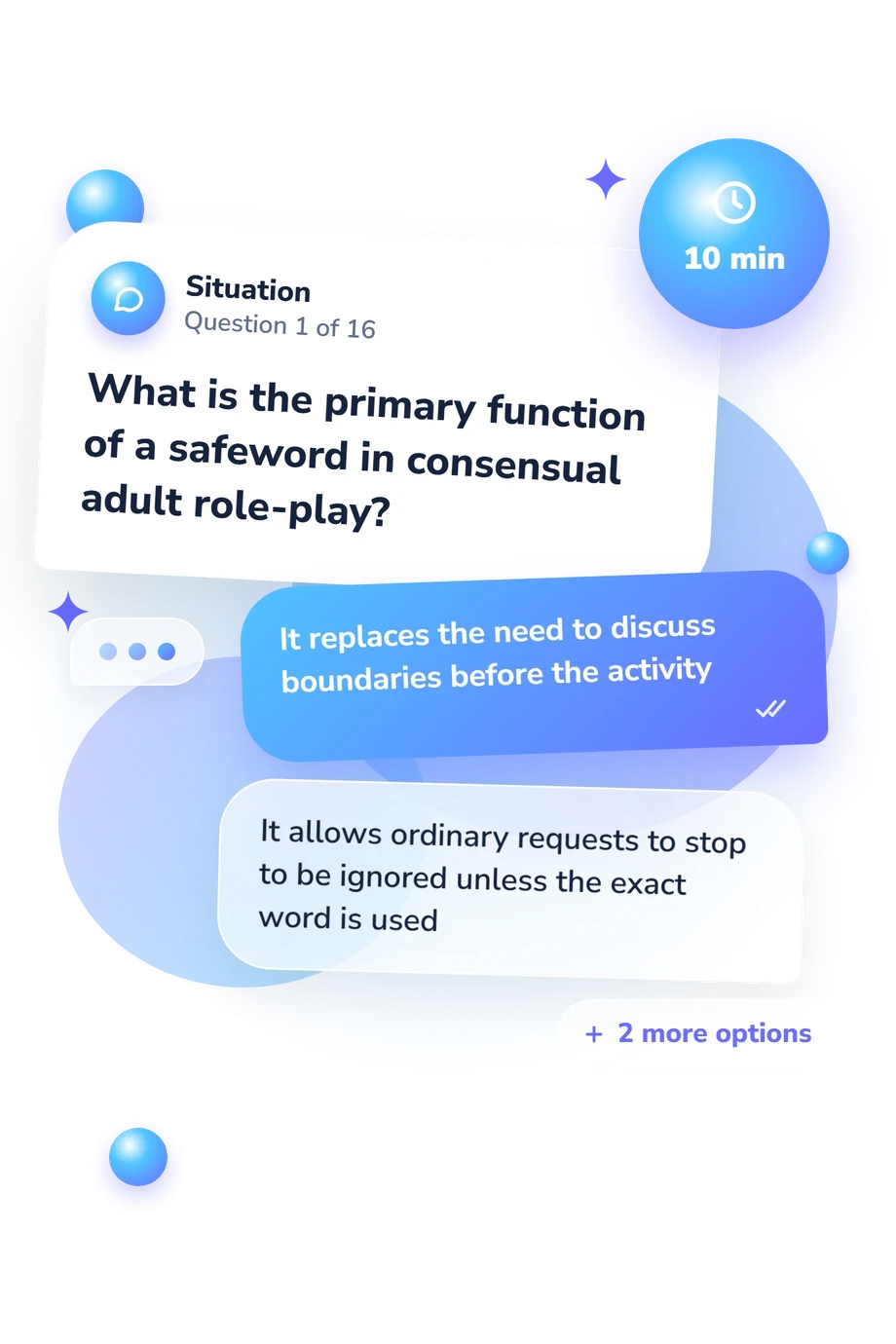
Example Questions From the Test
- Clean the area repeatedly with strong antiseptic to remove all bacteria
- Change promptly, cleanse gently, let the skin dry, and use an appropriate barrier product if needed
- Switch to a different scented product at every change until one works
- Keep the area tightly covered with fragranced lotion to prevent air exposure
- Whether capable adults freely consent and can stop, rather than someone being shamed, coerced, or unable to refuse
- Whether a disposable or reusable product is involved
- Whether the situation happens in private rather than in public
- Whether it lasts for only a short time
- Avoid discussing it so neither participant feels self-conscious
- Check physical comfort and skin condition, discuss emotional reactions, and note any boundaries for the future
- Discard all earlier boundaries because the scene is complete
- Evaluate success only by whether the planned scene was completed
Diaper Punishment Quiz - Description and methodology of the test
People who want a clearer framework for judging adult role-play, toileting discipline, or related care can use the diaper punishment quiz to organize practical reflection. The assessment is intended for readers who want a clear toileting safety framework for reasoning through sensitive scenarios and distinguishing supportive choices from harmful ones. It organizes judgment around what changes when capacity, boundaries, or a child’s welfare is at stake.
What This Assessment Explores
Questions test whether readers distinguish consensual adult role-play from coercion, recognize withdrawable consent, and respond when intoxication, threats, or a request to stop changes a situation. They also cover children’s accidents, fear, concealment, and non-shaming safeguarding.
The questionnaire tests knowledge of recognizing whether a response or situation involving adult diaper role-play is freely chosen, respectful, and safe.
The scenarios group into three themes:
- Consent and autonomy show whether agreement is informed, voluntary, ongoing, and free from pressure.
- Safeguarding and caregiving show whether distress, coercion, disclosures, or accidents prompt protection rather than blame.
- Hygiene, boundaries, and aftercare show whether care is safe, requests to stop are honored, and comfort is checked.
Results appear on Diaper Punishment Knowledge: 0-16, with Foundations to strengthen (0-6), Developing knowledge (7-12), and Strong knowledge (13-16). This educational score is not a medical, legal, or abuse determination.
Methodology and Scientific Basis
Each item presents a concrete situation with several responses. The reader chooses the option that best reflects consent, safeguarding, hygiene, or supportive care, rather than reporting a personal history. The displayed total is interpreted through the educational result bands and reflects the reader's answers to these educational scenarios.
The questionnaire combines relationship boundaries with diaper hygiene and everyday caregiving decisions, so its result may reflect more than one context.
Methodologically, the questionnaire is conceptually consistent with Zamboni (2019), whose qualitative study examined adult baby/diaper-lover behavior in an online community sample. Dunkley and Brotto (2020) offer a related consent framework for BDSM contexts, while the American Academy of Pediatrics and Blume-Peytavi and colleagues support the toileting, hygiene, and skin-care content. These sources clarify themes; they do not make this questionnaire an adaptation of any one instrument.
This online questionnaire is not presented as a standardized instrument with a norm group, reliability estimate, or independent validation. Self-report answers can shift with current circumstances, self-awareness, memory, or pressure to appear knowledgeable, so the displayed bands describe performance on these scenarios rather than a complete account of conduct.
- Zamboni, Brian D. (2019). "A Qualitative Exploration of Adult Baby/Diaper Lover Behavior From an Online Community Sample." The Journal of Sex Research, 56(2), 191-202. 10.1080/00224499.2017.1373728
- Dunkley, Cara R., and Lori A. Brotto. (2020). "The Role of Consent in the Context of BDSM." Sexual Abuse, 32(6), 657-678. 10.1177/1079063219842847
- American Academy of Pediatrics. (2016). "The American Academy of Pediatrics Guide to Toilet Training: Revised and Updated Second Edition." Bantam Books.
- Blume-Peytavi, Ulrike, Matthias Hauser, Lena Lünnemann, Georgios N. Stamatas, Jan Kottner, and Natalie Garcia Bartels. (2014). "Prevention of Diaper Dermatitis in Infants-A Literature Review." Pediatric Dermatology, 31(4), 413-429. 10.1111/pde.12348
Updated: