
Anna or Elsa Quiz
How the Scales are Structured
Who Usually Takes This Test?
See How You Compare
Below is a preview of how scores are typically distributed across each scale.
Example Questions From the Test
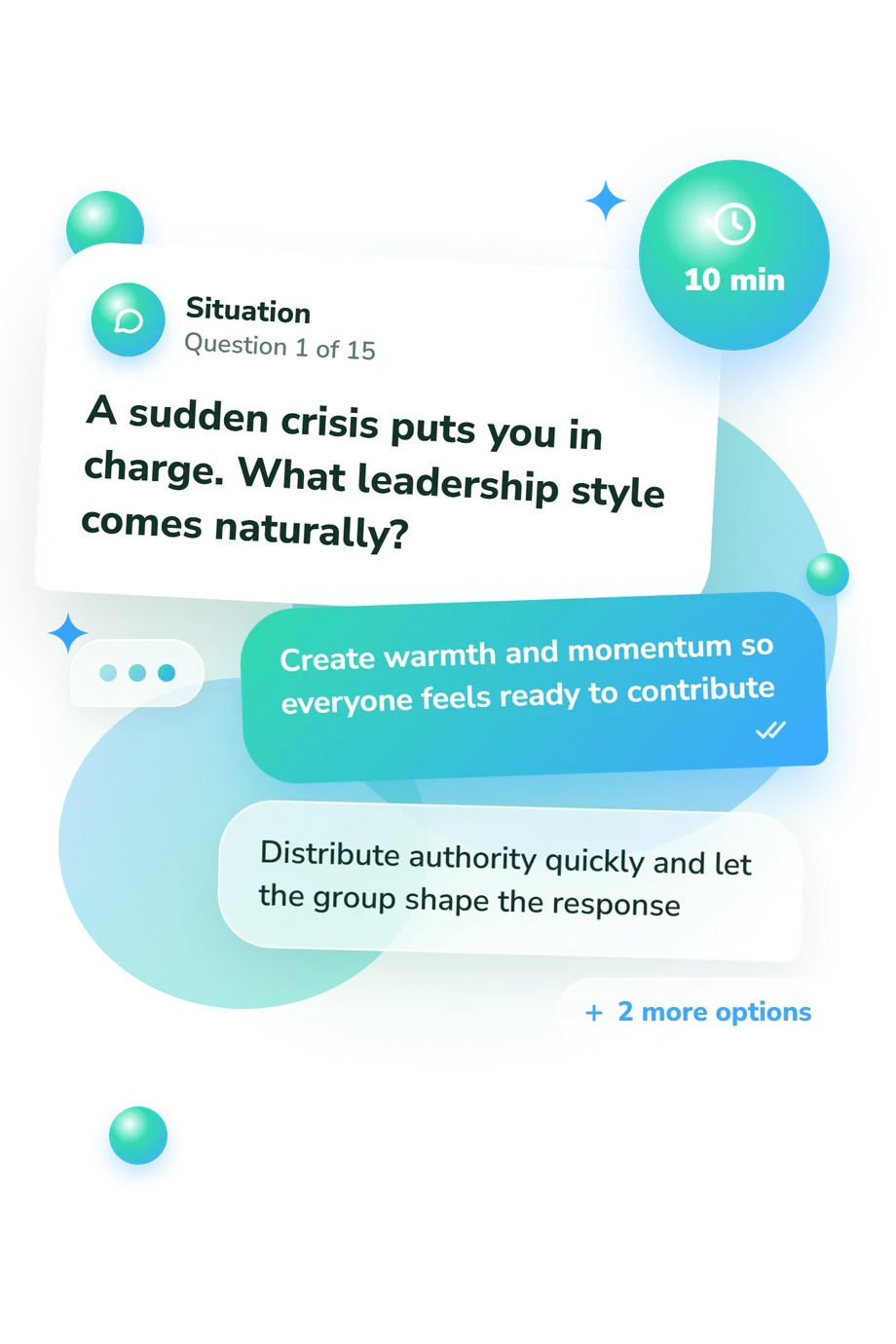
- Create warmth and momentum so everyone feels ready to contribute
- Distribute authority quickly and let the group shape the response
- Consult a small inner circle, then settle on a direction
- Project calm, contain my own alarm, and give clear instructions
- Give them room and later send a thoughtful message
- Listen warmly, then help them imagine another attempt
- Offer a practical observation they can consider when ready
- Suggest a new shared adventure to restore their hope
- Introduce myself widely and follow every promising conversation
- Help with the event and chat as opportunities arise
- Find one approachable person and stay near them
- Choose a useful behind-the-scenes role with limited socializing
Anna or Elsa Quiz - Description and methodology of the test
Readers who want to reflect on how they respond to connection, pressure, uncertainty, and decisions may find this format useful. The Anna or Elsa Quiz turns those everyday situations into a playful comparison of character-associated affinities. Someone using an am-I-Anna-or-Elsa quiz can notice recurring response patterns while current circumstances may influence what feels familiar.
What This Assessment Explores
Scenarios cover connection, pressure, uncertainty, self-expression, cooperation, leadership, conflict, affection, social energy, risk, and setbacks.
The three displayed scores explain the comparison made by this quiz about Elsa and Anna:
- Anna Affinity (0-15) reflects resonance with Anna’s warmth, spontaneity, persistence, and eagerness to connect: Quiet Contrast (0-5) signals reserved resonance; Kindred Spark (6-10) shows matching qualities; Openhearted Adventurer (11-15) shows strong resonance.
- Anna-Elsa Blend Affinity (0-15) reflects Anna’s relational energy with Elsa’s reflective self-command: Distinctive Lean (0-5) favors one style; Flexible Middle (6-10) draws on both; Sisterly Synthesis (11-15) combines warm engagement and measured independence.
- Elsa Affinity (0-15) reflects resonance with Elsa’s composure, independence, deliberation, and carefully expressed care: Expressive Contrast (0-5) signals open or spontaneous engagement; Reflective Kinship (6-10) adds thoughtful restraint; Poised Independent (11-15) shows strong resonance.
The top score marks the strongest affinity; a one-point gap signals a blend.
Methodology and Scientific Basis
Each item presents a brief social or emotional situation with four response options. The choices contrast spontaneous engagement, consultation, private reflection, calm containment, persistence, and compromise, allowing respondents to select a recognizable reaction rather than rate an abstract statement.
The questionnaire displays three scores. The highest indicates the strongest affinity, and scores within one point indicate a blend. Standardized norms or validated population cutoffs have not been established for this online questionnaire.
The method is a comparative self-report in an are-you-Anna-or-Elsa quiz format. The closest conceptual parallel is the Character Recognizability Scale (Żerebecki et al., 2024), which addresses how audiences recognize character attributes. Hoffner and Buchanan (2005) connect perceived similarity and character attributes with wishful identification, while Cohen (2001) describes an audience’s psychological relationship with a media character. These studies are conceptual parallels, not validation of this questionnaire or its three-scale scoring.
Because it is self-report, answers may shift with current context, familiarity with the films, and self-awareness; the result organizes reflection on how Elsa- and Anna-associated patterns appear in responses rather than making a clinical conclusion.
- Żerebecki, Bartosz G., Suzanna J. Opree, Joep Hofhuis, and Susanne Janssen. (2024). Beyond Perceived Similarity: Development and Validation of the Character Recognizability Scale (CRS). Mass Communication and Society, 27(5), 1220-1251. 10.1080/15205436.2024.2366224
- Hoffner, Cynthia, and Martha Buchanan. (2005). Young Adults’ Wishful Identification With Television Characters: The Role of Perceived Similarity and Character Attributes. Media Psychology, 7(4), 325-351. 10.1207/S1532785XMEP0704_2
- Cohen, Jonathan. (2001). Defining Identification: A Theoretical Look at the Identification of Audiences With Media Characters. Mass Communication & Society, 4(3), 245-264. 10.1207/S15327825MCS0403_01
Updated: