
What Weather Am I Quiz
How the Scales are Structured
Who Usually Takes This Test?
See How You Compare
Below is a preview of how scores are typically distributed across each scale.
Example Questions From the Test
- Call someone and see whether they want to go out.
- Handle a few tasks, then enjoy some unstructured downtime.
- Read, write, or listen to music while sinking into the quiet.
- Take a solitary walk and let my thoughts unfold naturally.
- A calm presence that lets them set the emotional pace.
- Gentle encouragement and a reminder of what may still go well.
- Practical company, such as sharing a meal or taking a short walk.
- Warm, animated energy aimed at helping hope feel possible again.
- A cheerful outing with people, movement, and plenty happening.
- A flexible day with one social plan and room to improvise.
- A quiet personal project with minimal interruption.
- A relaxed meetup with someone whose company feels easy.
What Weather Am I Quiz - Description and methodology of the test
People who use familiar images to reflect on their inner style may find this questionnaire useful. This weather personality test translates everyday choices into four atmospheric affinities. It invites reflection on whether your profile leans toward one style or combines several. As a quiz about what weather you are, it helps connect those reflections with everyday preferences. The What Weather Am I Quiz shows which atmosphere feels most like you and whether styles combine.
What the Weather Personality Quiz Measures
This weather personality quiz organizes patterns in feeling, social energy, focus, and responses to disruption. Its dimensions are:
- Rain (0-12) reflects introspection, emotional depth, restorative solitude, and subtle moods; Passing Shower (0-4), Steady Rain (5-8), Deep Downpour (9-12).
- Snowfall (0-12) reflects quiet composure, deliberate pacing, orderly focus, and stillness; Brief Flurry (0-4), Settling Snow (5-8), Deep Snowfall (9-12).
- Sunshine (0-12) reflects outward warmth, visible optimism, social energy, and brightening shared moments; Soft Glow (0-4), Warm Breaks (5-8), Full Sunshine (9-12).
- Thunderstorm (0-12) reflects intensity, bold expression, decisive momentum, and comfort with disruptive change; Distant Rumble (0-4), Building Storm (5-8), Electric Storm (9-12).
Together, these dimensions describe flexible preferences rather than fixed identities, helping visitors notice which environments restore, energize, settle, or challenge them.
Methodology and Evidence Base
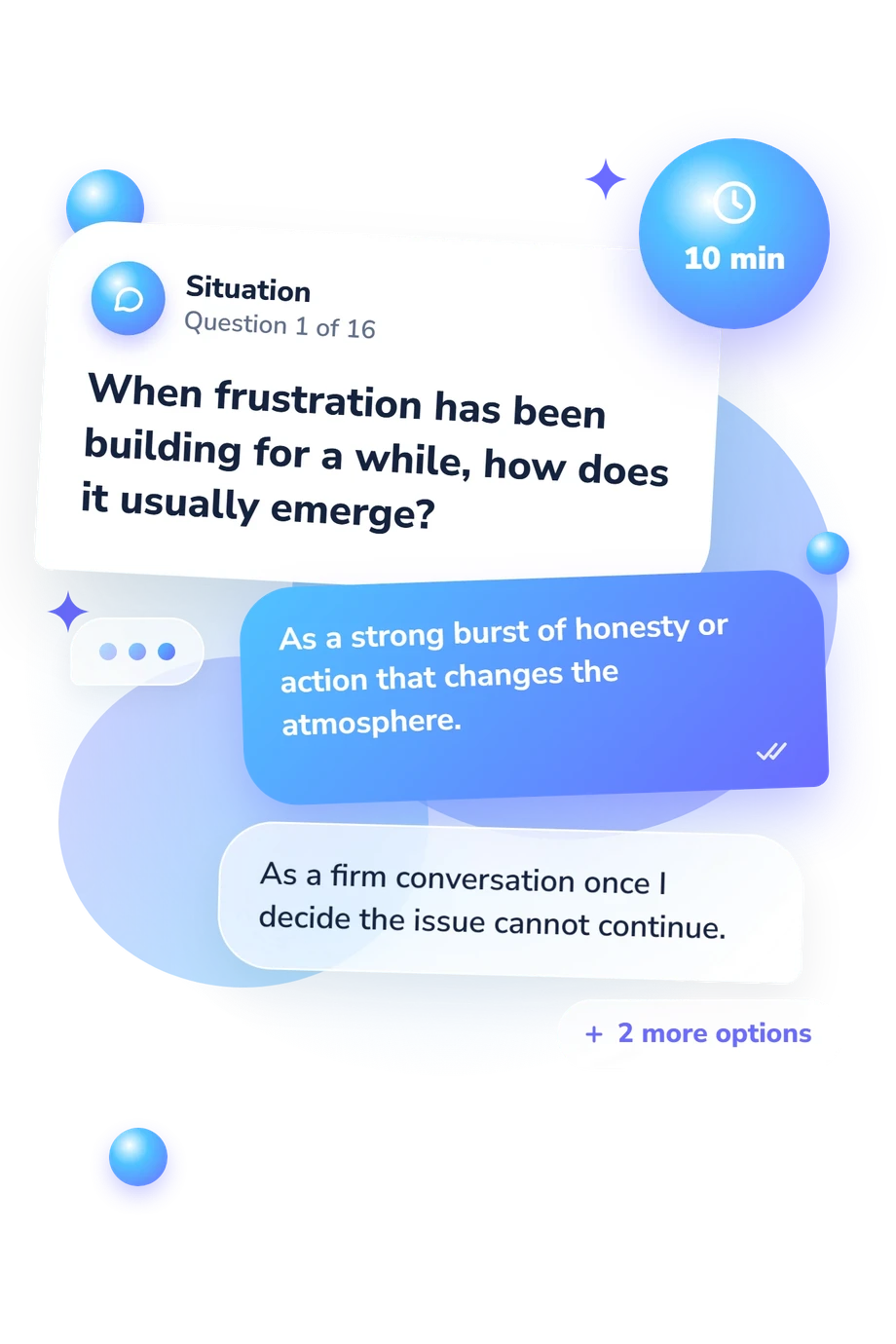
Each item presents a familiar situation with four response options, asking which reaction, pace, or setting feels most natural. The scenarios touch on disagreement, disappointment, change, solitude, social contact, emotional processing, and sustained focus. This approach lets respondents recognize patterns through everyday choices rather than abstract trait labels.
Results are compared across four scales. The highest score indicates the strongest affinity, and scores within one point produce a blended result, so a person may receive a combination rather than a single weather image. The resulting weather personality profile is descriptive rather than a standardized measure, and current mood, context, memory, and self-awareness can shape the self-report.
Loose, metaphorical comparisons are possible with the weather-and-mood study by Klimstra and colleagues, which examines how actual weather affects mood, and with the Big Five Inventory and five-factor model; these sources do not establish the four atmospheric dimensions, validate this questionnaire, or provide norms for it, and the questionnaire is not an adaptation of them.
- Klimstra, T. A., Frijns, T., Keijsers, L., Denissen, J. J. A., Raaijmakers, Q. A. W., van Aken, M. A. G., Koot, H. M., van Lier, P. A. C., & Meeus, W. H. J. (2011). Come rain or come shine: Individual differences in how weather affects mood. Emotion, 11(6), 1495-1499. 10.1037/a0024649
- John, O. P., Donahue, E. M., & Kentle, R. L. (1991). The Big Five Inventory-Versions 4a and 54. Technical Report, Institute of Personality and Social Research, University of California, Berkeley. 10.1037/t07550-000
- McCrae, R. R., & Costa, P. T. (1987). Validation of the five-factor model of personality across instruments and observers. Journal of Personality and Social Psychology, 52(1), 81-90. 10.1037/0022-3514.52.1.81
Updated: