
Beard Quiz
How the Scales are Structured
Who Usually Takes This Test?
See How You Compare
Below is a preview of how scores are typically distributed across each scale.
Example Questions From the Test
- Very short facial hair maintained at a relatively even length
- A mustache paired with hair only on the tip of the chin
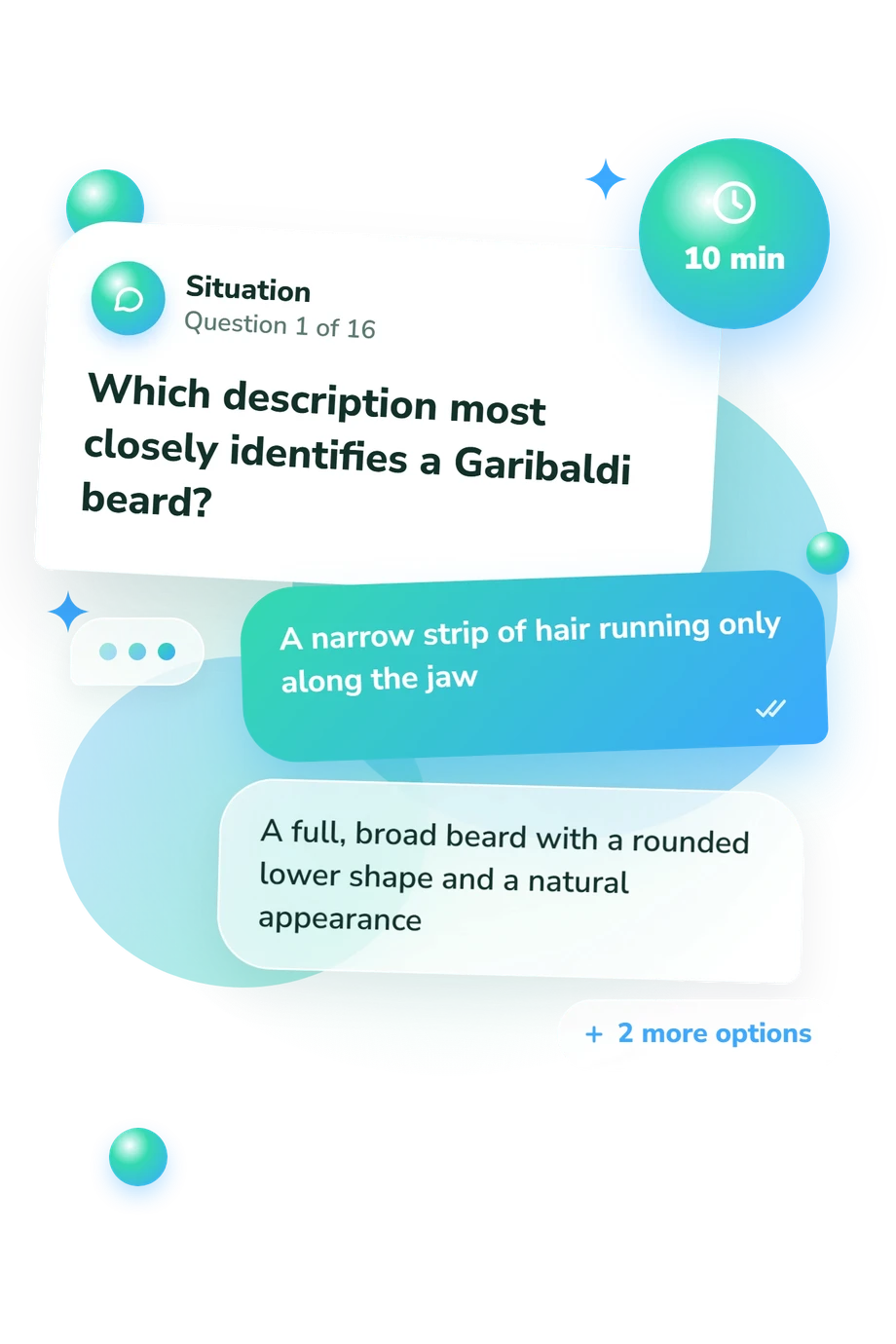
- A broad full beard with a naturally rounded bottom
- A thin strip extending from each sideburn along the jaw
- A bleaching effect that lightens facial hair
- A permanent change to the direction of hair growth
- A closer shave along the beard’s edges
- More styling control and light hold from thicker ingredients
- Water permanently weakens the hair at its root
- The hair can look longer when wet and contract as it dries
- Curly facial hair grows more quickly immediately after washing
- Wet facial hair becomes impossible for clippers to cut evenly
Beard Quiz - Description and methodology of the test
Readers who want to sharpen practical grooming knowledge can use this beard quiz to recognize established styles, choose sensible shaping approaches, and separate useful care from common myths. It suits anyone curious about beard terminology, styling, or routine maintenance. Some questions address whether you can grow a beard, but the result describes knowledge of grooming principles rather than genetics, density, or future growth.
What This Assessment Explores
The questionnaire tests practical knowledge rather than density or appearance. Items ask readers to recognize styles, judge proportions, choose grooming routines, and apply basic hair-and-skin principles. The practical question of what beard style is right for me is addressed through links between style names, shape, coverage, and facial balance, helping readers understand how grooming choices affect a look.
The assessed content falls into three groups:
- Style recognition shows whether you can identify forms such as Garibaldi, Van Dyke, anchor, circle, and handlebar beards.
- Shape and proportion explain how fullness, length, cheek coverage, and neckline placement influence visual balance.
- Routine care and skin knowledge guide choices involving oils, balms, cleansing, trimming, wet curls, sensitive-skin products, dryness, and ingrown hairs.
Beard Knowledge (0-16) is the displayed scale: Foundations to Build covers 0-6, Developing Knowledge covers 7-12, and Strong Knowledge covers 13-16. These bands describe accuracy across the tested content.
Methodology and Scientific Basis
Each item presents a style description, grooming situation, or care claim with several answer options. The respondent selects the best answer, and the online result combines performance into one knowledge score rather than separate clinical or personality scores. This format tests recall and practical judgment, not symptoms or personality.
The content is conceptually consistent with Bearded Gentleman (Peterkin and Burns, 2010), which organizes beard styles and grooming practice. Maurer, Rietzler, Burghardt, and Siebenhaar (2016) address beard hair, facial skin, and shaving challenges. Gray and McMichael (2016) closely match the items on ingrown hairs and grooming-related pseudofolliculitis barbae. These sources support the subject domains; they do not make this questionnaire an adaptation, reproduction, or validation of those publications.
For someone approaching it as a beard growth quiz, missed answers can reveal gaps in shaving myths, hair behavior, or skin care, but the result cannot estimate genetics or future density. This online learning tool has no stated norm group, reliability estimate, or clinical cutoff, so its bands are descriptive levels of quiz performance. Results may reflect guessing, prior grooming experience, current skin concerns, and how carefully each option is read.
- Peterkin A, Burns N. The Bearded Gentleman: The Style Guide to Shaving Face. Vancouver: Arsenal Pulp Press; 2010.
- Maurer M, Rietzler M, Burghardt R, Siebenhaar F. The male beard hair and facial skin - challenges for shaving. International Journal of Cosmetic Science. 2016;38(S1):3-9. 10.1111/ics.12328
- Gray J, McMichael AJ. Pseudofolliculitis barbae: understanding the condition and the role of facial grooming. International Journal of Cosmetic Science. 2016;38(S1):24-27. 10.1111/ics.12331
Updated: