
2 Types of People Quiz
How the Scales are Structured
Who Usually Takes This Test?
See How You Compare
Below is a preview of how scores are typically distributed across each scale.
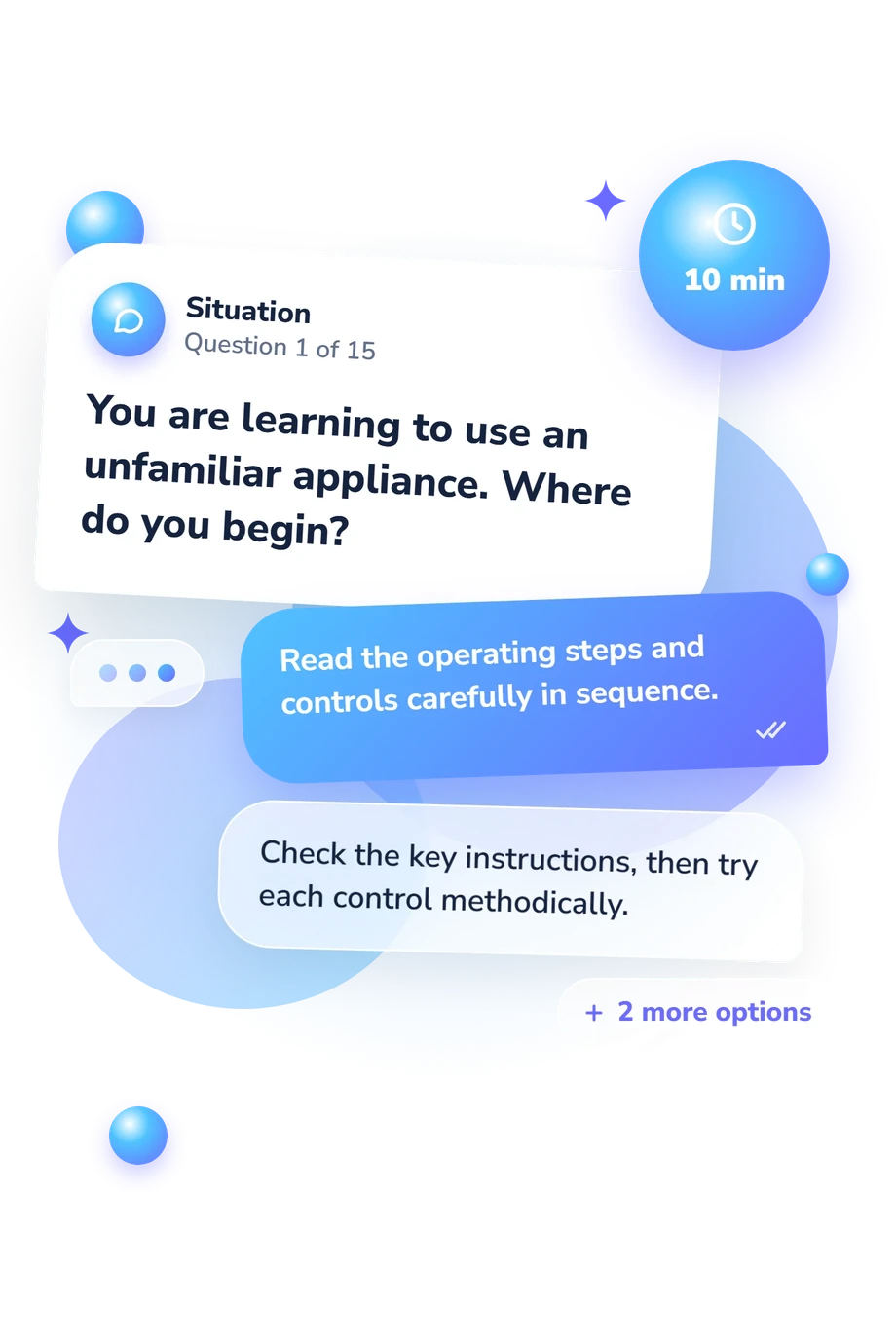
Example Questions From the Test
- Uninterrupted time with a private hobby, show, book, or walk.
- Mostly time alone, with a brief message or conversation.
- A relaxed evening with one or two familiar people.
- A lively shared activity where I can talk and reconnect.
- Enjoy it privately until I have fully taken it in.
- Reflect on it first, then tell one trusted person.
- Contact someone soon because sharing adds to the experience.
- Tell several people immediately and celebrate together.
- Explore independently at my own pace.
- Spend most of it alone and meet someone later.
- Choose an activity with one or two companions.
- Join a group outing and experience the place together.
2 Types of People Quiz - Description and methodology of the test
People seeking a practical snapshot of everyday preferences can use the 2 Types of People Quiz to consider how they notice information, restore energy, and organize activity. It is intended for self-reflection rather than for assigning a permanent identity. The questionnaire presents familiar choices about learning, social contact, and planning as a test of everyday preferences, creating a profile that can make recurring habits easier to discuss.
What This Assessment Explores
Although the format of the two types of people quiz sounds binary, each preference is treated as a continuum. Everyday scenarios show how attention, restoration, and planning operate in context, helping readers name recurring habits without treating a style as fixed.
The three displayed scales describe the following result dimensions:
- Focus Style (0-15) shows whether attention starts with concrete parts or the overall pattern: Detail-First Observer (0-5), Adjustable Lens (6-10), or Big-Picture Observer (11-15).
- Social Recharge (0-15) shows whether restoration comes more through personal space or shared energy: Solo Recharger (0-5), Selective Connector (6-10), or Social Recharger (11-15); it does not measure sociability, confidence, or relationship quality.
- Structure Preference (0-15) shows whether you favor spontaneity or advance structure: Spontaneous Explorer (0-5), Flexible Organizer (6-10), or Deliberate Planner (11-15); neither end is inherently better.
Methodology and Scientific Basis
Each prompt presents a familiar situation with four ordered response choices. The options move from one preference pole through intermediate positions toward the other, so respondents select the description that fits best rather than answer yes or no. Responses produce three separate totals, not one global type score, and the bands turn those totals into descriptive profiles.
Conceptually, the questionnaire is consistent with the Myers-Briggs Type Indicator (Myers et al., 1998), especially its contrasting preferences in perception, energy, and structure. Jung's typological theory supplies the earlier framework, while McCrae and Costa (1989) relate MBTI dimensions to the Five-Factor Model. This online form is not an adaptation or equivalent administration of those instruments.
As a personality style test, it relies on self-report, so current context, self-awareness, and response habits can shape the result. The displayed bands are descriptive rather than diagnostic, and the profile may vary with current circumstances, self-awareness, and the situation being considered; these shifts can appear in learning, social connection, and daily planning. Use the profile to notice patterns and compare them with lived experience.
- Myers, Isabel Briggs, Mary H. McCaulley, Naomi L. Quenk, and Allen L. Hammer. MBTI Manual: A Guide to the Development and Use of the Myers-Briggs Type Indicator. 3rd ed. Palo Alto, CA: Consulting Psychologists Press, 1998.
- McCrae, Robert R., and Paul T. Costa Jr. “Reinterpreting the Myers-Briggs Type Indicator From the Perspective of the Five-Factor Model of Personality.” Journal of Personality 57, no. 1 (1989): 17-40. 10.1111/j.1467-6494.1989.tb00759.x
- Jung, Carl Gustav. Psychological Types. The Collected Works of C. G. Jung, Volume 6. Translated by H. G. Baynes, revised by R. F. C. Hull. Princeton, NJ: Princeton University Press, 1971. Original work published 1921.
Updated: