
Gay Culture Quiz
How the Scales are Structured
Who Usually Takes This Test?
See How You Compare
Below is a preview of how scores are typically distributed across each scale.
Example Questions From the Test
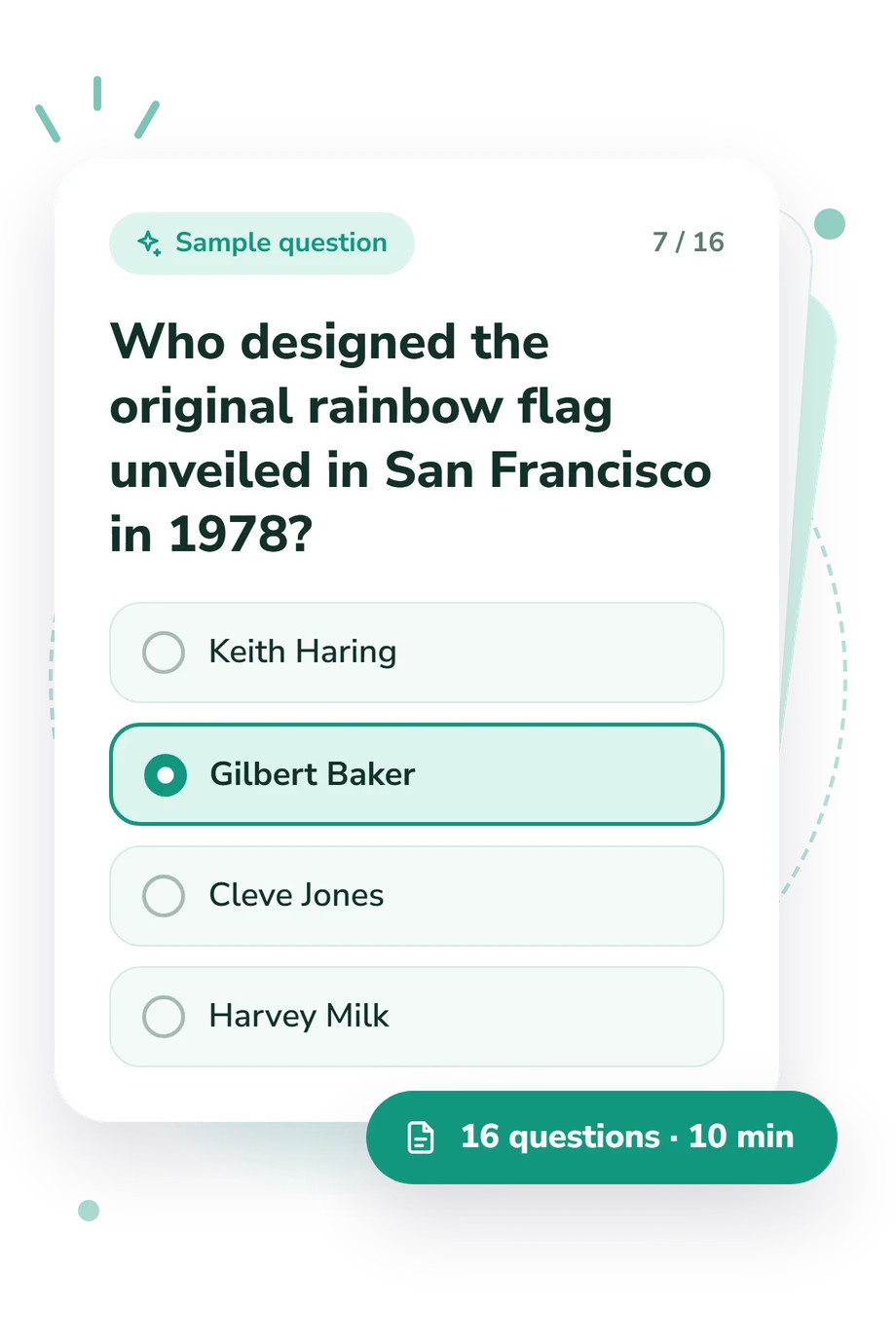
- Keith Haring
- Gilbert Baker
- Cleve Jones
- Harvey Milk
- Oscar Wilde
- Christopher Isherwood
- James Baldwin
- E. M. Forster
- A drag troupe that developed modern voguing
- A direct-action organization created during the AIDS crisis
- A legal group formed to challenge military discharge policies
- An early lesbian rights organization in the United States
Gay Culture Quiz - Description and methodology of the test
Readers who want to place LGBTQ+ references in historical and community context can use the gay culture quiz to check what they recognize and where their knowledge could grow. The questions explore LGBTQ+ history through activism, language, art, public figures, and community traditions, making the activity suited to curious learners and educators. Its result summarizes demonstrated knowledge without treating familiarity as a measure of identity, belonging, or sexual orientation.
What This Assessment Explores
Across public figures, movements, coded language, performance traditions, visual symbols, memorial projects, and landmark events, the questions ask you to connect a person, organization, term, image, or situation with its cultural context. They test recognition and discrimination between related references.
The historical material also places gay history within a wider cultural story, helping learners revisit familiar subjects, spot gaps, and choose topics for further reading.
The displayed scale is Gay Culture Knowledge (0-16), and its bands describe performance as follows:
- Foundations to explore (0-6) indicates recognition of some references while pointing toward people, communities, and movements worth discovering.
- Developing cultural fluency (7-12) shows a solid base across several topics, with room to broaden historical context.
- Strong cultural fluency (13-16) indicates wide-ranging knowledge of the cultural references covered here.
Methodology and Evidence Base
Each item presents a question or short scenario with four answer choices. The result summarizes performance on this introductory question set. Several items distinguish related terms, organizations, symbols, and events, so careful reading helps separate similar references.
Its accessible format offers a fun LGBT quiz experience, yet the subject requires context rather than guessing from isolated facts. Topics include activism, language, film, design, literature, memorialization, and ballroom traditions.
These sources offer historical context rather than psychometric evidence for the questionnaire. Aldrich (2006) supplies a broad cultural-history frame; Clendinen and Nagourney (2001) discuss organized gay-rights activism; Stein (2019) addresses Stonewall and protest history; and Campbell (2019) examines LGBTQ+ visual symbols and design. The questionnaire is conceptually consistent with these works, not a reproduction or adaptation of any one source.
Interpret the outcome as a snapshot of recognition in this set. Education, regional familiarity, wording, and momentary attention can affect performance, so the result is most useful for directing further reading and reflection.
- Aldrich, Robert, ed. Gay Life and Culture: A World History. London: Thames & Hudson, 2006.
- Clendinen, Dudley, and Adam Nagourney. Out for Good: The Struggle to Build a Gay Rights Movement in America. New York: Simon & Schuster, 2001.
- Stein, Marc, ed. The Stonewall Riots: A Documentary History. New York: New York University Press, 2019.
- Campbell, Andy. Queer X Design: 50 Years of Signs, Symbols, Banners, Logos, and Graphic Art of LGBTQ. New York: Black Dog & Leventhal, 2019.
Updated: