
Books of the Bible Quiz
How the Scales are Structured
Who Usually Takes This Test?
See How You Compare
Below is a preview of how scores are typically distributed across each scale.
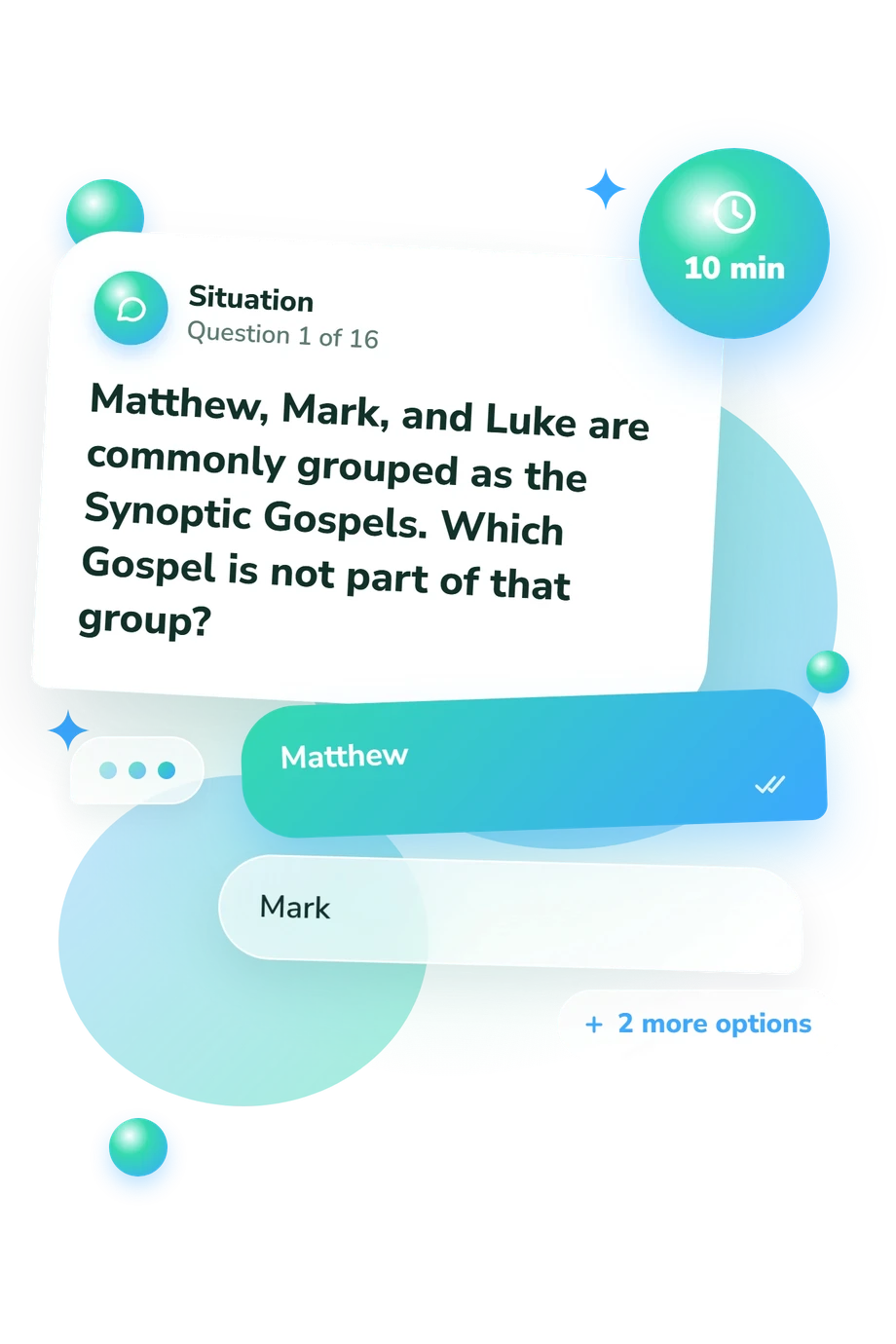
Example Questions From the Test
- Matthew
- Mark
- John
- Luke
- Ruth
- Esther
- Ezra
- Jonah
- Amos
- Ezekiel
- Micah
- Zechariah
Books of the Bible Quiz - Description and methodology of the test
Readers seeking a structured check of biblical familiarity can use this assessment to examine recognition of the Bible’s books, their order, and major groupings. For personal study or teaching preparation, the books of the bible quiz checks factual organization rather than theological commitment. The assessment also works as a Bible knowledge quiz, giving an overall indication of familiarity with biblical organization.
What This Assessment Explores
Within the common Protestant arrangement, this quiz on the 66 books of the Bible checks whether you can identify titles by placement, distinguish related books, recognize broad categories, and connect selected books with memorable content. Its Protestant-canon scope focuses on practical biblical familiarity: knowing where a book belongs and what it is commonly associated with, rather than evaluating belief or interpretive sophistication.
The result can guide review by showing strengths or gaps across these knowledge areas represented:
- Order and placement show how readily you locate a book in the Old or New Testament sequence.
- Groupings and categories show whether you recognize collections such as the Pentateuch, Gospels, Major Prophets, and historical or wisdom books.
- Distinctive content shows whether you connect a title with a notable narrative, theme, event, or literary purpose.
Methodology and Evidence Base
Response options keep the task focused on recognition rather than extended interpretation. In this Bible books quiz, each item presents four choices; each correct response earns one point.
The displayed scale is Books of the Bible Knowledge: 0-16, with Building Foundations (0-6), Developing Knowledge (7-12), and Strong Knowledge (13-16). These bands describe performance within the quiz’s 66-book Protestant-canon scope, not the value of anyone’s faith or scriptural tradition.
The questionnaire is conceptually consistent with the Bible Knowledge Scale, a model for factual biblical knowledge. Its factual-recall approach also relates to Pew Research Center’s religious-knowledge survey and Schnaufer and colleagues’ religious-literacy questionnaire. It is not an adaptation of those works; the displayed bands are quiz-defined descriptive categories.
Interpret the total as a guide to review topics, not a complete measure of religious literacy. Prior study, guessing, wording, current attention, and the limited item selection can affect performance; a correct choice shows recognition of a keyed association, not depth of interpretation or personal commitment.
- Krull, Douglas S., and Rodney A. McCloy. "Add to Your Faith Virtue and to Virtue Knowledge: A Bible Knowledge Scale." Journal of Psychology and Christianity, vol. 41, no. 2, 2022, pp. 106-117.
- Pew Research Center. "What Americans Know About Religion: U.S. Religious Knowledge Survey." July 23, 2019.
- Schnaufer, Evelyn, Mirjam Rutkowski, Antti Räsänen, Christina Osbeck, and Friedrich Schweitzer. "Developing a Research Tool for Investigating Religious Knowledge as Part of Religious Literacy: The Questionnaire - First Results - Possibilities for International Comparisons." Journal of Empirical Theology, vol. 35, no. 2, 2023, pp. 223-250. 10.1163/15709256-20231146
Updated: