
Am I a Scene Kid Quiz
How the Scales are Structured
Who Usually Takes This Test?
See How You Compare
Below is a preview of how scores are typically distributed across each scale.
Example Questions From the Test
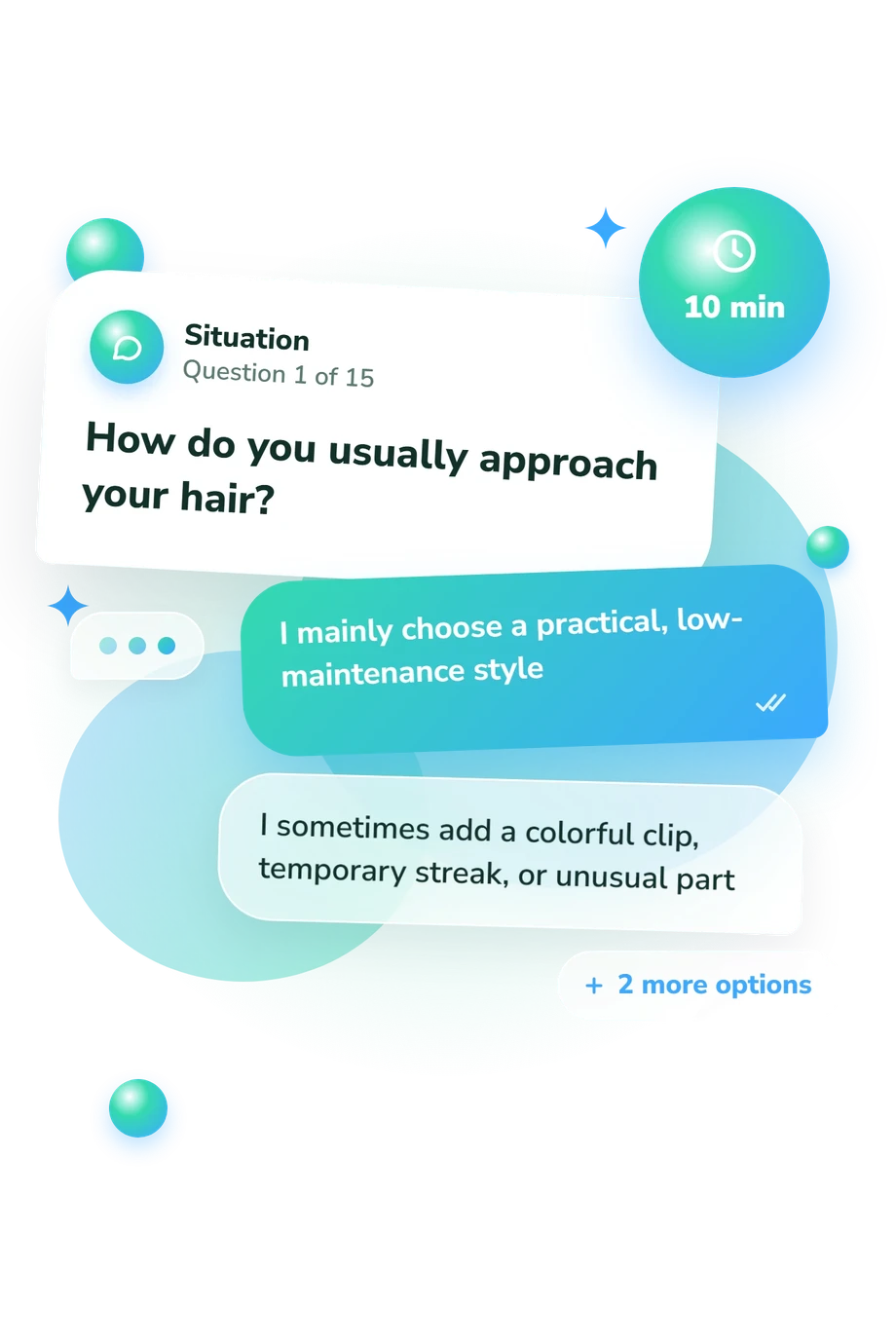
- I mainly choose a practical, low-maintenance style
- I sometimes add a colorful clip, temporary streak, or unusual part
- I like a defined fringe, choppy layers, or noticeable color
- I treat volume, dramatic layers, vivid color, or a sweeping fringe as a major part of my look
- A clean profile focused mainly on practical information or general interests
- A simple layout with one playful image, color, or music reference
- A personalized profile featuring expressive photos, graphics, lyrics, or alternative influences
- A highly customized burst of bold visuals, music references, dramatic captions, and scene nostalgia
- I do not usually seek communities around this interest
- I occasionally view related posts or listen when friends discuss it
- I follow creators, join conversations, or attend relevant events from time to time
- I actively exchange recommendations, creative ideas, looks, or memories in scene-friendly spaces
Am I a Scene Kid Quiz - Description and methodology of the test
People curious about how strongly scene culture fits their self-image can use the Am I a Scene Kid Quiz to organize reactions. Visitors can map separate aspects of their connection through this scene kid identity test instead of forcing a single yes-or-no conclusion about belonging. Its purpose is reflective: the profile lets each person consider how different parts of their relationship with scene culture fit together.
What This Assessment Explores
Identity is treated as multidimensional, combining shared references, participation, music discovery, and visual self-presentation. A single hairstyle, band preference, or popularity level does not determine the profile. The questionnaire treats scene identification as a multidimensional profile, not a yes-or-no label.
Rather than treating this as an are you a scene kid quiz, the result groups themes into three dimensions:
- Scene Community and Identity (0-15) measures resonance with identity, expression, references, and participation: Personal distance (0-5), Flexible connection (6-10), or Strong identification (11-15).
- Scene Music and Culture (0-15) measures engagement with associated sounds and touchstones: Limited connection (0-5), Active interest (6-10), or Deep engagement (11-15).
- Scene Style Expression (0-15) measures affinity for hair, clothing, color, accessories, and visual experimentation: Subtle connection (0-5), Selective expression (6-10), or Strong visual affinity (11-15).
Together, they form a three-part profile, with each area read separately.
Methodology and Scientific Basis
Each item offers four ordered responses, moving from little or no connection toward stronger engagement, expression, or identification. Prompts use everyday choices about hair, profiles, playlists, clothing, communities, concerts, and cultural references. Style prompts appear alongside questions about music, identity, online expression, and community. In this quiz about scene style, the three dimensions can produce an uneven profile.
The displayed dimensions are scored separately, but the questionnaire does not state how many points each response contributes. Read the bands as the instrument’s profile output, not as cutoffs inferred from answer wording.
Conceptually, the content is consistent with Rowe (2012), which links scene identity with participation and self-presentation. Mortara and Ironico (2013) examine emo aesthetics as cultural expression, while Seganti and Smahel (2011) describe personal and social meaning in online subcultural networking. These studies provide qualitative context for the themes in this questionnaire.
The questionnaire is a self-report snapshot: current interests, nostalgia, social context, and self-awareness can influence answers. The displayed bands are descriptive rather than population-based cutoffs; this format has no normative evidence, reliability estimate, or clinical cutoff.
- Rowe, Paula. 2012. "Piercings and Passports: Exploring the Social Mobility of Adelaide's Metalcore 'Scene Kids'." Youth Studies Australia 31(1): 8-15.
- Mortara, Ariela, and Simona Ironico. 2013. "Deconstructing Emo lifestyle and aesthetics: a netnographic research." Young Consumers 14(4): 351-359. 10.1108/YC-03-2013-00355.
- Seganti, Francesca Romana, and David Smahel. 2011. "Finding the meaning of emo in youths' online social networking: A qualitative study of contemporary Italian emo." First Monday 16(7). 10.5210/fm.v16i7.3197.
Updated: