
Do You Like to Poop Your Pants Quiz
How the Scales are Structured
Who Usually Takes This Test?
See How You Compare
Below is a preview of how scores are typically distributed across each scale.
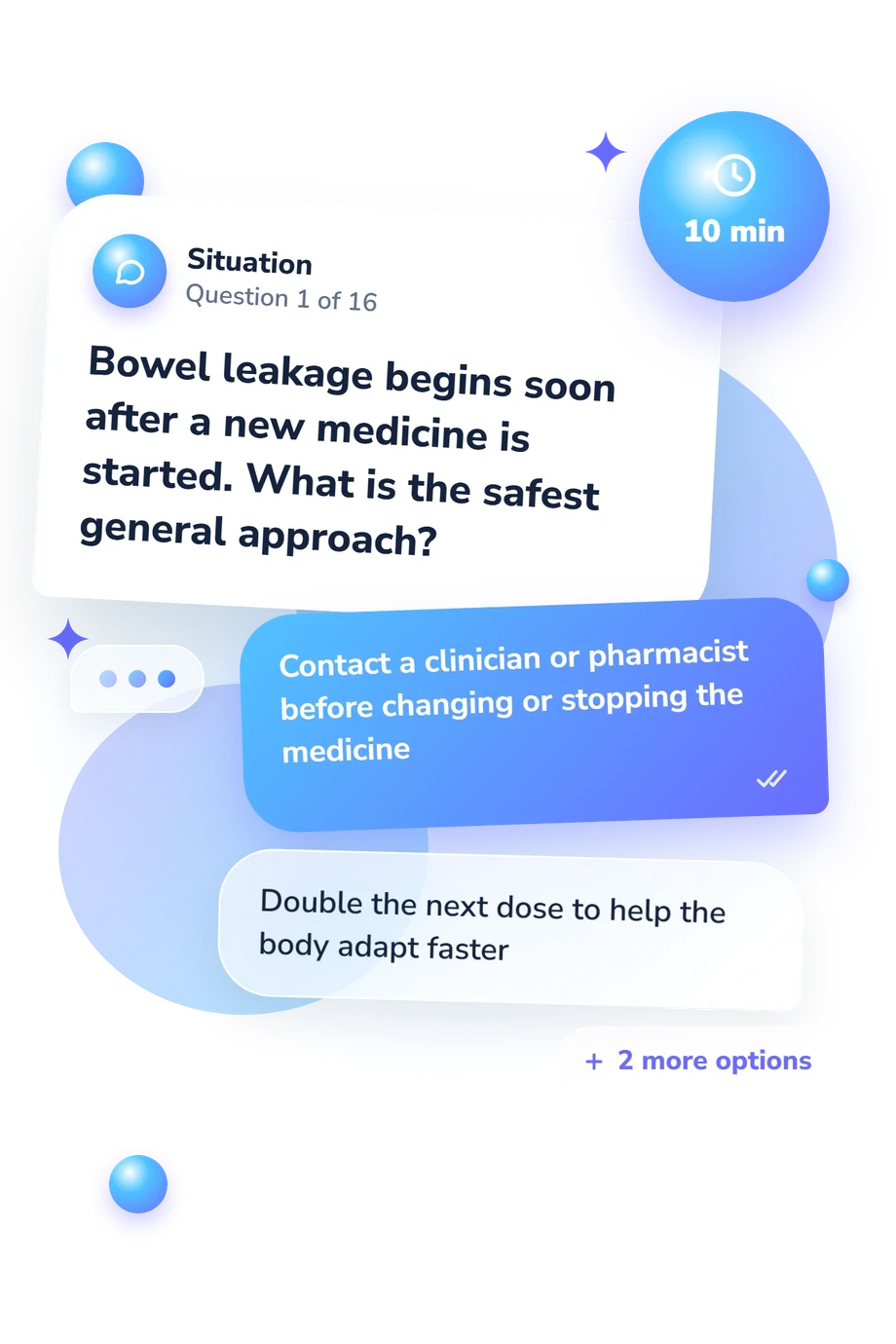
Example Questions From the Test
- Brief gas after eating beans
- One loose stool after an unusually rich meal
- A mild urge that resolves after using the toilet
- Black, tarry stool accompanied by dizziness or weakness
- Seasonal nasal congestion
- Acute diarrhea
- A minor bruise on the arm
- Nearsightedness
- Constipation permanently stops the bowel muscles from working
- Softer stool may leak around a mass of retained hard stool
- Hard stool causes the body to produce urine instead
- Constipation always turns into an intestinal infection
Do You Like to Poop Your Pants Quiz - Description and methodology of the test
For readers deciding whether they need a practical starting point, the Do You Like to Poop Your Pants Quiz offers a focused way to check everyday knowledge rather than personal symptom severity. It suits anyone who wants a clearer sense of what to explore next. The result from this bowel accident quiz can show which topics feel familiar and which deserve closer attention.
What This Assessment Explores
The questions test recognition of accurate information about accidental stool leakage. They cover diarrhea, constipation, medicine changes, urgency, symptom diaries, evaluation, skin care, laundering, toilet planning, and urgent warning signs. In this fecal incontinence quiz, the result reflects knowledge of these topics rather than symptom severity.
The result has one scale, Bowel Accident Knowledge (0-16), covering four topic groups:
- Terminology and causes explain fecal incontinence and common contributors.
- Hygiene and skin care show whether cleaning, drying, laundering, and barrier-care choices are understood.
- Urgency and planning reflect knowledge of responding to bowel signals and locating toilets.
- Warning signs and help-seeking indicate when routine self-care is insufficient.
Foundations to Build (0-6) means key concepts may need review; Developing Knowledge (7-12) reflects many essentials; Strong Knowledge (13-16) indicates solid knowledge. These labels help identify a useful starting point for review.
Methodology and Evidence Base
Each item presents a short scenario or definition with four answer choices. The options distinguish a safer, more accurate response from common misunderstandings across terminology, contributors, hygiene, self-care, help-seeking, and red-flag recognition. The displayed score condenses performance across these checks into one knowledge scale.
Conceptually, the questionnaire is consistent with Joh, Seong, and Ahn (2018), whose published study examined fecal-incontinence knowledge, attitudes, and help-seeking. ASCRS and UEG/ESCP/ESNM/ESPCG guidelines provide clinical context for evaluation, management, skin care, hydration concerns, and urgent symptoms. This questionnaire is not an adaptation of that study or those guidelines; it is an educational questionnaire focused on knowledge.
Interpret the band from this bowel leakage quiz as a review guide: a lower band points to foundational concepts, while a higher band confirms practical strengths and may reveal topics worth revisiting. The bands are educational summaries, not validated medical cutoffs or a diagnosis. Performance may reflect prior knowledge, current circumstances, and how each scenario is understood. Severe pain, significant bleeding, black tarry stool, faintness, confusion, or dehydration warrants prompt or urgent medical help regardless of the score.
- Hee-Kyung Joh, Moo-Kyung Seong, and Hyun-Jun Ahn. Fecal incontinence knowledge, attitudes, and help-seeking behaviors among community-dwelling adults in Korea. Neurourology and Urodynamics. 2018;37(4):1474-1484. 10.1002/nau.23480
- Liliana G. Bordeianou, Amy J. Thorsen, Deborah S. Keller, et al. The American Society of Colon and Rectal Surgeons Clinical Practice Guidelines for the Management of Fecal Incontinence. Diseases of the Colon & Rectum. 2023;66(5):647-661. 10.1097/DCR.0000000000002776
- Sadé L. Assmann, Daniel Keszthelyi, Jos Kleijnen, et al. Guideline for the diagnosis and treatment of Faecal Incontinence-A UEG/ESCP/ESNM/ESPCG collaboration. United European Gastroenterology Journal. 2022;10(3):251-286. 10.1002/ueg2.12213
Updated: