
Classic TV Quiz Questions
How the Scales are Structured
Who Usually Takes This Test?
See How You Compare
Below is a preview of how scores are typically distributed across each scale.
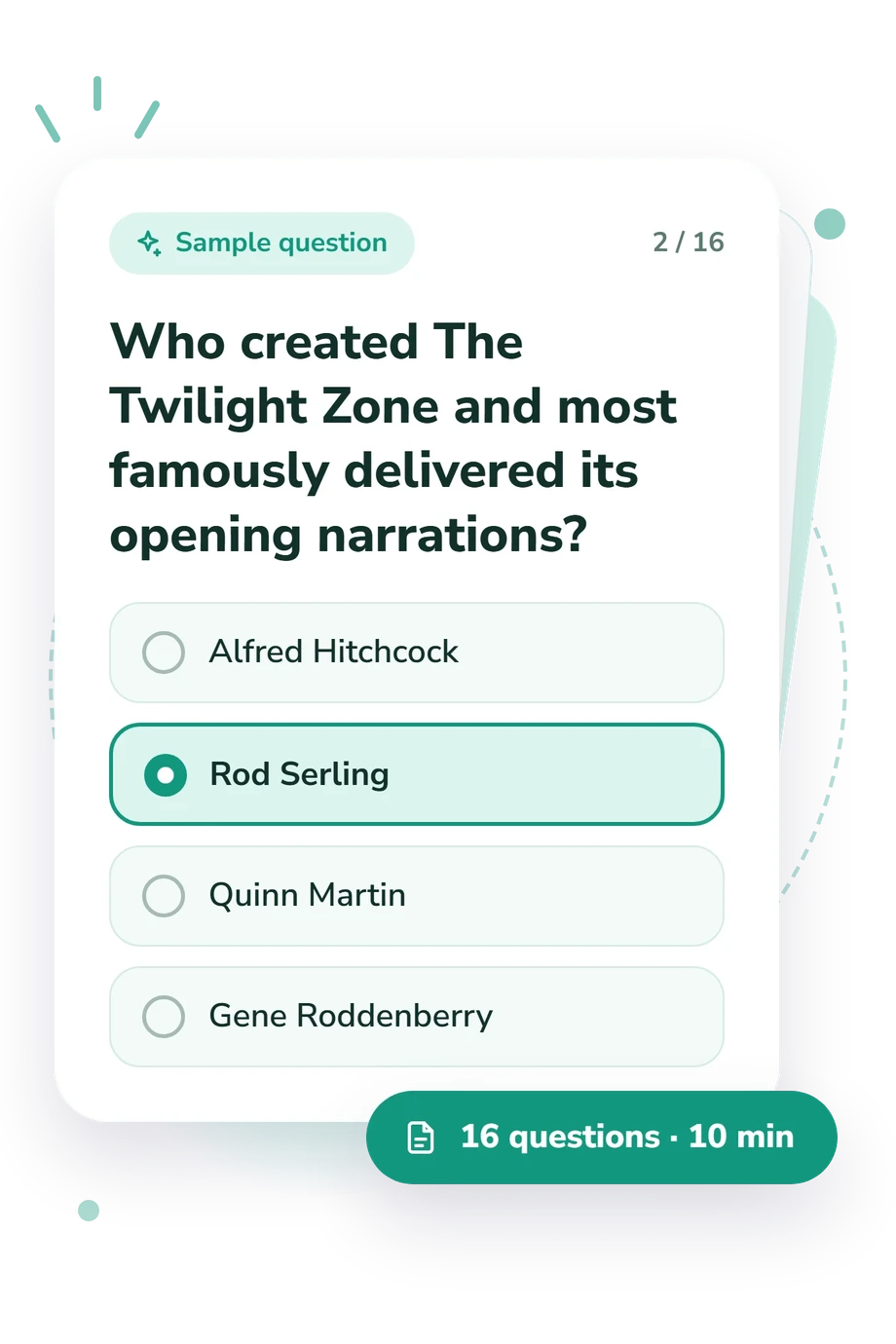
Example Questions From the Test
- A police box
- A railway signal box
- A London taxi
- A telephone booth
- Alfred Hitchcock
- Rod Serling
- Quinn Martin
- Gene Roddenberry
- Steve McGarrett
- Thomas Magnum
- Joe Friday
- Frank Cannon
Classic TV Quiz Questions - Description and methodology of the test
This assessment is for viewers who want to test their knowledge of landmark television and decide whether their familiarity with classic programs is broad or still developing. Classic TV Quiz Questions suits people who enjoy factual recognition across television history. The result from this classic television quiz offers an overall knowledge level to guide further exploration.
What This Assessment Explores
Knowledge of television is measured through programs, characters, settings, signature lines, and plot developments. Items ask for factual recognition of catchphrases, comic characters, and distinctive premises, making this suitable for classic TV trivia.
The content groups are not separate result dimensions:
- Science-fiction items connect unusual premises with a series or character.
- Sitcom items identify family groups, domestic settings, ensemble roles, and comic situations.
- Crime and workplace items identify investigative methods, professional settings, and revelations.
- Catchphrases and locations test recognition of memorable wording and context.
All groups contribute to one total, not separate scores. Results appear as Classic TV Knowledge (0-16): Channel Surfer (0-6) means you recognize parts of classic television history, with room to explore landmark characters and series; Prime-Time Regular (7-12) means solid knowledge across genres and eras; Classic TV Authority (13-16) means broad, precise recognition of iconic shows, characters, settings, and plot points.
Methodology and Evidence Base
Each item presents a short description or recognition prompt followed by four answer choices. The respondent selects the option that best fits the program, character, setting, quotation, or plot event. This is an online knowledge check, not a personality inventory or clinical questionnaire.
A total from this TV history quiz reflects performance across the sampled programs, characters, settings, and plot points; item themes explain the content rather than generate separate strengths. The result bands describe increasing breadth and precision of overall knowledge, not population norms or diagnostic thresholds.
Television reference books provide factual background for the programs and details represented here, but they do not validate the questionnaire’s scoring, standardization, reliability, or validity. This questionnaire is not an adaptation of those books.
Performance also depends on cultural familiarity, prior exposure, memory, and guessing. It has no documented psychometric standardization, population norms, or reliability and validity estimates, so the score is best read as a snapshot of factual knowledge at completion.
- Brooks, Tim, and Earle F. Marsh. The Complete Directory to Prime Time Network and Cable TV Shows, 1946-Present. 9th ed., Ballantine Books, 2007. ISBN 978-0-345-49773-4.
- McNeil, Alex. Total Television: The Comprehensive Guide to Programming from 1948 to the Present. 4th rev. ed., Penguin Books, 1996. ISBN 978-0-14-024916-3.
- Newcomb, Horace, ed. Encyclopedia of Television. 2nd ed., Fitzroy Dearborn, 2004. ISBN 1-57958-411-0. DOI 10.4324/9780203937341.
Updated: