
Dolan Twins Boyfriend Quiz
How the Scales are Structured
Who Usually Takes This Test?
See How You Compare
Below is a preview of how scores are typically distributed across each scale.
Example Questions From the Test
- Ask to use the standard method so the outcome stays predictable
- Suggest testing the shortcut on one small part first
- Laugh, commit to the idea, and help make it memorable
- Let him try it while I focus on keeping the rest organized
- I would rather hear about the finished project over dinner.
- I would offer a few ideas, then suggest another activity.
- I would help for a while if we could keep the plan flexible.
- I would dive in and enjoy inventing the result together.
- Doing something creative together once both of us have had space
- Returning to a familiar routine before discussing it again
- Using a little humor, followed by a straightforward conversation
- Changing scenery and letting the issue settle gradually
Dolan Twins Boyfriend Quiz - Description and methodology of the test
Fans curious about an imagined relationship dynamic may find this questionnaire a light way to clarify what they enjoy. In that setting, a dolan twins boyfriend quiz is less about choosing a real partner than noticing which qualities feel appealing in a playful scenario. It offers a relationship quiz about the Dolan Twins for self-reflection, without turning the exercise into a real-world compatibility decision.
What This Assessment Explores
Questions use imagined dates, competitions, creative projects, routines, tense conversations, and group adventures to reveal preferences about romance, humor, flexibility, teamwork, encouragement, and friendship. The result is a preference profile describing the boyfriend preferences you bring to an imagined scenario, rather than either twin’s actual personality or verified traits.
The three result dimensions are:
- Ethan-Inspired Boyfriend Match (0-15) reflects creative, humorous, spontaneous preference: Different Wavelength (0-5), Shared Spark (6-10), or Strong Ethan Affinity (11-15).
- Grayson-Inspired Boyfriend Match (0-15) reflects drive, structure, practical projects, and direct encouragement: Different Rhythm (0-5), Motivated Connection (6-10), or Strong Grayson Affinity (11-15).
- Twin-Energy Bestie Match (0-15) reflects whether playful teamwork and group connection outweigh romance-led interest: Romance-Led Interest (0-5), Blended Bond (6-10), or Bestie Energy (11-15).
Methodology and Scientific Basis
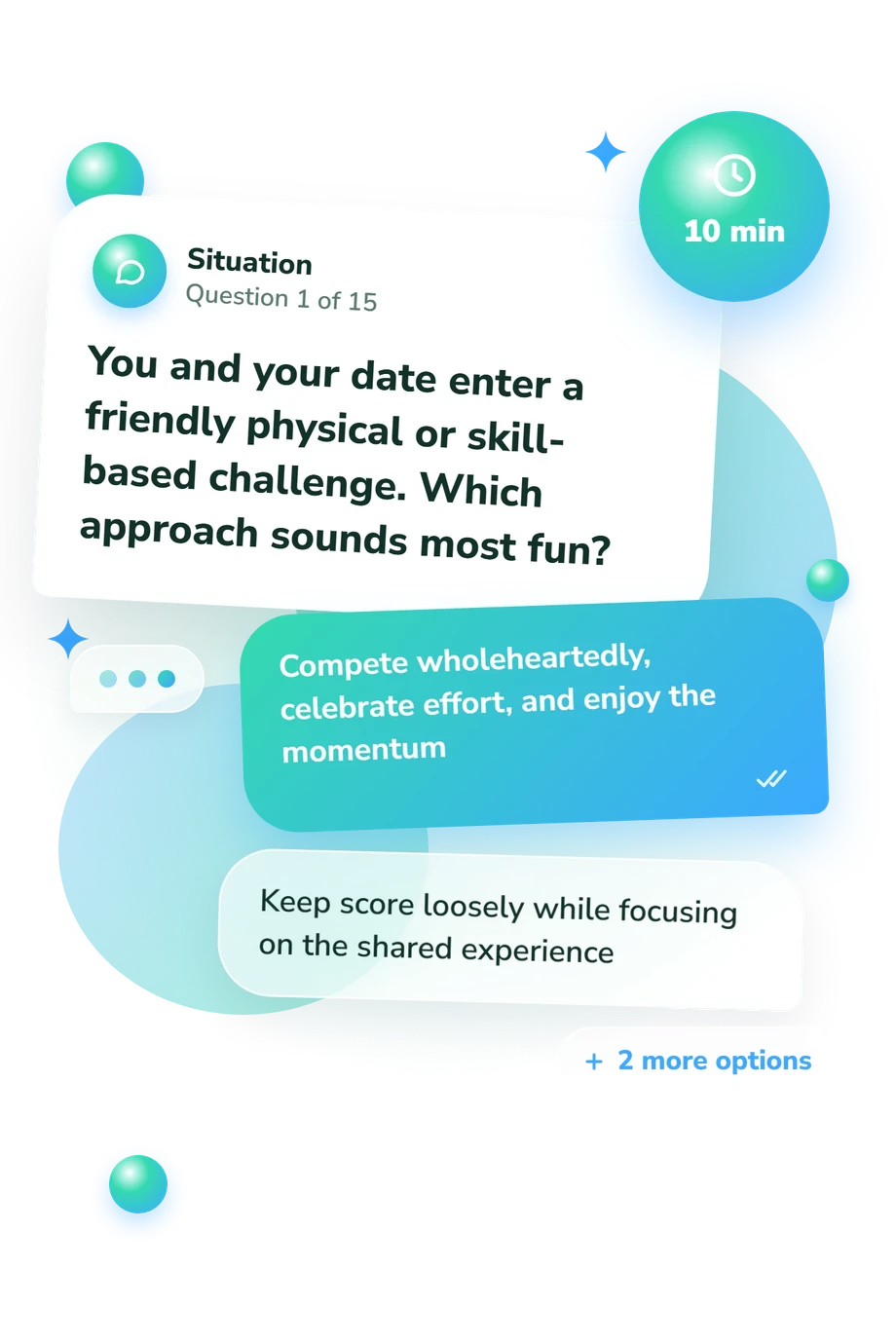
Each of the 15 items offers four response choices about imagined dates, challenges, routines, romance, teamwork, or friendship. The respondent selects the reaction that best fits a preferred scenario rather than reporting an event.
The questionnaire displays results on three separate 0-15 scales. It does not state how individual answer choices contribute to them, so readers should use the named bands rather than infer an unlisted point rule.
Rather than forcing a single answer to which Dolan twin is for you, this quiz presents separate preference dimensions. The bands are descriptive entertainment categories, not a ranking system.
Its focus on imagined bonds with online personalities is conceptually consistent with Rihl and Wegener (2019), who examine parasocial interaction around YouTube celebrities. Tukachinsky (2010) distinguishes para-romantic and para-friend relationships; Rubin, Perse, and Powell (1985) provide an earlier account of parasocial interaction. These sources address the subject matter, not this exact item set or scoring.
Self-report results can shift with mood, fandom involvement, and familiarity with the twins' public personas. Treat the profile as a snapshot of a preferred scenario, not evidence of real compatibility or diagnosis.
- Alexander Rihl and Claudia Wegener (2019). YouTube celebrities and parasocial interaction: Using feedback channels in mediatized relationships. Convergence, 25(3), 554-566. 10.1177/1354856517736976
- Riva Tukachinsky (2010). Para-romantic love and para-friendships: Development and assessment of a multiple-parasocial relationships scale. American Journal of Media Psychology, 3(1/2), 73-94.
- A. M. Rubin, E. M. Perse, and R. A. Powell (1985). Loneliness, parasocial interaction, and local television news viewing. Human Communication Research, 12(2), 155-180. 10.1111/j.1468-2958.1985.tb00071.x
Updated: