
Celebrity Eyes Quiz
How the Scales are Structured
Who Usually Takes This Test?
See How You Compare
Below is a preview of how scores are typically distributed across each scale.
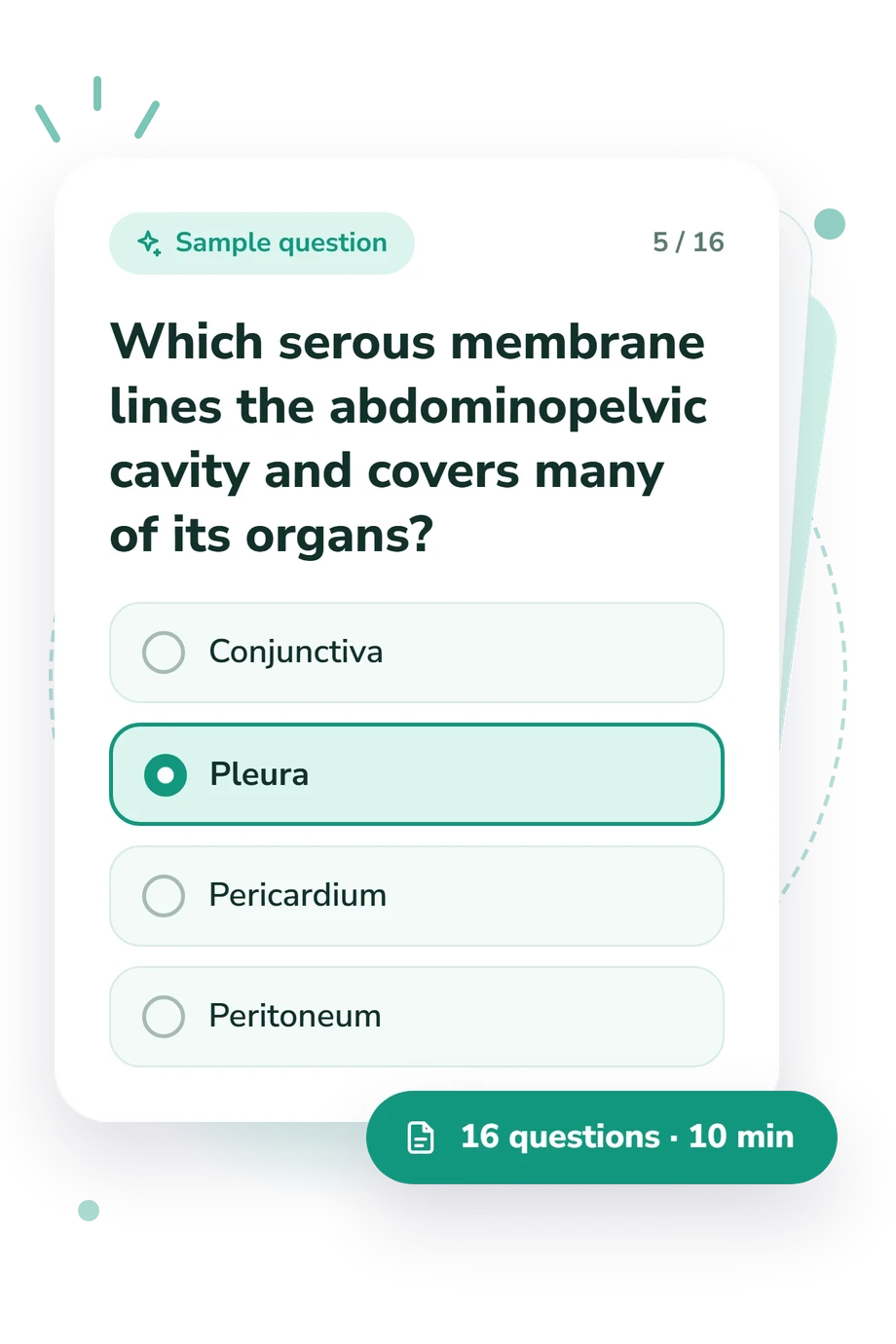
Example Questions From the Test
- Connective tissue
- Muscle tissue
- Nervous tissue
- Covering epithelium
- It anchors the organ rigidly to the cavity wall
- It supplies oxygen by replacing nearby blood vessels
- It creates voluntary contractions of the organ
- It reduces friction as the organ moves
- Conjunctiva
- Pleura
- Pericardium
- Peritoneum
Celebrity Eyes Quiz - Description and methodology of the test
Designed for learners who want to connect recognizable eye features with foundational anatomy, the Cell Tissue Quiz checks whether you can move from observation to explanation. It suits students, curious readers, and anyone revising basic histology or body membranes. As a quiz on cells and tissues, it turns visual examples into an educational knowledge profile, showing your overall level across celebrity-eye facts, eye tissues, and serous membranes.
What This Assessment Explores
The questions connect celebrity-related eye observations with foundational anatomy. They cover iris color, eyelid appearance, injury history, corneal protection, retinal signaling, pupil movement, tissue categories, and serous membranes. You apply terms to brief situations rather than merely recognizing definitions.
The single displayed scale is Celebrity Eyes, Tissues, and Serous Membranes Knowledge: 0-16. It combines three themes:
- Celebrity-eye knowledge measures whether you can distinguish visible features, named conditions, and relevant facts.
- Eye-tissue knowledge shows whether you can match the sclera, cornea, retina, and iris with their tissue roles.
- Serous-membrane knowledge reflects whether you can identify pleura, pericardium, and peritoneum and distinguish their layers.
Foundations to build (0-6) signals review needs; Developing knowledge (7-12) indicates partial command; Strong knowledge (13-16) indicates accurate connections. This cell anatomy quiz's single total indicates broad review needs across the combined subject areas, not separate topic scores.
Methodology and Scientific Basis
Each item presents a short prompt with four answer choices. Some test recognition, while others require selecting the tissue, membrane, or anatomical explanation that fits a brief situation. The format combines factual recall with basic application rather than ratings of symptoms or personality.
Methodologically, the cited sources support the anatomy and histology concepts rather than the celebrity-specific facts. Betts et al. (2022) and Mescher (2021) cover tissue classes, epithelial organization, muscle types, eye coverings, and serous membranes. Pleural distinctions also align with Charalampidis et al. (2015), particularly the visceral and parietal layers and the fluid-filled pleural space. This tissue classification quiz uses established concepts but is not a reproduction of those published works.
Scoring summarizes correct responses across the three subject areas and places the single total in the displayed learning bands. Because the score combines them, it indicates broad review needs rather than topic-specific performance. The result is educational rather than medical guidance. Familiarity with celebrity facts, terminology, attention, and current memory may affect performance, so the result is a time-specific snapshot of educational knowledge.
- Betts JG, Young KA, Wise JA, Johnson E, Poe B, Kruse DH, Korol O, Johnson JE, Womble M, DeSaix P. Anatomy and Physiology 2e. Houston, TX: OpenStax; 2022. ISBN: 978-1-711494-06-7.
- Mescher AL. Junqueira's Basic Histology: Text and Atlas. 16th ed. New York, NY: McGraw Hill; 2021. ISBN: 978-1-260-46298-2.
- Charalampidis C, Youroukou A, Lazaridis G, et al. Pleura space anatomy. Journal of Thoracic Disease. 2015;7(Suppl 1):S27-S32. 10.3978/j.issn.2072-1439.2015.01.48
Updated: