
Automobile Quiz
How the Scales are Structured
Who Usually Takes This Test?
See How You Compare
Below is a preview of how scores are typically distributed across each scale.
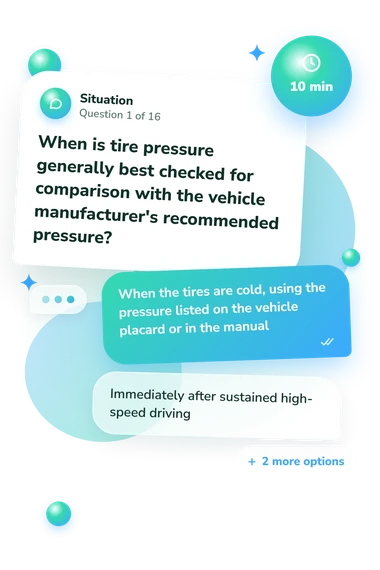
Example Questions From the Test
- Its resistance to uncontrolled combustion known as engine knock
- The amount of energy contained in each gallon
- The percentage of detergent additives in the fuel
- How quickly the fuel evaporates in cold weather
- Compression, intake, exhaust, power
- Intake, power, compression, exhaust
- Intake, compression, power, exhaust
- Power, exhaust, compression, intake
- A measurement of the engine's intake airflow
- A code that states the recommended tire pressure only
- A standardized 17-character vehicle identification number
- A digital record of every trip made by the vehicle
Automobile Quiz - Description and methodology of the test
Drivers, students, and curious learners can use this automobile quiz to check how well they understand common vehicle systems and everyday safety decisions. This car knowledge quiz offers a focused starting point for revising automotive basics, identifying gaps, or choosing topics for further study. The score gives a simple indication of performance on the knowledge items and highlights areas that deserve attention.
What This Assessment Measures
Across the items, the assessment examines understanding of automobile operation, maintenance, terminology, and safety situations. It is intended for anyone wanting a practical snapshot of how well they connect automotive ideas with everyday situations. Taking this basic car knowledge quiz can show which knowledge areas need review.
These are the knowledge themes represented in the result:
- Vehicle operation: questions in this theme test recognition of engines, transmissions, differentials, and propulsion systems.
- Maintenance and terminology: these items test understanding of tire pressure, temperature alerts, VINs, octane ratings, and routine care.
- Safety and control: these questions test knowledge of ABS, hydroplaning, regenerative braking, and speed management.
Automobile Knowledge is the displayed scale, scored from 0-16: Foundation Building (0-6), Developing Knowledge (7-12), and Strong Knowledge (13-16). The bands reflect performance across these items and show how broadly the material was answered correctly.
Methodology and Evidence Base
Each item uses four-option multiple choice, asking the respondent to select the best answer to a technical or driving situation. The mix of terminology and safety questions requires recall plus understanding of basic mechanisms. As an automotive quiz, it treats each correct response as evidence about that item, not the respondent overall.
Scoring is direct: every correct answer adds one point to the raw total, and the resulting band summarizes the breadth of correct answers. The score from this auto quiz is an informal snapshot influenced by prior instruction, vehicle familiarity, and individual item wording.
The questionnaire is a digital knowledge check, not an adaptation of a named published instrument. The digital format is comparable to the computer-based automotive assessment discussed by Hartmann, Güzel, and Gschwendtner, which separates computer testing from hands-on performance. The 2014 standards issued by AERA, APA, and NCME support interpreting scores in relation to purpose and available evidence. The questionnaire has no stated standardization, population norms, or reliability estimates, so its total should be read as an informal indication of performance on these items.
- Finch, Curtis R. Troubleshooting Instruction in Vocational-Technical Education Via Dynamic Simulation: Final Report. Pennsylvania State University, Department of Vocational Education; Pennsylvania Department of Education, Bureau of Vocational, Technical, and Continuing Education, 1971. ERIC Document ED055204.
- Hartmann, Stefan, Emre Güzel, and Tobias Gschwendtner. "Digital measurement of hands-on performance? Ecological validation of a computer-based assessment of automotive repair skills." Empirical Research in Vocational Education and Training, vol. 15, article 15, 2023. 10.1186/s40461-023-00153-x
- American Educational Research Association, American Psychological Association, and National Council on Measurement in Education. Standards for Educational and Psychological Testing. American Educational Research Association, 2014.
Updated: