
Weight Gain Quiz
How the Scales are Structured
Who Usually Takes This Test?
See How You Compare
Below is a preview of how scores are typically distributed across each scale.
Example Questions From the Test
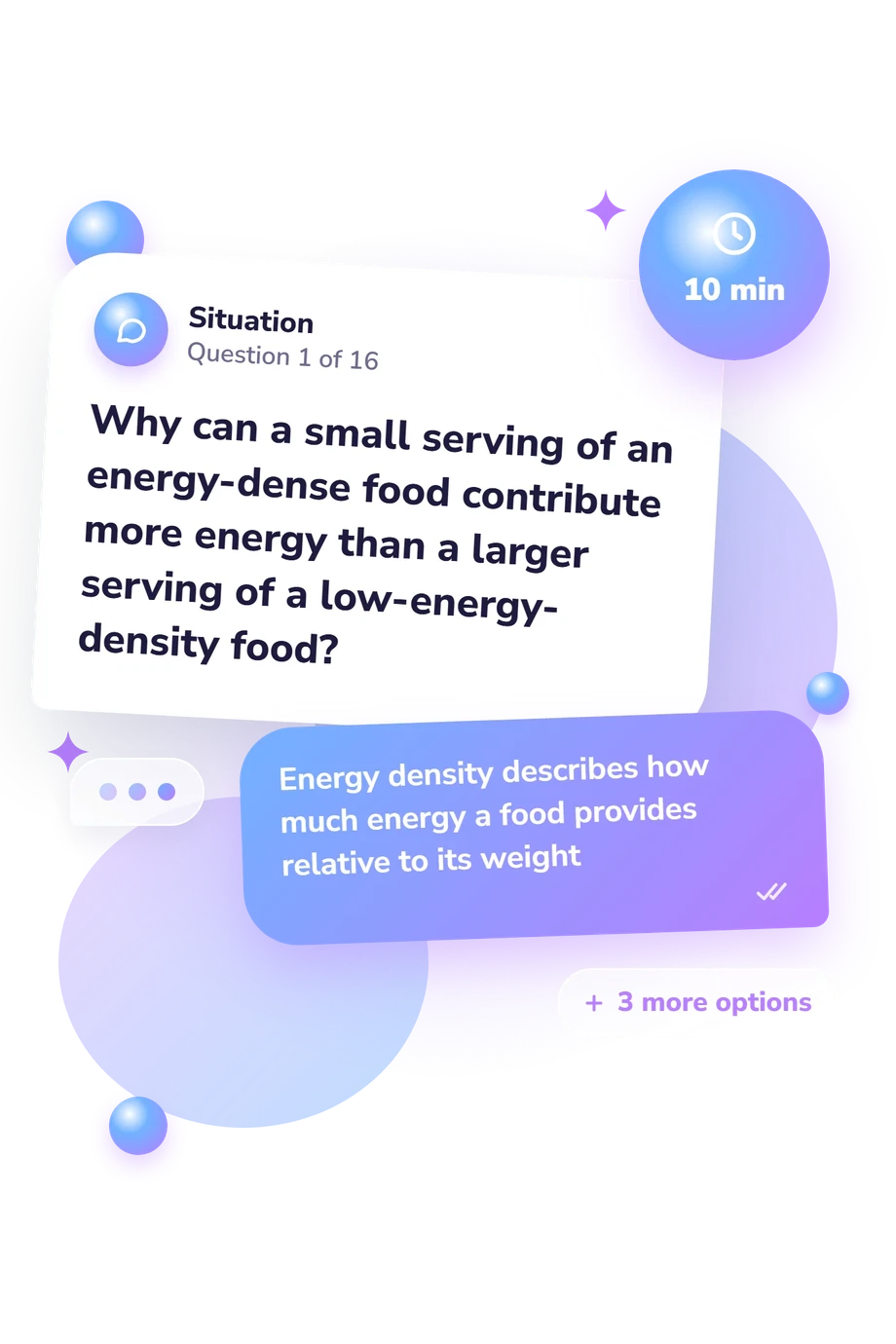
- Energy density describes how much energy a food provides relative to its weight
- Small servings are always digested twice
- Larger portions contain no energy when they include water
- The body's energy use depends only on the physical size of a meal
- It identifies the medical cause of a person's weight change
- It can only be calculated for people who exercise regularly
- It directly measures the amount of fluid retained by the body
- It does not directly distinguish fat, muscle, bone, or fat distribution in an individual
- Temporary thirst after exercise and warmth on a hot day
- Muscle soreness after a new workout and improved appetite
- Brief hunger before lunch and tiredness after staying up late
- Persistent fatigue, feeling unusually cold, and constipation
Weight Gain Quiz - Description and methodology of the test
Readers trying to interpret a changing scale may benefit from a structured review of the explanations that commonly get confused. In that role, the weight gain quiz focuses on practical knowledge rather than predicting what one person’s body will do. It suits self-reflection around food, fluid, muscle, medicines, health conditions, and measurement, especially when a simple number feels inconclusive.
What This Assessment Explores
The questionnaire examines whether a respondent can separate ordinary fluctuation from longer-term change and recognize that body weight reflects more than fat. Its value for understanding weight gain lies in applying basic concepts to everyday situations, not predicting one person’s outcome.
The main themes are:
- Energy balance and food composition explain how energy density and sustained intake relative to expenditure affect body mass.
- Measurement limits show why BMI and a single scale reading cannot identify every component of change.
- Fluid, muscle, and routines help distinguish digestion, sodium, training, sleep, and daily variation from stored fat.
- Health and treatment factors flag medicines, thyroid patterns, midlife changes, and rapid swelling for attention.
The displayed result is Weight Gain Knowledge, scored 0-16: Foundation to build (0-6), Developing knowledge (7-12), or Strong knowledge (13-16). These are educational, unvalidated summaries of knowledge. They do not estimate personal likelihood or clinical risk.
Methodology and Scientific Basis
Each item uses four answer choices and asks for the best-supported explanation. The set covers mechanisms, measurement, symptoms, medicines, healthy weight-gain practices, and situations where timing or severity changes the appropriate response. It is therefore a knowledge check with applied examples, not a tool for estimating a target weight.
Scoring reflects correct answers across the presented material. The total can show which concepts need review, especially for someone considering unexplained weight gain, but it does not transform a body measurement into a diagnosis.
The structure is conceptually consistent with the Weight Management Nutrition Knowledge Questionnaire (Mikhail et al., 2020), not an adaptation or validated reproduction of it. Hall and colleagues’ energy-balance model supports the distinction between intake, expenditure, and stored tissue. Medici and colleagues support the medication theme, while Kapoor and colleagues support the midlife and menopause context.
Tracking weight changes under similar conditions can add context because fluid and digestion affect single readings. Interpretation is also limited by self-report, current circumstances, and personal interpretation of questions. Rapid swelling with breathing difficulty, chest pain, fainting, or other severe symptoms calls for prompt medical attention rather than an online result.
- Mikhail D, Rolls B, Yost KJ, Balls-Berry JE, Gall M, Blixt K, Novotny PJ, Albertie M, Jensen MD. Development and validation testing of a weight management nutrition knowledge questionnaire for adults. International Journal of Obesity. 2020;44(3):579-589. 10.1038/s41366-019-0510-1
- Hall KD, Heymsfield SB, Kemnitz JW, Klein S, Schoeller DA, Speakman JR. Energy balance and its components: implications for body weight regulation. American Journal of Clinical Nutrition. 2012;95(4):989-994. 10.3945/ajcn.112.036350
- Medici V, McClave SA, Miller KR. Common Medications Which Lead to Unintended Alterations in Weight Gain or Organ Lipotoxicity. Current Gastroenterology Reports. 2016;18(1):2. 10.1007/s11894-015-0479-4
- Kapoor E, Collazo-Clavell ML, Faubion SS. Weight Gain in Women at Midlife: A Concise Review of the Pathophysiology and Strategies for Management. Mayo Clinic Proceedings. 2017;92(10):1552-1558. 10.1016/j.mayocp.2017.08.004
Updated: