
Drug Attitude Inventory (DAI-30) Test
How the Scales are Structured
Who Usually Takes This Test?
See How You Compare
Below is a preview of how scores are typically distributed across each scale.
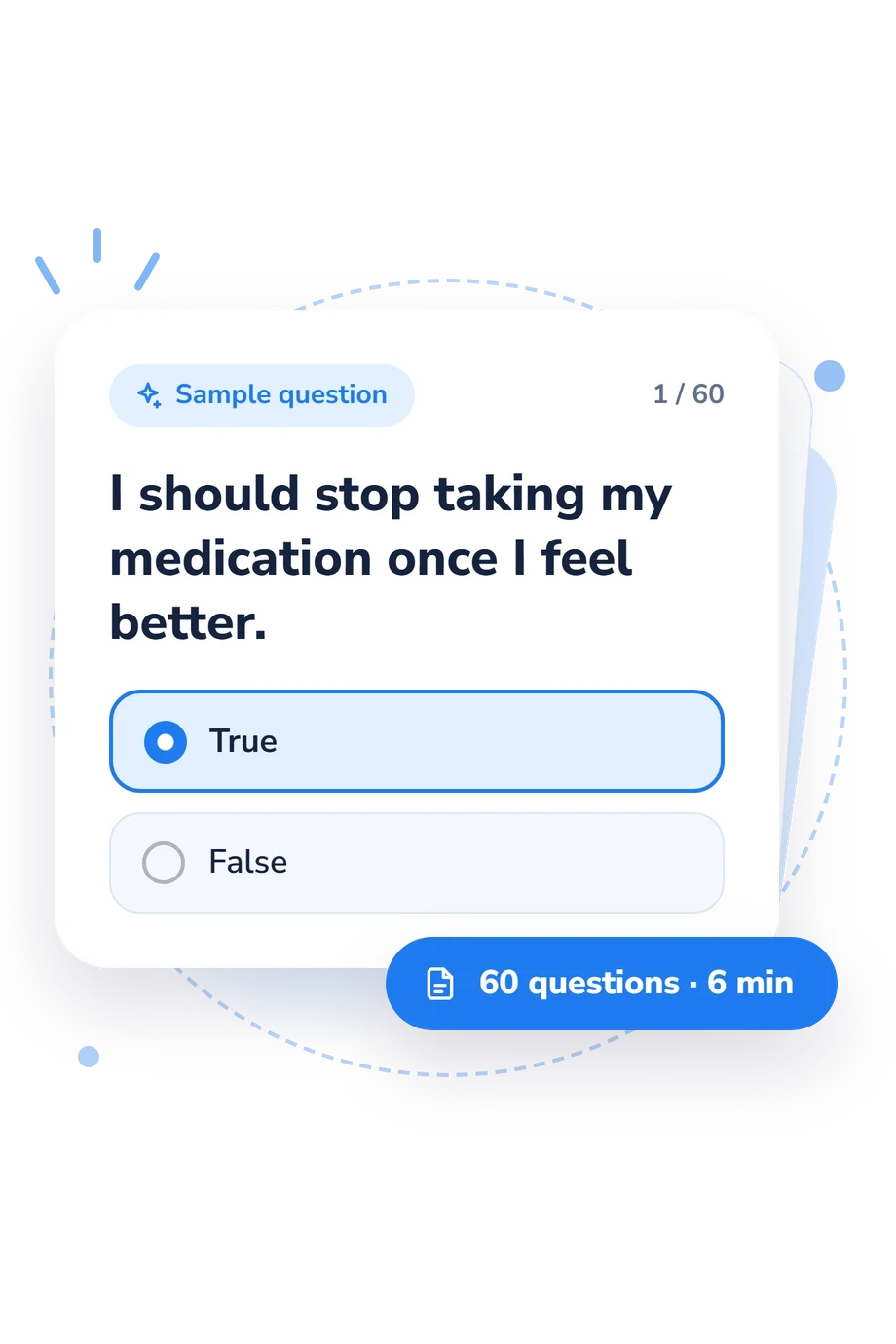
Example Questions From the Test
- True
- False
- True
- False
- True
- False
Drug Attitude Inventory (DAI-30) Test - Description and methodology of the test
People considering how they respond to prescribed medication may use the Drug Attitude Inventory (DAI-30) Test to organize reactions that can affect cooperation with treatment. As a treatment adherence questionnaire, it focuses on perceived benefits, unwanted effects, autonomy, and confidence in continuing care. The result gives respondents a concise profile of attitudes that may support more focused self-reflection.
What This Assessment Explores
In this format, the DAI-30 questionnaire examines reactions to medication and beliefs about ongoing treatment. Statements address benefits, side effects, alertness, concentration, autonomy, social functioning, relapse prevention, and stopping decisions. The result describes treatment attitude and readiness to follow recommendations rather than symptom severity.
The three result types describe these dimensions:
- Negative Attitude: 0-15 measures negative responses associated with resistance or unwillingness; Low negative attitude 0-5, Moderate negative attitude 6-10, High negative attitude 11-15.
- Positive: 0-15 measures positive responses associated with willingness to cooperate; Low positivity 0-5, Moderate positivity 6-10, High positivity 11-15.
- Treatment Attitude: -15-15 measures overall adherence and readiness to follow medical recommendations; Negative attitude / non-compliance -15--1, Positive attitude / compliance 0-15.
Together, the scores show whether resistance or cooperation is more prominent.
Methodology and Evidence Base
Each statement asks respondents to mark whether it is true or false for them, covering beliefs and experiences related to medication and treatment. Items address benefits, side effects, perceived control, and decisions about starting or stopping treatment. The result reports separate counts of positive and negative responses and a total; positive totals indicate compliance, while negative totals indicate non-compliance.
The questionnaire addresses attitudes toward medication and ongoing treatment. The published DAI-30 supplies the conceptual and psychometric reference, with research examining reliability and discriminative validity, while this online form presents the displayed result bands. Research on subjective experiences of antipsychotic medication is relevant to the questionnaire’s attention to perceived benefits and burdens, including how these experiences may relate to treatment outcomes and quality of life.
Interpret the result as a structured snapshot: responses may reflect current treatment experiences, side effects, clinical conversations, social pressure, and self-awareness, and the result can highlight beliefs to explore without showing how consistently treatment is followed in daily life.
- Hogan, T. P., Awad, A. G., & Eastwood, R. (1983). A self-report scale predictive of drug compliance in schizophrenics: Reliability and discriminative validity. Psychological Medicine, 13(1), 177-183. 10.1017/S0033291700050182
- Awad, A. G., Hogan, T. P., Voruganti, L. N. P., & Heslegrave, R. J. (1995). Patients' subjective experiences on antipsychotic medications: Implications for outcome and quality of life. International Clinical Psychopharmacology, 10(Suppl. 3), 123-132. 10.1097/00004850-199509000-00016
Updated: