
Freudly+971 508685814hello@freudly.ai
Freudly
depression

Neurotic Disorders Questionnaire Test
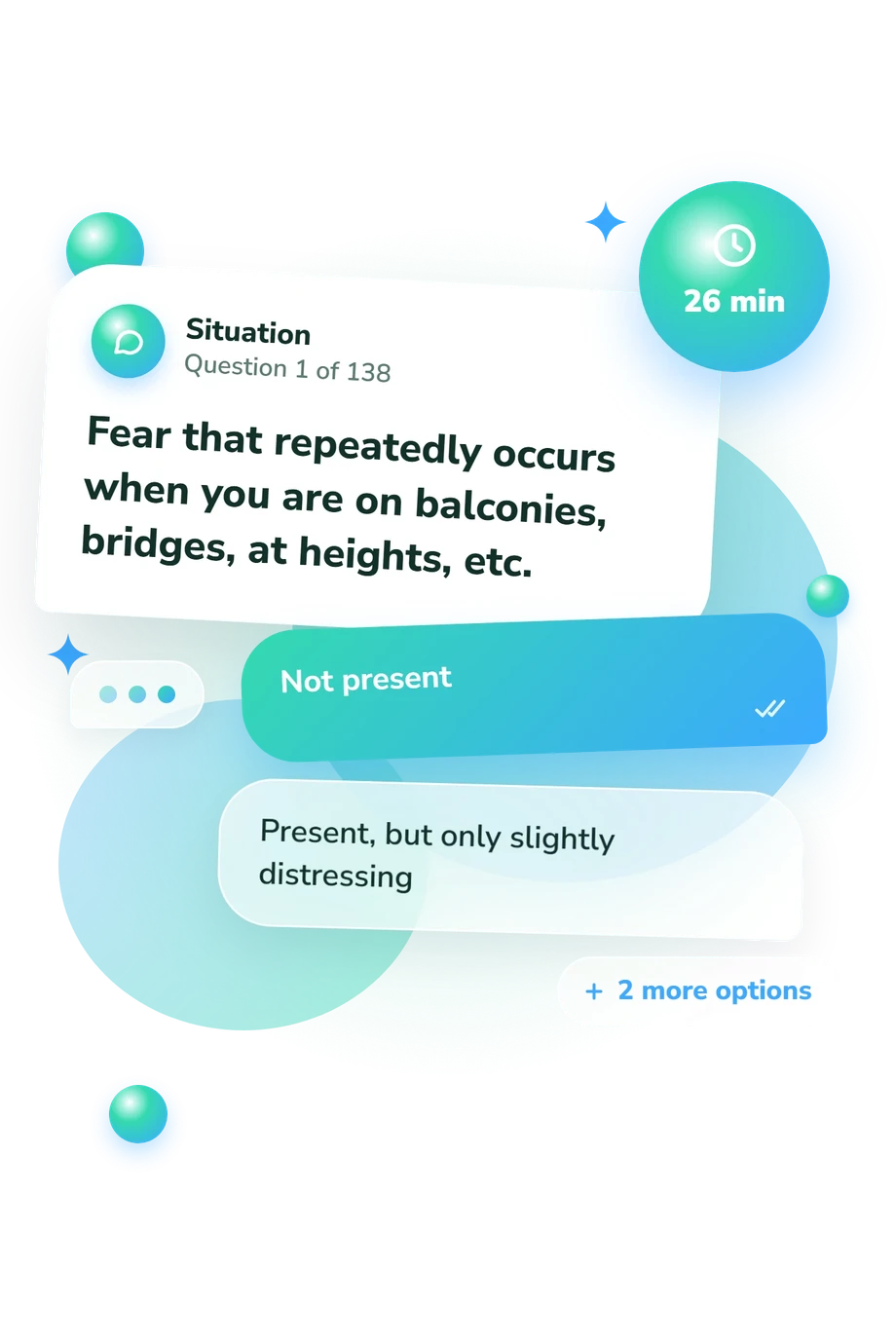
Take the online Neurotic Disorders Questionnaire Test - AI psychologist FreudlyYou can take Neurotic Disorders Questionnaire Testhere. Online version of a simple and accurate psychological test with interpretation.en
Clarify the severity and impact of neurotic symptoms in about 26 minutes. A 138 item format supports diagnosis, guides treatment decisions, and helps track progress over time.
Start Online Test
Questions: 13826 minutes
08:30
October 2, 2025
October 2, 2025
Material has been updated
October 2, 2025
Material has been published
18,375 views
1,462 completions
1,231 likes
Verified by Daniel Hall
Psychologist with 25 years of experience
Share
Scale Explorer

How the Scales are Structured

example score
50/100
Somatic Complaints (SC)
Measures the extent of bodily (somatic) complaints that may be associated with psycho-emotional strain.
Low
Moderate
High
033: Low | 3466: Moderate | 67100: High
A score of 50 falls in the Moderate range, suggesting a noticeable but not pronounced level of somatic symptoms that may be linked to emotional factors.
example score
75/100
Psychasthenic Symptoms (PS)
Measures the severity of psychasthenic traits such as indecisiveness, doubt, excessive introspection, and anxiety-related tension.
Low
Moderate
High
033: Low | 3466: Moderate | 67100: High
A score of 75 falls in the High range, suggesting a more pronounced tendency toward doubt, indecision, and anxious introspection compared with lower scores on this scale.
example score
80/100
Hypochondriacal Disorders (HD)
This scale assesses the extent of excessive health-related worry and preoccupation with having or developing illnesses.
Low
Moderate
High
033: Low | 3466: Moderate | 67100: High
A score of 80 falls in the High range, indicating a pronounced tendency toward persistent health-related concerns and heightened attention to bodily sensations.
example score
22/100
Difficulties in Social Contacts (DiSC)
Assesses the extent of difficulties in establishing and maintaining social interactions that may be linked to anxiety or insecurity.
Low difficulties
Moderate difficulties
High difficulties
033: Low difficulties | 3466: Moderate difficulties | 67100: High difficulties
A score of 22 falls in the Low difficulties range, suggesting relatively few reported problems with initiating or sustaining social contacts.
example score
51/100
Obsessions (O)
Assesses the severity of intrusive thoughts, urges, repetitive behaviors, or fears associated with obsessive-compulsive symptom patterns.
Low
Moderate
High
033: Low | 3466: Moderate | 67100: High
A score of 51 falls in the Moderate range, suggesting a noticeable but not extreme level of obsessive thoughts or compulsive tendencies on this scale.
example score
47/100
Derealization (D)
Measures the intensity of derealization experiences such as feeling that the surroundings are unreal or distant.
Low
Moderate
High
033: Low | 3466: Moderate | 67100: High
A score of 47 falls in the Moderate range, suggesting a noticeable but not extreme level of derealization-related experiences.
example score
84/100
Sexual Dysfunction (SD)
Assesses the severity of self-reported sexual difficulties that may accompany anxiety, depressive, or other neurotic symptoms.
Low
Moderate
High
033: Low | 3466: Moderate | 67100: High
A score of 84 falls in the High range, suggesting pronounced sexual difficulties are being reported on this scale.
example score
46/100
Neurasthenic Disorders (ND)
Measures the severity of neurasthenic features such as fatigue, irritability, and reduced performance.
Low
Moderate
High
033: Low | 3466: Moderate | 67100: High
A score of 46 falls in the Moderate range, suggesting a noticeable but not pronounced level of fatigue/irritability-related complaints on this scale.
example score
25/100
Histrionic Disorders (HD)
Measures the degree of histrionic (hysterical) traits such as emotional lability, demonstrativeness, and theatricality.
Low
Moderate
High
033: Low | 3466: Moderate | 67100: High
A score of 25 falls in the Low range, suggesting relatively minimal expression of histrionic traits on this scale.
example score
66/100
Sleep Disturbance (SD)
Assesses the severity of sleep problems such as difficulty falling asleep, frequent awakenings, or non-restorative sleep.
Low
Moderate
High
033: Low | 3466: Moderate | 67100: High
A score of 66 falls in the Moderate range, indicating noticeable sleep disturbances that may be affecting sleep quality.
example score
38/100
Worry and Tension (WaT)
Measures the intensity of internal restlessness, anxiety, and psychological tension.
Low
Moderate
High
033: Low | 3466: Moderate | 67100: High
A score of 38 falls in the Moderate range, suggesting a noticeable but not pronounced level of anxiety and tension.
example score
17/100
Depressive Disorders (DD)
Assesses the presence and severity of depressive symptoms such as low mood, reduced interest, and low energy.
Low
Moderate
High
033: Low | 3466: Moderate | 67100: High
A score of 17 falls in the Low range, suggesting relatively mild depressive symptom severity on this scale.
example score
73/100
Fear and Phobias (FaP)
Assesses the severity of fears and phobic avoidance related to specific situations or objects.
Low
Moderate
High
033: Low | 3466: Moderate | 67100: High
A score of 73 falls in the High range, suggesting more pronounced fear and phobic-avoidance tendencies compared with lower scores.
example score
40/100
Overall Index (OI)
Measures the overall severity of neurotic symptoms aggregated across all questionnaire scales.
Low
Moderate
High
033: Low | 3466: Moderate | 67100: High
A score of 40 falls in the Moderate range, suggesting a noticeable overall level of neurotic symptoms compared to lower scores.
Start Online Test
just completed the test
DATA-BASED USER COHORTS

Who Usually Takes This Test?

Therapy Intake Clients
41%OF USERS
People starting or restarting psychotherapy who want a structured picture of neurotic symptoms and how they affect daily functioning.
Patients in Psychiatric Care
34%OF USERS
Individuals seeing a psychiatrist for anxiety-like, somatic, or obsessive symptoms who need clearer diagnostic detail to guide treatment.
Progress Monitoring Patients
25%OF USERS
People already in treatment who take the questionnaire periodically to track symptom changes and evaluate therapy effectiveness.
BASED ON AGGREGATED, ANONYMIZED DATA FROM TENS OF THOUSANDS OF FREUDLY USERS.
Benchmarking

See How You Compare

Once you complete the test, your results are compared with real-world data from people in your country.
Below is a preview of how scores are typically distributed across each scale.
Somatic Disorders (SD)
Average
28.7
Normal range
1641.3
min.
0
max.
100
This curve shows how scores are typically distributed.
Once you complete the test, your result will appear on the scale so you can see how you compare.
Psychasthenic Disorders (PD)
Average
73.6
Normal range
59.288
min.
0
max.
100
This curve shows how scores are typically distributed.
Once you complete the test, your result will appear on the scale so you can see how you compare.
Hypochondriacal Disorders (HD)
Average
50.4
Normal range
33.967
min.
0
max.
100
This curve shows how scores are typically distributed.
Once you complete the test, your result will appear on the scale so you can see how you compare.
Difficulties in Social Interactions (DiSI)
Average
48.9
Normal range
31.566.3
min.
0
max.
100
This curve shows how scores are typically distributed.
Once you complete the test, your result will appear on the scale so you can see how you compare.
Obsessions (O)
Obsessions (O)
Average
30.4
Normal range
12.448.4
min.
0
max.
100
This curve shows how scores are typically distributed.
Once you complete the test, your result will appear on the scale so you can see how you compare.
Derealization (D)
Derealization (D)
Average
41.1
Normal range
2854.2
min.
0
max.
100
This curve shows how scores are typically distributed.
Once you complete the test, your result will appear on the scale so you can see how you compare.
Sexual disorders (Sd)
Average
48
Normal range
31.764.3
min.
0
max.
100
This curve shows how scores are typically distributed.
Once you complete the test, your result will appear on the scale so you can see how you compare.
Neurasthenic Disorders (ND)
Average
30.6
Normal range
16.444.8
min.
0
max.
100
This curve shows how scores are typically distributed.
Once you complete the test, your result will appear on the scale so you can see how you compare.
Histrionic Disorders (HD)
Average
31.2
Normal range
15.347.1
min.
0
max.
100
This curve shows how scores are typically distributed.
Once you complete the test, your result will appear on the scale so you can see how you compare.
Sleep Disturbance (SD)
Average
46.7
Normal range
32.261.3
min.
0
max.
100
This curve shows how scores are typically distributed.
Once you complete the test, your result will appear on the scale so you can see how you compare.
Anxiety, tension (At)
Average
73.9
Normal range
56.591.4
min.
0
max.
100
This curve shows how scores are typically distributed.
Once you complete the test, your result will appear on the scale so you can see how you compare.
Depressive Disorders (DD)
Average
62.9
Normal range
45.780
min.
0
max.
100
This curve shows how scores are typically distributed.
Once you complete the test, your result will appear on the scale so you can see how you compare.
Fear, Phobias (FP)
Fear, Phobias (FP)
Average
49
Normal range
34.363.8
min.
0
max.
100
This curve shows how scores are typically distributed.
Once you complete the test, your result will appear on the scale so you can see how you compare.
Overall score (Os)
Overall score (Os)
Average
47.4
Normal range
33.561.2
min.
0
max.
100
This curve shows how scores are typically distributed.
Once you complete the test, your result will appear on the scale so you can see how you compare.
Featured On
SAMPLE QUESTIONS

Example Questions From the Test

The questions in this questionnaire address symptoms and difficulties that are commonly observed in neurotic disorders. Information about which of these have been present during the past week will help clarify what is currently causing distress. Please read each question carefully and select the response option that best reflects the extent to which each symptom or difficulty has bothered you.
    • Not present
    • Present, but only slightly distressing
    • Present, moderately severe
    • Present and very distressing
    • Not at all
    • Present, but only slightly distressing
    • Moderate
    • Severe and very distressing
    • Not present
    • Present, but only slightly distressing
    • Present, moderately severe
    • Present and very distressing
WHAT THE TEST MEASURES
About This Assessment
Questionnaire for Neurotic Disorders, NND-Ci Test

Neurotic Disorders Questionnaire Test - Symptoms and Signs

depression
phobias
obsessiveness
neuronalization

Clinicians may use the Neurotic Disorders Questionnaire as a self-report inventory to quantify the presence and severity of neurotic symptom patterns and related distress. It is intended to support clinical formulation and monitoring when neurotic symptoms are a focus of assessment. The instrument includes 138 items and typically takes about 26 minutes to complete.

Responses can be summarized to provide an estimate of symptom burden that may be integrated with interview data, behavioral observations, and other measures. In practice, the Neurotic Disorders Questionnaire may be used to track change over time and to inform treatment planning, while interpretation should remain contextual and consistent with the individual’s clinical presentation.

Author: Hans J. Eysenck
Literature: Barlow, D. H. Anxiety and its disorders: the nature and treatment of anxiety and panic. Guilford Press. 2014.; Aleksandrowicz, J. W., et al. Symptoms Check List “S” and “O”: tools used for diagnosis and description of neurotic disorders. Psychoterapia. 1981.
Popular tests
Comments
Leave a Comment