
Homecoming Dress Quiz
How the Scales are Structured
Who Usually Takes This Test?
See How You Compare
Below is a preview of how scores are typically distributed across each scale.
Example Questions From the Test
- In airy layers of chiffon or tulle that float with each step
- With a smooth satin drape that feels soft but controlled
- In a structured fabric softened by one delicate feature
- With crisp, geometric lines and almost no flowing movement
- Pearl or crystal studs, a neat clutch, and understated shoes
- One traditional accessory combined with a few fresher accents
- Clean metallic pieces that make the outfit feel sleek and current
- Playful accessories with mixed colors, shapes, or textures
- A graphic black, white, or metallic palette with strong contrast
- One saturated color presented with minimal decoration
- A versatile neutral in a recognizable formal style
- A soft floral palette with gentle color transitions
Homecoming Dress Quiz - Description and methodology of the test
Choosing a look for homecoming becomes easier when you can name the details that feel most natural to you. This homecoming dress quiz is for anyone comparing silhouettes, fabrics, colors, accessories, and levels of sparkle before making a choice. As a homecoming dress personality quiz, it turns those preferences into a practical style profile for browsing, fittings, and outfit planning.
What This Assessment Explores
The questionnaire examines preferences in silhouette, fabric, color, accessories, movement, and visual impact. It suits anyone choosing a homecoming look who wants language for personal taste; as a quiz for the perfect homecoming dress, it guides style comparisons without forcing one trend.
The four result dimensions are:
- Classic Elegance (0-12) measures tailored, timeless polish; Different Direction (0-4), Selective Classic (5-8), and Strong Classic Affinity (9-12) show increasing alignment.
- Modern Edge (0-12) measures sleek lines and unexpected cuts; Different Direction (0-4), Contemporary Accent (5-8), and Strong Modern Affinity (9-12) mark the bands.
- Soft Romance (0-12) measures flowing movement and delicate detail; Different Direction (0-4), Romantic Accent (5-8), and Strong Romantic Affinity (9-12) describe the result.
- Spotlight Glam (0-12) measures sparkle, shine, and bold presence; Understated Direction (0-4), Measured Glam (5-8), and Strong Glam Affinity (9-12) indicate the level.
Methodology and Scientific Basis
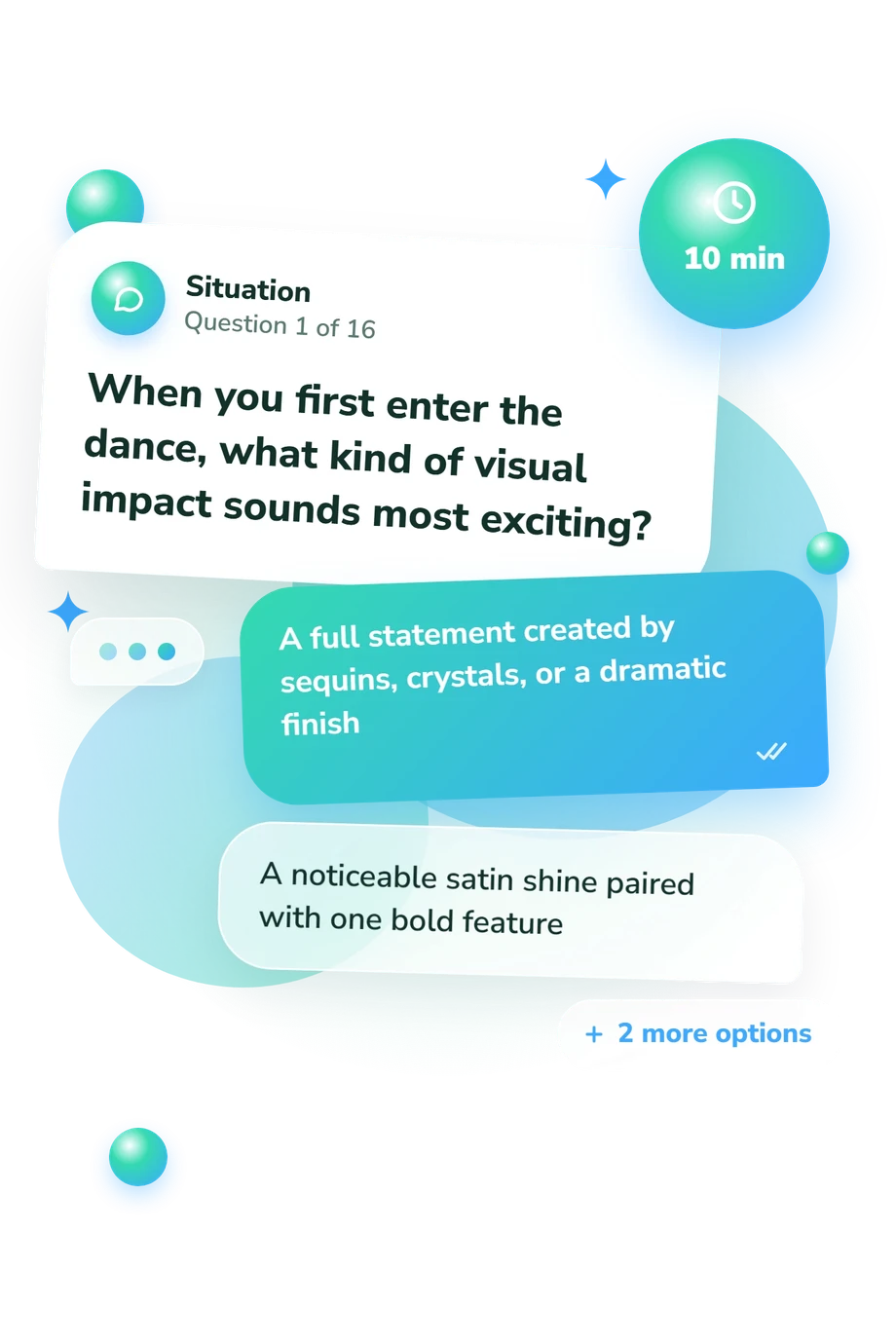
Each prompt presents a styling situation with four response options about silhouette, movement, accessories, color, or shine. There are no correct answers; select the option that best matches your preference. This makes the format a homecoming dress style quiz rather than a test of fashion knowledge.
Responses produce four profile scores. Mixed results can show how timeless structure, modern details, softness, or glamour combine in one style. The bands indicate relative strength, not pass marks or rankings, so interpret the profile as a pattern of tendencies.
Conceptually, the questionnaire is consistent with Cho and Fisher (1986), which links clothing choices with recognizable style types. It also relates to Stolovy (2021) on clothing, personality, and body image; Sontag and Lee (2004) on clothing and the self; and Kang, Johnson, and Kim (2013) on clothing and mood. These sources provide context, not evidence that this questionnaire is a standardized adaptation.
Self-report means current mood, the event, and familiarity may shape answers. Use the result as a homecoming dress personality quiz for comparing dresses and accessories, not as a fixed personality measurement.
- Cho, Emily, Neila Fisher, and Hermine Lueders. (1986). It's You! Looking Terrific, Whatever Your Type. New York: Villard Books. ISBN 978-0-394-55129-6.
- Stolovy, Tali. (2021). Styling the Self: Clothing Practices, Personality Traits, and Body Image Among Israeli Women. Frontiers in Psychology, 12, 719318. DOI 10.3389/fpsyg.2021.719318.
- Sontag, M. Suzanne, and Jongnam Lee. (2004). Proximity of Clothing to Self Scale. Clothing and Textiles Research Journal, 22(4), 161-177. DOI 10.1177/0887302X0402200402.
- Kang, Ju-Young M., Kim K. P. Johnson, and Jieun Kim. (2013). Clothing functions and use of clothing to alter mood. International Journal of Fashion Design, Technology and Education, 6(1), 43-52. DOI 10.1080/17543266.2012.762428.
Updated: