
Freudly+971 508685814hello@freudly.ai
Freudly
cyberpsychology

Adolescent Psychological Problems Questionnaire Test
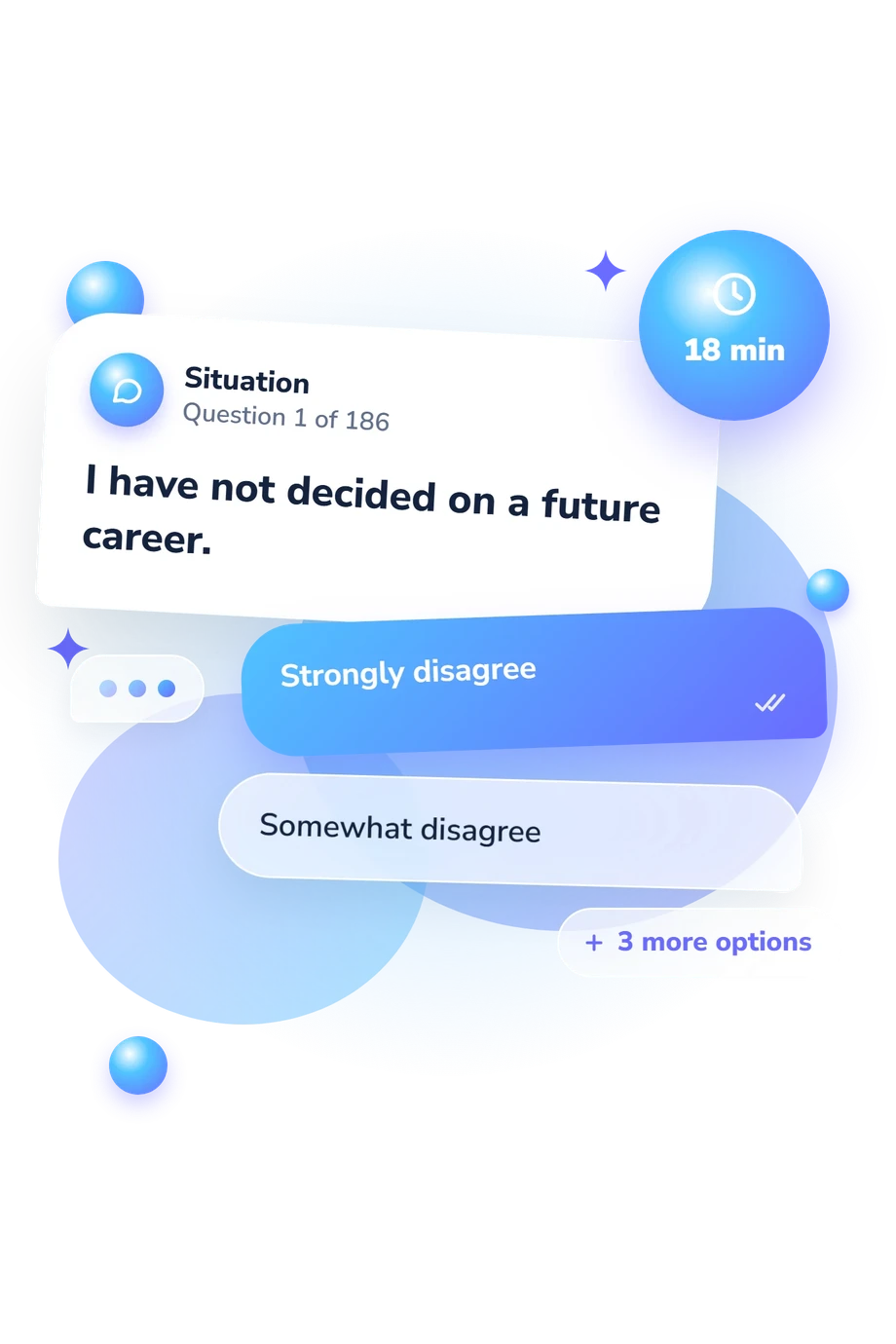
Take the online Adolescent Psychological Problems Questionnaire Test - AI psychologist FreudlyYou can take Adolescent Psychological Problems Questionnaire Testhere. Online version of a simple and accurate psychological test with interpretation.en
Understand a teen’s key emotional and social concerns in about 18 minutes. A 93 item screen updated for today’s online life helps guide timely, targeted school or clinical support.
Start Online Test
Questions: 9318 minutes
08:30
October 2, 2025
October 2, 2025
Material has been updated
October 2, 2025
Material has been published
14,309 views
1,118 completions
967 likes
Verified by Daniel Hall
Psychologist with 25 years of experience
Share
Scale Explorer

How the Scales are Structured

example score
3/5
Health-Related (HR)
This scale reflects psychological difficulties related to how an adolescent perceives their health, physical well-being, and body image.
Low concern
Moderate concern
High concern
11.86: Low concern | 1.873.15: Moderate concern | 3.165: High concern
A score of 3 falls in the Moderate concern range, suggesting some noticeable worries or sensitivity about health or body image that may influence everyday feelings without being consistently intense.
example score
3/5
Societal Development (SD)
Assesses how difficult it is for the adolescent to understand and adapt to social changes, their social environment, and their perceived place in society.
Low difficulties
Moderate difficulties
High difficulties
12.42: Low difficulties | 2.434.17: Moderate difficulties | 4.185: High difficulties
A score of 3 falls in the Moderate difficulties range, suggesting occasional challenges in interpreting societal changes and feeling secure about one’s place in the social environment.
example score
3/5
School-Related (SR)
Measures how challenging school life feels, including learning demands, relationships with teachers and classmates, and overall adaptation to school requirements.
Low difficulties
Moderate difficulties
High difficulties
12.03: Low difficulties | 2.043.3: Moderate difficulties | 3.315: High difficulties
A score of 3 indicates moderate school-related difficulties, suggesting some stress or adjustment issues with studying or school relationships that may affect day-to-day comfort at school.
example score
2/5
With the Parental Home (WtPH)
Assesses the intensity of psychological difficulties linked to relationships and emotional climate in the parental home (e.g., conflicts, misunderstandings, emotional distance).
Low difficulties
Moderate difficulties
High difficulties
11.75: Low difficulties | 1.763.19: Moderate difficulties | 3.25: High difficulties
A score of 2 falls in the Moderate difficulties range, suggesting some tension or unmet needs in the parental-home relationship climate, but not at a pronounced level.
example score
3/5
Future-Related (FR)
Assesses an adolescent’s psychological difficulties related to thinking about the future, planning, and expectations.
Clear outlook
Mixed outlook
Uncertain outlook
11.89: Clear outlook | 1.93.42: Mixed outlook | 3.435: Uncertain outlook
A score of 3 falls in the Mixed outlook range, suggesting occasional uncertainty or tension about future plans and expectations.
example score
3/5
Problem Concern Level (PCL)
Measures the overall intensity of an adolescent’s problematic concerns across key life areas.
Low
Average
High
12.1: Low | 2.113.09: Average | 3.15: High
A score of 3 falls in the Average range, suggesting some concerns are present but without clear signs of pronounced maladjustment across areas.
example score
3/5
Leisure Activities (LA)
Assesses difficulties a teenager may have in organizing free time, leisure, and hobbies.
Well-organized leisure
Some leisure difficulties
Marked leisure difficulties
11.57: Well-organized leisure | 1.583.13: Some leisure difficulties | 3.145: Marked leisure difficulties
A score of 3 suggests some difficulties with planning or engaging in leisure activities and maintaining satisfying hobbies, but not at the highest level on this scale.
example score
3/5
With Oneself (My Self) (WOS)
Measures internal psychological difficulties related to self-esteem, self-acceptance, and inner conflicts in adolescence.
Low difficulties
Moderate difficulties
High difficulties
11.88: Low difficulties | 1.893.41: Moderate difficulties | 3.425: High difficulties
A score of 3 indicates a moderate level of self-related difficulties, suggesting occasional doubts about self-worth or internal tension without being consistently overwhelming.
example score
3/5
Peer Communication (PC)
Assesses the teenager’s level of difficulty in interacting with peers, including socialization problems, conflicts, and feelings of loneliness.
Low difficulties
Moderate difficulties
Elevated difficulties
11.24: Low difficulties | 1.252.83: Moderate difficulties | 2.845: Elevated difficulties
A score of 3 indicates elevated difficulties with peer communication, suggesting more frequent challenges such as tension in relationships or feeling socially isolated compared with most peers.
Start Online Test
just completed the test
DATA-BASED USER COHORTS

Who Usually Takes This Test?

School psychologists and counselors
46%OF USERS
They use it to quickly screen a student or class for anxiety, stress, loneliness, and communication issues and plan targeted support.
Concerned parents and guardians
34%OF USERS
They take it to better understand what a teen is struggling with and decide what kind of help or conversation is needed.
Teachers and homeroom leaders
20%OF USERS
They use it to spot early warning signs in teens and coordinate timely interventions with school support staff.
BASED ON AGGREGATED, ANONYMIZED DATA FROM TENS OF THOUSANDS OF FREUDLY USERS.
Benchmarking

See How You Compare

Once you complete the test, your results are compared with real-world data from people in your country.
Below is a preview of how scores are typically distributed across each scale.
about health (ah)
about health (ah)
Average
3.4
Normal range
2.83.9
min.
1
max.
5
This curve shows how scores are typically distributed.
Once you complete the test, your result will appear on the scale so you can see how you compare.
with the development of society (wtdos)
Average
4
Normal range
3.24.7
min.
1
max.
5
This curve shows how scores are typically distributed.
Once you complete the test, your result will appear on the scale so you can see how you compare.
with school (ws)
with school (ws)
Average
2.4
Normal range
1.82.9
min.
1
max.
5
This curve shows how scores are typically distributed.
Once you complete the test, your result will appear on the scale so you can see how you compare.
with the parental home (wtph)
Average
2.6
Normal range
23.3
min.
1
max.
5
This curve shows how scores are typically distributed.
Once you complete the test, your result will appear on the scale so you can see how you compare.
with the future (wtf)
Average
2.9
Normal range
2.33.4
min.
1
max.
5
This curve shows how scores are typically distributed.
Once you complete the test, your result will appear on the scale so you can see how you compare.
Level of problematic preoccupation (Lopp)
Average
2.8
Normal range
2.13.5
min.
1
max.
5
This curve shows how scores are typically distributed.
Once you complete the test, your result will appear on the scale so you can see how you compare.
with leisure activities (wla)
Average
2.9
Normal range
2.43.5
min.
1
max.
5
This curve shows how scores are typically distributed.
Once you complete the test, your result will appear on the scale so you can see how you compare.
with myself (my self) (wm(s)
Average
3.9
Normal range
3.34.5
min.
1
max.
5
This curve shows how scores are typically distributed.
Once you complete the test, your result will appear on the scale so you can see how you compare.
with communication with peers (wcwp)
Average
3.1
Normal range
2.53.7
min.
1
max.
5
This curve shows how scores are typically distributed.
Once you complete the test, your result will appear on the scale so you can see how you compare.
Featured On
SAMPLE QUESTIONS

Example Questions From the Test

Below are some situations that you and your peers may experience as problems. Some of these may apply to you, and others may not apply at all. Please indicate the extent to which each of the problems listed applies to you.
    • Strongly disagree
    • Rather disagree
    • Not sure (neither yes nor no)
    • Rather agree
    • Strongly agree
    • Strongly disagree
    • Rather disagree
    • Not sure (neither yes nor no)
    • Rather agree
    • Strongly agree
    • Completely disagree
    • Rather not
    • Hard to say (neither yes nor no)
    • Rather agree
    • Completely agree
WHAT THE TEST MEASURES
About This Assessment

Adolescent Psychological Problems Questionnaire Test - Symptoms and Signs

cyberpsychology
stressors

This measure is intended to support structured screening of common emotional and behavioral concerns in adolescents. The Adolescent Psychological Problems Questionnaire provides a standardized self-report format to help identify areas that may warrant further clinical inquiry. It is attributed to Thomas M. Achenbach.

The instrument contains 93 items and typically requires about 18 minutes to complete. Responses are used to summarize patterns of reported symptoms and psychosocial difficulties and may inform referral decisions, treatment planning, or school-based support when interpreted in context.

The Adolescent Psychological Problems Questionnaire is not a stand-alone diagnostic tool; results should be integrated with clinical interview data, collateral information, and other assessment findings to guide decision-making.

Author: Thomas M. Achenbach
Literature: Achenbach, T. M., & Rescorla, L. A. Manual for the ASEBA school-age forms & profiles. University of Vermont, Research Center for Children, Youth, & Families. 2001.; Odgers, C. L., & Jensen, M. R. Annual research review: Adolescent mental health in the digital age: Facts, fears, and future directions. Journal of Child Psychology and Psychiatry. 2020.
Popular tests
Comments
Leave a Comment