
Reflection on Life Experiences Test
How the Scales are Structured
Who Usually Takes This Test?
See How You Compare
Below is a preview of how scores are typically distributed across each scale.
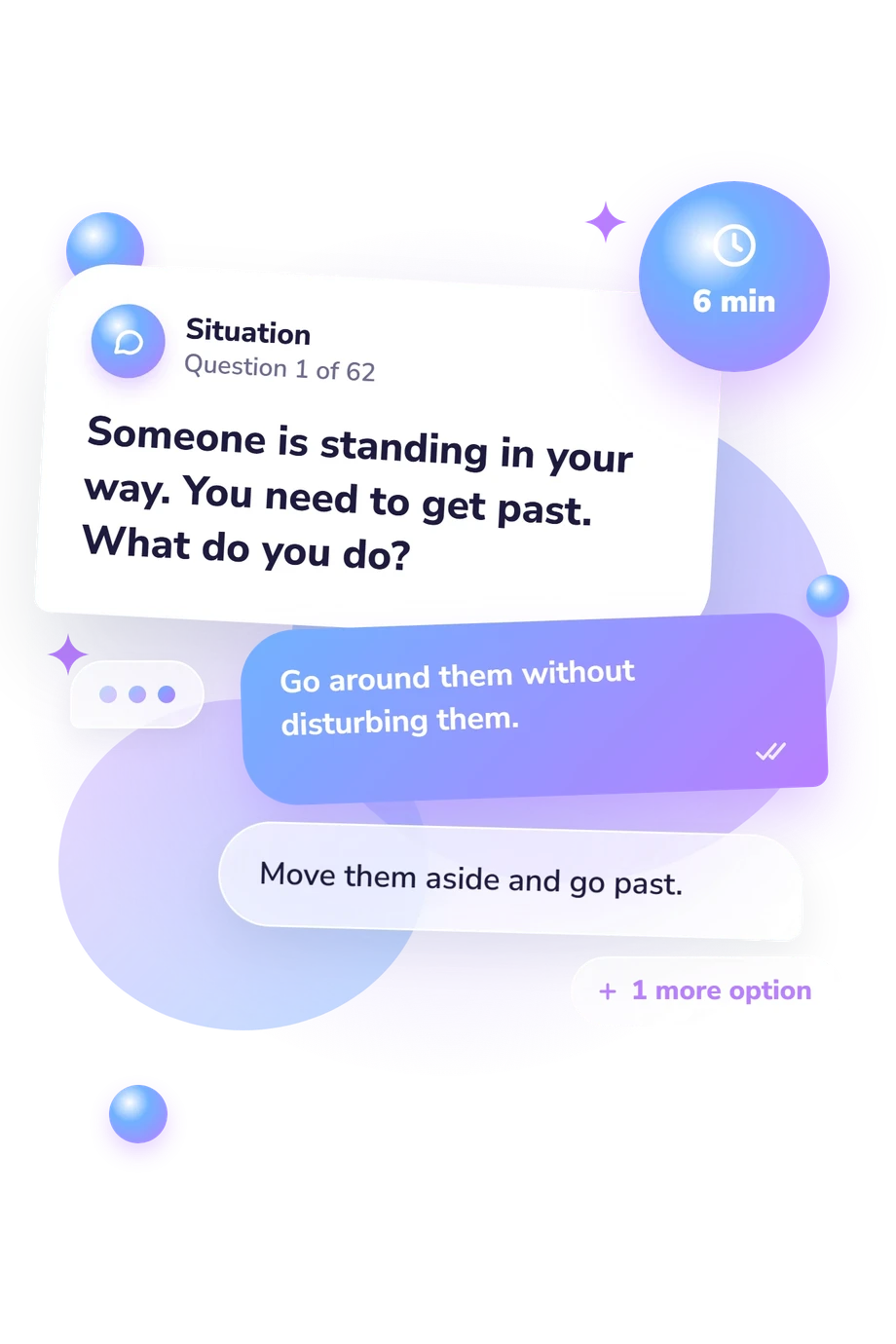
Example Questions From the Test
- I go around them without disturbing them.
- I move them aside and go through.
- It depends on my mood.
- Nothing; it is none of my business.
- I do not know in advance; it depends on how things unfold.
- I would go over and definitely start a conversation.
- a) I hurry to school.
- b) If someone rushes to help, I will go too.
- c) I call 112 and stop passers-by...
Reflection on Life Experiences Test - Description and methodology of the test
People who want to examine how they might respond across varied everyday situations may find the Reflection on Life Experiences Test useful. As a life experience questionnaire, it gives readers a structured way to consider patterns across different contexts. Its profile highlights whether responses lean toward self-focus, concern for others, or a lack of clear preference in some moral choices.
What This Assessment Explores
It examines choices when convenience conflicts with another person's needs, rules, fairness, duty, or opportunities to contribute. Other situations cover praise, insult, responsibility, ideals, and community. The result describes moral and interpersonal tendencies.
Its moral values test links everyday choices with moral values across three dimensions:
- Underdeveloped Moral Relationships (0-26) reflects choices without a clear preference; Low underdevelopment (0-12) and High underdevelopment (13-26) are the displayed bands, with higher scores linked to unstable, impulsive behavior.
- Selfish Orientation (0-26) reflects self-focus and some amoral orientation; Low selfishness (0-12) and Elevated selfishness (13-26) are the displayed bands, with 13 or more selections indicating egocentrism.
- Orientation Toward Others (0-26) reflects concern for other people and adequate moral development; Lower orientation to others (0-12) and Pronounced orientation to others (13-26) are the displayed bands, with 13 or more selections indicating strong other-orientation.
Methodology and Evidence Base
Questions use short everyday and ethical dilemmas. Most of the sample presents three answer choices that contrast non-intervention, conditional action, self-interest, or active responsibility. The respondent selects the option closest to a likely response, making this an ethical self-assessment rather than a knowledge test.
The result is reported across three scales. The first scale is defined through choices showing no clear preference, while 13 or more selections are identified as thresholds for the latter two. Because the questionnaire does not state how answers contribute to scores, interpretation should follow the scale definitions and displayed bands rather than an assumed point rule.
The questionnaire is conceptually consistent with established educational approaches to reflecting on life experience; Stepanov (2001) provides related educational-assessment context, while Ma (2013) presents an integrated account of moral development. The online questionnaire is not a standardized or normed adaptation, so its results should not be treated as population norms.
Self-report results can shift with current circumstances, social desirability, and self-awareness, so read the profile as a structured prompt for reflection.
- Shchurkova, N. E. (ed.). Education of Children at School: New Approaches and New Technologies. Moscow: New School, 1998. 205 pp. ISBN 5-7301-0247-X.
- Stepanov, E. N. (ed.). The Educational Process: Studying Effectiveness. Moscow: Sfera, 2001.
- Ma, Hing Keung. The Moral Development of the Child: An Integrated Model. Frontiers in Public Health, 1, Article 57, 2013. 10.3389/fpubh.2013.00057
Updated: