
Freudly+971 508685814hello@freudly.ai
Freudly
cyberpsychology

Psychological Problems of Adolescents in Real and Virtual Environments Test
Take the online Psychological Problems of Adolescents in Real and Virtual Environments Test - AI psychologist FreudlyYou can take Psychological Problems of Adolescents in Real and Virtual Environments Testhere. Online version of a simple and accurate psychological test with interpretation.en
Understand teen stress, anxiety, loneliness, and online impacts in about 11 minutes. A 60 item, school-tested tool that helps spot support needs early and guide targeted school or counseling support.
Start Online Test
Questions: 6011 minutes
08:30
October 2, 2025
October 2, 2025
Material has been updated
October 2, 2025
Material has been published
30,631 view
3,535 completions
2,889 likes
Verified by Daniel Hall
Psychologist with 25 years of experience
Share
Scale Explorer

How the Scales are Structured

example score
3/5
School-Related (SR)
Assesses the extent of school-related difficulties such as academic strain, peer/teacher conflicts, and school-related anxiety.
Low
Moderate
High
12.03: Low | 2.043.88: Moderate | 3.895: High
A score of 3 falls in the Moderate range, suggesting some school-related stress or challenges that may be present but not pronounced.
example score
3/5
Internet-Related Problems (IRP)
Measures the extent to which a teenager’s online immersion is associated with psychological or daily-life difficulties.
Low
Moderate
High
11.5: Low | 1.513.4: Moderate | 3.415: High
A score of 3 falls in the Moderate range, suggesting some internet-related strain may be present without clearly indicating pervasive impairment.
example score
3/5
In Relationships With Parents (IRWP)
Measures the degree of difficulties and lack of support perceived by the adolescent in relationships with parents.
Low difficulties
Moderate difficulties
High difficulties
11.37: Low difficulties | 1.383.34: Moderate difficulties | 3.355: High difficulties
A score of 3 indicates a moderate level of difficulties in relationships with parents, suggesting occasional tension or unmet support needs without pervasive conflict.
example score
3/5
Communication-Related Problems (CRP)
Measures the extent of difficulties a teenager experiences in communicating and interacting with peers, including conflicts and feelings of disconnection.
Low difficulties
Moderate difficulties
High difficulties
11.26: Low difficulties | 1.273.1: Moderate difficulties | 3.115: High difficulties
A score of 3 indicates a moderate level of communication-related difficulties, suggesting occasional challenges in peer interaction without persistent or severe problems.
example score
3/5
Identity Formation (IF)
Measures difficulties an adolescent experiences in forming a stable sense of personal identity and self-definition.
Low difficulty
Moderate difficulty
High difficulty
11.65: Low difficulty | 1.663.68: Moderate difficulty | 3.695: High difficulty
A score of 3 indicates a moderate level of difficulty with identity formation, suggesting some uncertainty about self-definition and social role that may arise in both real and online contexts.
example score
3/5
Safety-Related Problems (SRP)
Assesses perceived difficulties and concerns related to personal and public safety in real and virtual environments.
Low concerns
Moderate concerns
High concerns
12.39: Low concerns | 2.44.38: Moderate concerns | 4.395: High concerns
A score of 3 falls in the Moderate concerns range, suggesting occasional worries about safety or feeling threatened that may affect comfort in everyday situations.
example score
3/5
Overall Level of Problem Concern (OLoPC)
Measures the overall severity of psychological difficulties an adolescent experiences across real-life and virtual contexts.
Low concern
Moderate concern
High concern
11.98: Low concern | 1.993.34: Moderate concern | 3.355: High concern
A score of 3 falls in the Moderate concern range, suggesting a noticeable but not extreme overall level of difficulties across areas of life.
Start Online Test
just completed the test
DATA-BASED USER COHORTS

Who Usually Takes This Test?

Teens feeling overwhelmed
46%OF USERS
Adolescents aged 13–16 who notice anxiety, loneliness, stress at school, or mood changes and want to understand what might be going on.
Concerned parents and guardians
32%OF USERS
Adults who see shifts in a teen’s behavior, sleep, grades, or online habits and want clearer signals about where support is needed.
School psychologists and educators
22%OF USERS
Specialists who use the questionnaire to screen student well-being and plan timely interventions for offline and online-related difficulties.
BASED ON AGGREGATED, ANONYMIZED DATA FROM TENS OF THOUSANDS OF FREUDLY USERS.
Benchmarking

See How You Compare

Once you complete the test, your results are compared with real-world data from people in your country.
Below is a preview of how scores are typically distributed across each scale.
related to school (rts)
Average
3.1
Normal range
2.63.6
min.
1
max.
5
This curve shows how scores are typically distributed.
Once you complete the test, your result will appear on the scale so you can see how you compare.
internet-related (i)
Average
2.5
Normal range
1.83.2
min.
1
max.
5
This curve shows how scores are typically distributed.
Once you complete the test, your result will appear on the scale so you can see how you compare.
in relationships with parents (irwp)
Average
3.9
Normal range
3.44.4
min.
1
max.
5
This curve shows how scores are typically distributed.
Once you complete the test, your result will appear on the scale so you can see how you compare.
related to communication (rtc)
Average
3.1
Normal range
2.63.6
min.
1
max.
5
This curve shows how scores are typically distributed.
Once you complete the test, your result will appear on the scale so you can see how you compare.
formation of identity (foi)
Average
2.6
Normal range
1.93.3
min.
1
max.
5
This curve shows how scores are typically distributed.
Once you complete the test, your result will appear on the scale so you can see how you compare.
related to safety (rts)
Average
3
Normal range
2.43.7
min.
1
max.
5
This curve shows how scores are typically distributed.
Once you complete the test, your result will appear on the scale so you can see how you compare.
Level of Problematic Concern (LoPC)
Average
2.6
Normal range
1.93.3
min.
1
max.
5
This curve shows how scores are typically distributed.
Once you complete the test, your result will appear on the scale so you can see how you compare.
Featured On
SAMPLE QUESTIONS

Example Questions From the Test

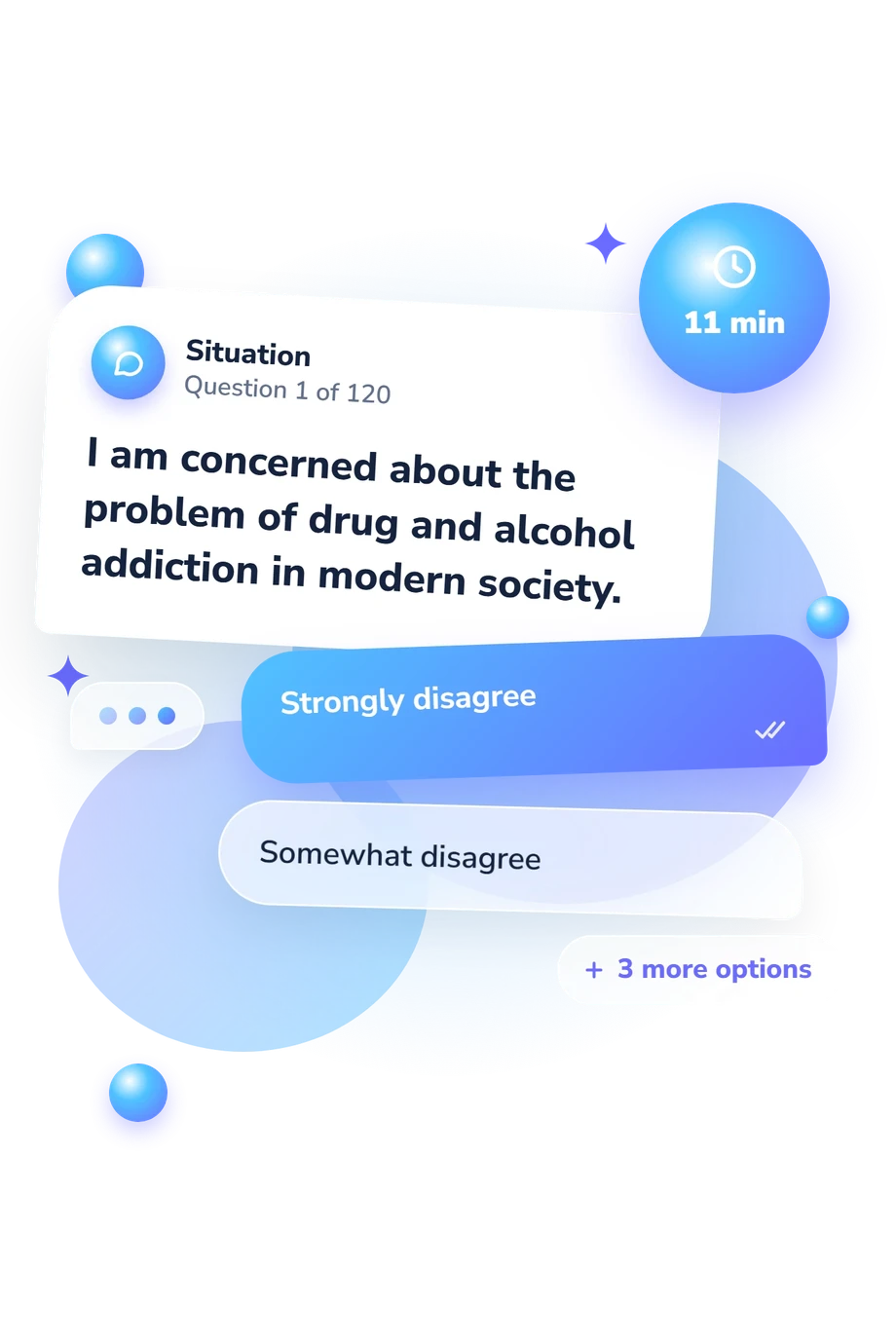
    • Strongly disagree
    • Somewhat disagree
    • Not sure (neither yes nor no)
    • Somewhat agree
    • Strongly agree
    • Completely disagree
    • Rather disagree
    • Hard to say (neither agree nor disagree)
    • Rather agree
    • Completely agree
    • Strongly disagree
    • Rather not
    • Hard to say (neither agree nor disagree)
    • Rather agree
    • Strongly agree
WHAT THE TEST MEASURES
About This Assessment

Psychological Problems of Adolescents in Real and Virtual Environments Test - Symptoms and Signs

cyberpsychology
stressors

This measure is designed to screen for common psychological difficulties experienced by adolescents across offline and online contexts. Psychological Problems of Adolescents in Real and Virtual Environments is intended to support identification of areas that may warrant further clinical inquiry.

The instrument includes 60 items and typically takes about 11 minutes to complete. Items address broad domains of emotional and social functioning, including distress related to school and relationships, and concerns associated with digital communication and social media. It is not a diagnostic tool; results should be interpreted in conjunction with clinical interview, collateral information, and other assessment data.

Psychological Problems of Adolescents in Real and Virtual Environments is attributed to Patricia M. Greenfield and may be used in educational or clinical settings to inform referral decisions, monitoring, and planning of supportive interventions.

Author: Patricia M. Greenfield
Literature: Achenbach, T. M., & Rescorla, L. A. Manual for the ASEBA school-age forms & profiles. University of Vermont, Research Center for Children, Youth, & Families. 2001.; Odgers, C. L., & Jensen, M. R. Annual research review: Adolescent mental health in the digital age: Facts, fears, and future directions. Journal of Child Psychology and Psychiatry. 2020.
Popular tests
Comments
Leave a Comment