
Coverage Quiz
How the Scales are Structured
Who Usually Takes This Test?
See How You Compare
Below is a preview of how scores are typically distributed across each scale.
Example Questions From the Test
- A premium
- A coverage limit
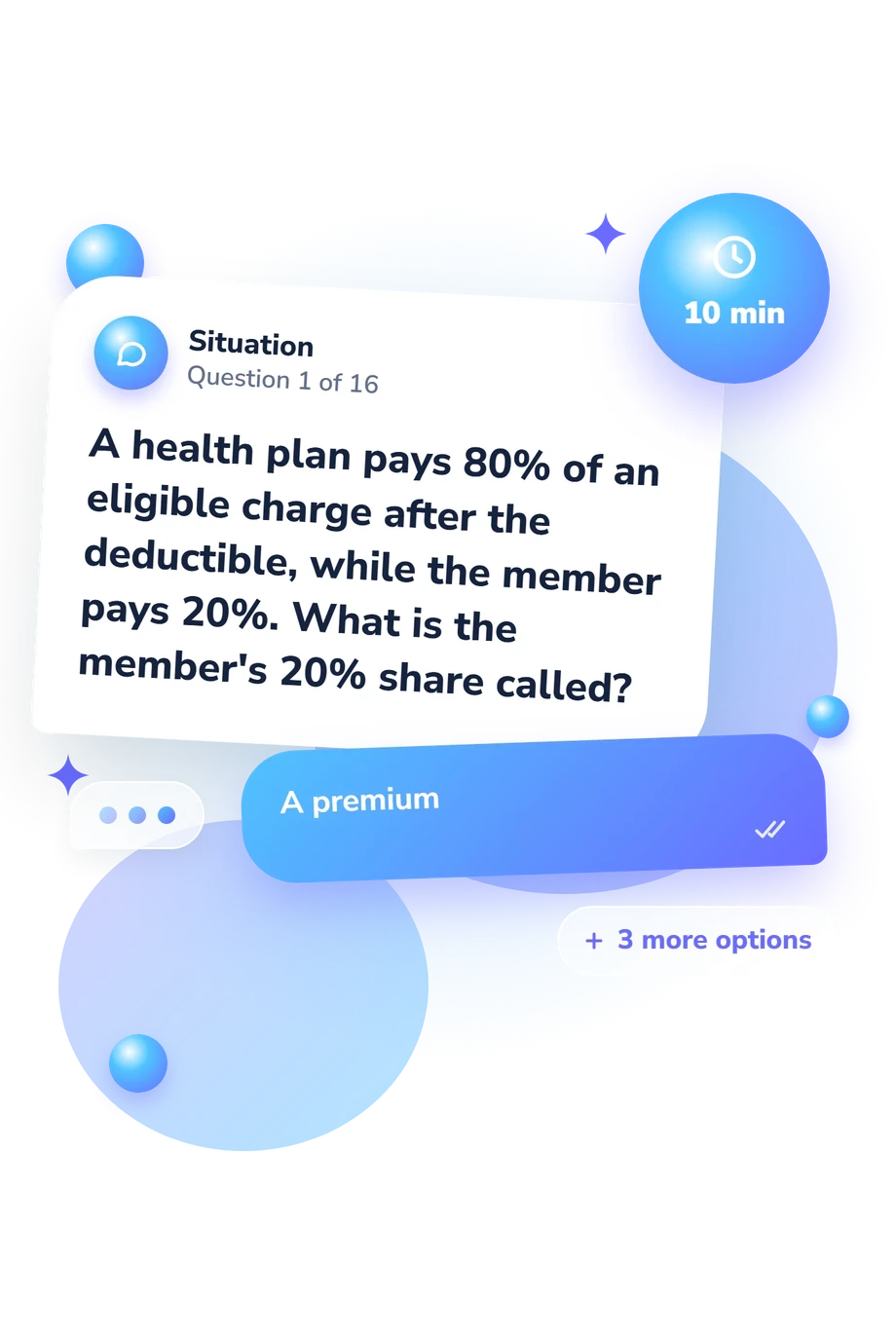
- Coinsurance
- A fixed copayment
- The portion of a covered loss paid by the policyholder
- The amount charged to keep an insurance policy in force
- An optional increase in a policy's coverage limit
- A payment made by an insurer after approving a claim
- The declarations page
- The insurer's advertising notice
- The claim-release section
- The payment reminder
Coverage Quiz - Description and methodology of the test
Readers who want to understand everyday policy language can use this insurance knowledge test while comparing policies, handling a claim, or preparing precise questions about health, property, and liability protection. It focuses on everyday decisions involving health, property, and liability coverage. The coverage quiz offers a focused way to examine practical understanding.
What This Assessment Explores
The questions emphasize literacy over legal memorization. Questions in this insurance policy quiz check whether respondents recognize terms, apply them to routine decisions, and separate general rules from policy-specific conditions. The questionnaire suits people reviewing their understanding of health, property, and liability coverage.
Three groups organize the scenarios:
- Policy foundations show how you distinguish premiums, deductibles, coinsurance, limits, exclusions, declarations, endorsements, and lapses.
- Health situations test how you apply network status and coordination rules when plans or providers are involved.
- Property, liability, and claims situations show whether you can interpret valuation, documentation, responsibility, and review options.
The Insurance Coverage Knowledge scale runs from 0-16: Coverage Basics to Build (0-6) signals foundational review; Developing Coverage Literacy (7-12) shows growing understanding; Strong Coverage Literacy (13-16) reflects a well-developed grasp.
Methodology and Scientific Basis
Each of the 16 items presents a definition or insurance situation with four answer choices. The items test vocabulary, application, and judgment about next steps. The questionnaire displays a result on the educational scale; the questions do not specify point values or equal weighting, so the descriptive bands move from foundational review through developing understanding to a strong grasp of common concepts.
As an insurance literacy assessment, this questionnaire is conceptually consistent with Allodi, Bocchino, and Stella’s direct measure of insurance knowledge, which addresses core terms and practical understanding. It is not an adaptation of that measure. The broader 2011 Tennyson survey study connects consumer understanding with practical decisions, while Paez and colleagues’ HILM supports attention to choosing and using health coverage. Sanjeewa and Hongbing’s review helps distinguish literacy from simple familiarity. These sources provide context, not authorship or validation of this questionnaire.
Guessing, prior experience, scenario reading, and current circumstances can affect selected responses. The result is educational and does not determine a particular insurer’s coverage decision; policy wording, insurer rules, and location remain decisive.
- Tennyson, S. (2011). Consumers' insurance literacy: Evidence from survey data. Financial Services Review, 20(3), 165-179. 10.61190/fsr.v20i3.4701
- Allodi, E., Bocchino, E. M., & Stella, G. P. (2021). Understanding Insurance Knowledge: A Brief 7-Item Measure. International Journal of Business and Management, 16(2), 65-74. 10.5539/ijbm.v16n2p65
- Paez, K. A., Mallery, C. J., Noel, H., Pugliese, C., McSorley, V. E., Lucado, J. L., & Ganachari, D. (2014). Development of the Health Insurance Literacy Measure (HILM): Conceptualizing and Measuring Consumer Ability to Choose and Use Private Health Insurance. Journal of Health Communication, 19(Suppl. 2), 225-239. 10.1080/10810730.2014.936568
- Sanjeewa, W. S., & Hongbing, O. (2019). Consumers' Insurance Literacy: Literature Review, Conceptual Definition, and Approach for a Measurement Instrument. European Journal of Business and Management, 11(26), 49-65. 10.7176/EJBM/11-26-05
Updated: