
Native American Name Quiz
How the Scales are Structured
Who Usually Takes This Test?
See How You Compare
Below is a preview of how scores are typically distributed across each scale.
Example Questions From the Test
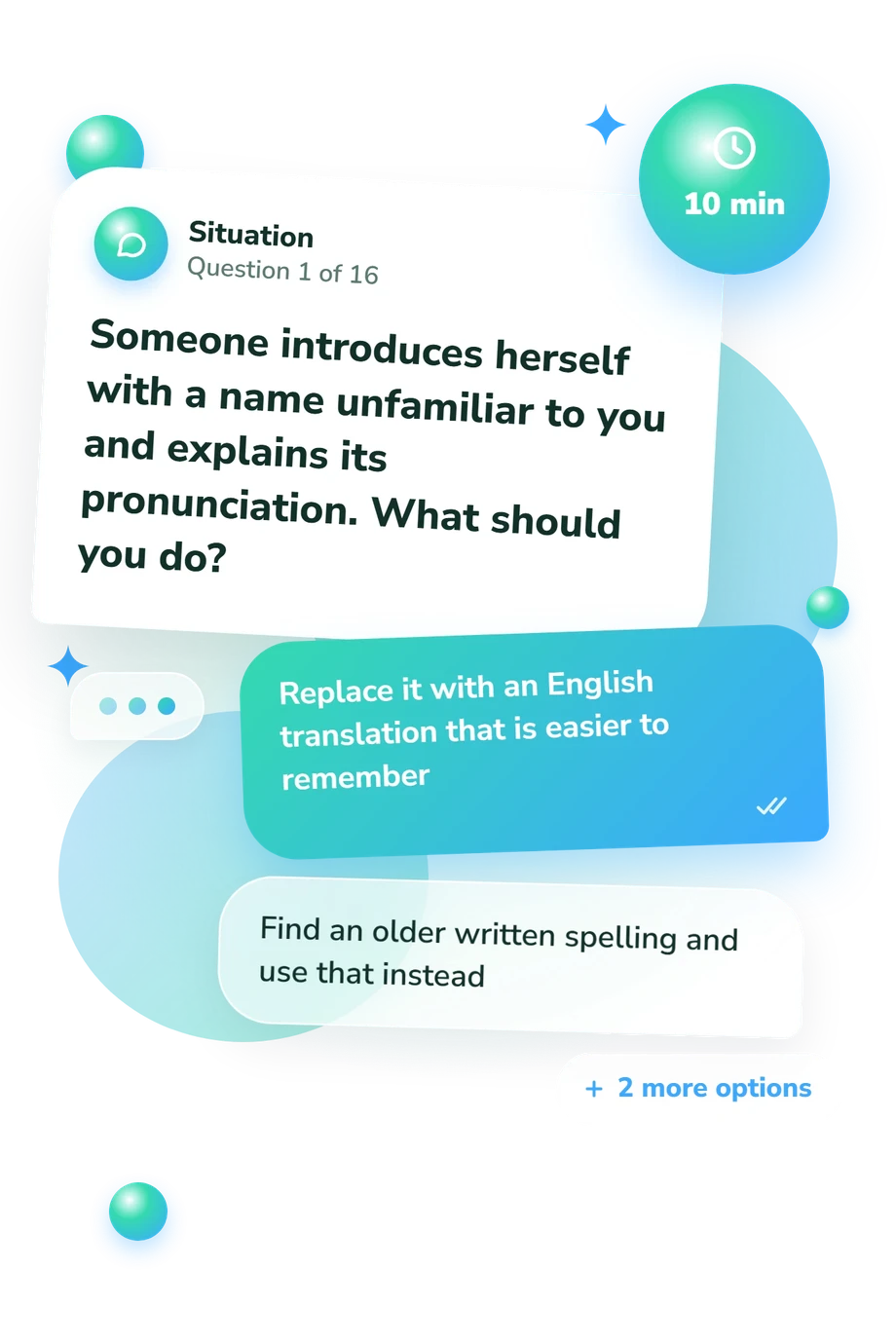
- Replace it with an English translation that is easier to remember
- Find an older written spelling and use that instead
- Use the name and pronunciation she provided, asking politely for repetition if needed
- Shorten the name without asking so conversation flows more easily
- Their forms and roles vary significantly among Nations and languages
- They are interchangeable categories throughout Native North America
- Clan names are always used as legal surnames in English-language documents
- Personal names universally describe an individual’s strongest personality trait
- A name a people or community uses for itself
- An English translation created for a difficult place name
- A name assigned to a community by a colonial government
- A historical name that no living community recognizes
Native American Name Quiz - Description and methodology of the test
Readers who want to learn how Indigenous names should be approached, rather than receive a guessed identity label, can use the Native American Name Quiz as a focused knowledge check. This Indigenous naming knowledge test clarifies whether your reasoning recognizes language, history, community difference, and respectful conduct. The result identifies areas for reflection without inferring ancestry, citizenship, or authority to represent a Nation.
What This Test Measures
Questions test whether respondents distinguish Nations, languages, histories, and naming systems. Scenarios address pronunciation, meaning claims, spellings, records, translations, surnames, events, and place names.
The result’s focus is organized into these dimensions:
- Name use and pronunciation show respect for the form a person provides.
- Language and sources show whether evidence is community-connected and orthographies may vary.
- History and place names show how records, colonization, restoration, and landscape interact.
- Cultural conduct shows the boundary between learning and imitation.
It works as a Native American naming traditions quiz, measuring contextual knowledge rather than personality. Native American Names Knowledge (0-16) is reported as Foundation to build (0-6), Developing context (7-12), or Strong contextual knowledge (13-16). This reflects variation, history, language, and respectful practice, not ancestry or cultural authority.
Methodology and Evidence Base
Each item presents a situation or judgment with four answer choices. You select the response that best reflects careful, Nation-specific reasoning; the task does not ask you to invent a name, claim ancestry, or identify tribal affiliation. The displayed score summarizes questionnaire performance, but no item-by-item weighting rule is stated, so the points assigned to responses should not be reverse-engineered.
The assessment draws on onomastics, Indigenous-language context, and history. Exner and Little Bear (2007) is the closest comparison for semantic meaning and variation in Indigenous personal names. Meadows and McKenzie (2026) provides a Nation-specific account of Kiowa personal names; Steckley (2018) examines colonial effects on recorded Wyandot names. Richardson and Galloway (2011) connects place names with geography, culture, language, and community history. The questionnaire is conceptually consistent with these works, not a direct adaptation of them.
The bands for this Native naming practices quiz are descriptive rather than standardized population norms or a credential. Performance can vary with reading, terminology, attention, prior exposure, and self-report bias. Use the result to guide further study, not to infer identity from a score.
- Exner, Frank, and Little Bear. (2007). North American Indians: Personal Names With Semantic Meaning. Names: A Journal of Onomastics, 55(1), 3-15. 10.1179/nam.2007.55.1.3
- Meadows, William C., and Andrew McKenzie. (2026). The Construction and Usage of Kiowa Personal Names. International Journal of American Linguistics, 92(1), 77-116. 10.1086/738181
- Steckley, John. (2018). Rescuing Colonized Names of the Wyandot. Onomastica Canadiana, 97(1-2), 165-187.
- Richardson, Allan, and Brent Galloway. (2011). Nooksack Place Names: Geography, Culture, and Language. Vancouver: University of British Columbia Press.
Updated: