
What Type of Veil Should I Wear Quiz
How the Scales are Structured
Who Usually Takes This Test?
See How You Compare
Below is a preview of how scores are typically distributed across each scale.
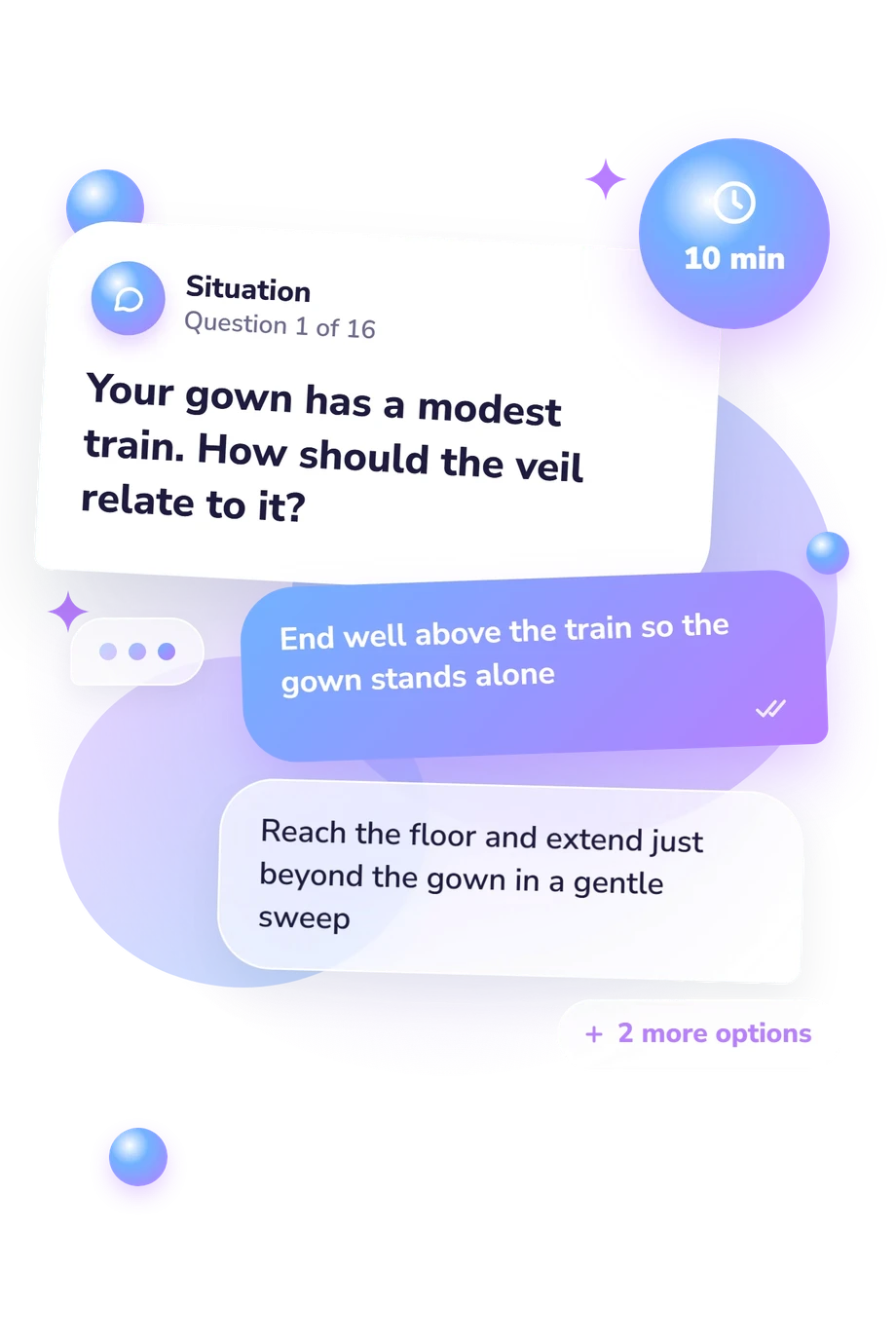
Example Questions From the Test
- With a short, sculpted sweep of netting across part of my face
- With soft fabric falling around my shoulders or arms
- With a long layer that becomes part of my full silhouette
- With a small face-framing detail, but not much coverage
- A small face-framing accent noticed at close range
- A soft veil visible around my body without a long trail
- A sweeping cathedral veil extending dramatically behind me
- A long veil with clear drama, but a somewhat restrained extension
- A simple longer veil to soften the retro elements
- A birdcage shape that deliberately completes the vintage mood
- A barely visible hair accessory instead of face netting
- A short veil with a subtle nod to vintage style
What Type of Veil Should I Wear Quiz - Description and methodology of the test
Brides weighing silhouette, movement, and ceremony logistics can use this bridal veil quiz to turn broad inspiration into a clearer accessory direction. The What Type of Veil Should I Wear Quiz connects personal taste with the practical details that shape how a veil may look and feel. It can also help you choose a wedding veil before discussing fabric, trim, or bustle plans.
What This Assessment Explores
Items address drama, face framing, coverage, movement, train length, venue space, dress detail, and effort required to arrange or remove a veil. The result describes styling preference, not a bridal rule.
The result shows the strongest affinities among four veil styles; the highest outcome leads, while outcomes within one point form a blended result.
These are the four reported style dimensions:
- Birdcage Veil (0-12) measures short, face-framing affinity: Different Direction (0-4), Possible Match (5-8), Strong Affinity (9-12).
- Cathedral Veil (0-12) measures extra-long trailing affinity: Different Direction (0-4), Possible Match (5-8), Strong Affinity (9-12).
- Chapel Veil (0-12) measures floor-length, modest-sweep affinity: Different Direction (0-4), Possible Match (5-8), Strong Affinity (9-12).
- Fingertip Veil (0-12) measures adaptable coverage and movement: Different Direction (0-4), Possible Match (5-8), Strong Affinity (9-12).
Methodology and Evidence Base
Each item presents a bridal styling situation with four response options. The choices vary silhouette, trail length, face coverage, movement, and effort required to arrange or remove a veil. The questionnaire reports responses across four displayed style scales; the point contribution of each answer is not specified, so answer-level weighting cannot be inferred.
As a wedding veil style quiz, it treats the score as a pattern of stated preferences. The displayed bands organize descriptive outcomes; they do not establish a points-per-answer rule or standardized norms.
These sources provide contextual background rather than validation of this online questionnaire or its four scoring scales. Research by Sykes and Brace-Govan connects bridal choice with identity and transition rituals; Bala describes the veil categories used in bridal styling; and Min, Ceballos, and Yurchisin examine gown selection within interpersonal role dynamics. The questionnaire is an online self-report tool without established standardization or validation.
Read the result as a snapshot of current taste. Mood, dress changes, venue constraints, and self-perception may shift answers, so the leading direction is best checked against the gown, hairstyle, and movement expected on the day.
- Sykes, K., & Brace-Govan, J. (2015). The bride who decides: Feminine rituals of bridal gown purchase as a rite of passage. Australasian Marketing Journal, 23(4), 277-285. 10.1016/j.ausmj.2015.10.009
- Bala, D. (2019, July 15). 8 Types Of Wedding Veil Every Bride Should Consider. British Vogue.
- Min, S., Ceballos, L. M., & Yurchisin, J. (2018). Role power dynamics within the bridal gown selection process. Fashion and Textiles, 5, Article 17. 10.1186/s40691-018-0132-6
Updated: