
Winnie the Pooh Test

Wondering which Winnie-the-Pooh character you're most like? Take this Winnie the Pooh Test — 79 questions — a playful personality quiz that matches your everyday habits, social style, and coping tendencies to a Hundred Acre Wood favorite: Pooh, Piglet, Tigger, Eeyore, Rabbit, Owl, Kanga, or Roo.
Start Online Test
Questions7910 minutes
Hi! My name is Freudly, i am an AI therapist, I will give you an interpretation of the test after you complete it.
08:30
March 25, 2026
March 25, 2026
Material has been updated
303 views
138 completions
26 likes
Verified by Daniel Hall
Psychologist with 25 years of experience
Share
Scale Explorer

How the Scales are Structured

example score
20/30
Extraversion–Energy (EE)
Measures your typical level of outgoing energy and comfort with stimulation, from calm and reserved to playful and socially proactive.
Calm & Reserved
Balanced Energy
High-Energy & Outgoing
010Calm & Reserved1120Balanced Energy2130High-Energy & Outgoing
A score of 20 suggests a balanced energy level, with an ability to be sociable and engaged while still appreciating calmer moments.
example score
11/30
Nurturance–Supportiveness (NS)
Measures how naturally you offer care, reassurance, and practical support to others.
Hands-Off
Selective Supporter
Nurturing Helper
010Hands-Off1120Selective Supporter2130Nurturing Helper
A score of 11 suggests you tend to be supportive in a selective, situational way rather than consistently taking on a nurturing or protective role.
example score
17/30
Worry–Stress Reactivity (WSR)
Measures how strongly you tend to react with worry and stress to uncertainty, pressure, or potential problems.
Low reactivity
Moderate reactivity
High reactivity
010Low reactivity1120Moderate reactivity2130High reactivity
A score of 17 suggests a moderate tendency to feel alert and concerned under stress, with some worry showing up in uncertain situations without it being constant.
Start Online Test
just completed the test
DATA-BASED USER COHORTS

Who Usually Takes This Test?

Nostalgic Disney fans
41%OF USERS
People who grew up with the stories take it for a cozy dose of nostalgia and to see which character they still relate to.
Fun personality quiz takers
34%OF USERS
Curious quiz lovers click for a quick, lighthearted result about their habits, social style, and stress responses.
Friends and couples comparing
25%OF USERS
Groups take it together to compare matches, laugh at the results, and start an easy conversation about personalities.
BASED ON AGGREGATED, ANONYMIZED DATA FROM TENS OF THOUSANDS OF FREUDLY USERS.
Benchmarking

See How You Compare

Once you complete the test, your results are compared with real-world data from people in your country.
Below is a preview of how scores are typically distributed across each scale.
Extraversion–Energy (E)
Average
11.2
Normal range
7.315
min.
0
max.
30
Majority
This curve shows how scores are typically distributed.
Once you complete the test, your result will appear on the scale so you can see how you compare.
Nurturance–Supportiveness (N)
Average
12.2
Normal range
8.515.9
min.
0
max.
30
Majority
This curve shows how scores are typically distributed.
Once you complete the test, your result will appear on the scale so you can see how you compare.
Worry–Stress Reactivity (WR)
Average
13.9
Normal range
9.818
min.
0
max.
30
Majority
This curve shows how scores are typically distributed.
Once you complete the test, your result will appear on the scale so you can see how you compare.
Featured On
CLEAR ANSWERS TO COMMON QUESTIONS

Frequently Asked Questions

What does this Winnie the Pooh Test measure?
It matches your everyday habits, social style, and coping tendencies to one of eight Hundred Acre Wood characters — Pooh, Piglet, Tigger, Eeyore, Rabbit, Owl, Kanga, or Roo. Results include a character match, a brief explanation, and friendly tips.
Is there really a winnie the pooh characters mental disorders connection?
The association between Pooh characters and mental health patterns originated as a well-known satirical academic paper, not an actual clinical framework. This test uses the familiar characters as a fun, memorable lens for personality and coping style — it does not diagnose any mental health condition or provide a genuine clinical assessment.
Is the winnie the pooh mental illness test a real diagnostic tool?
No. This is an entertainment quiz, and results do not diagnose any mental health condition or provide clinical assessment. If you have genuine concerns about your mental health, a licensed mental health professional can provide an actual clinical evaluation — this quiz is meant purely for fun and light self-reflection.
How long does it take and how many questions are included?
The quiz includes 79 questions and typically takes about 10 minutes. Select the option that best fits your typical behavior, not an unusual day, and if unsure, choose the response that applies most often.
What if my pooh test results seem to match more than one character?
That's common — some response patterns can align with more than one profile. Use the full character description and tips to identify the closest overall fit rather than focusing on a single response.
Can I take this Winnie the Pooh Test with friends?
Yes, this is one of the most popular ways to enjoy it. Many groups take it together specifically to compare matches, laugh at the results, and start an easy, lighthearted conversation about personality and coping styles.
Can my character match change if I retake the quiz?
Yes. Since your result reflects your current habits, stress responses, and social style, retaking the quiz during a different period or after a shift in how you typically cope with things can produce a different character match.
WHAT THE TEST MEASURES
About This Assessment
Winnie the Pooh Test
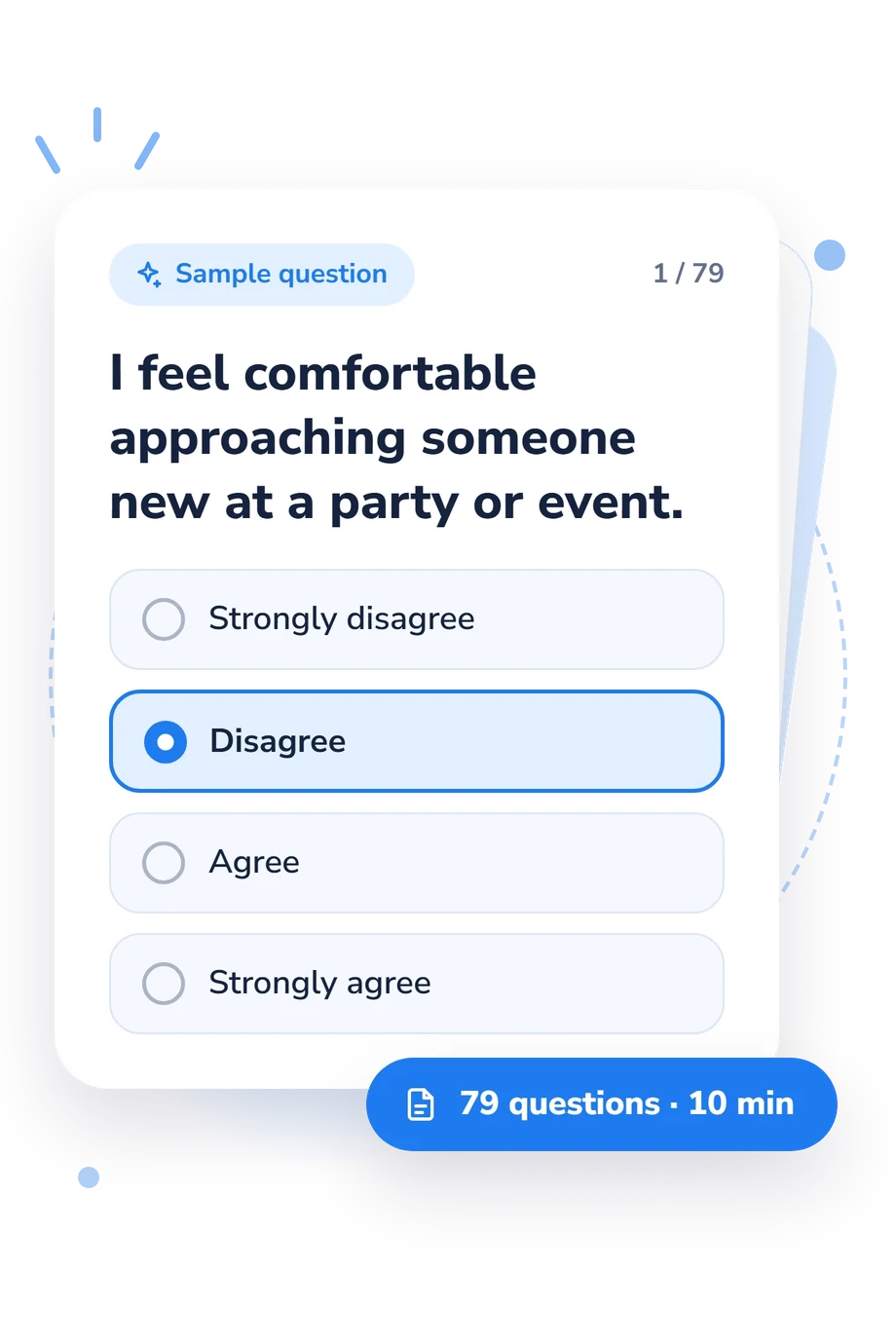
This is a playful personality quiz that matches your habits, social style, and stress responses to a character from the Hundred Acre Wood. The Winnie the Pooh Test includes 79 questions and typically takes about 10 minutes to complete. Results do not diagnose any mental health condition or provide clinical assessment — they provide a character match with a brief explanation and friendly tips.

Why Take a Winnie the Pooh Test

The idea of matching Winnie-the-Pooh characters to personality patterns became popular partly through a well-known satirical academic paper that playfully analyzed the Hundred Acre Wood residents through a clinical lens — Tigger's boundless energy, Piglet's constant worry, Eeyore's gloom, Rabbit's need for order. It's a fun, memorable way to talk about personality and coping styles using characters most people already know well, not an actual clinical framework.

This pooh test takes that familiar cast and turns it into a genuine, lighthearted self-reflection quiz — asking about what energizes you, how you handle stress, and how you show up for friends, then matching your pattern to the character whose traits most closely resemble your own. It's designed to feel like a fun mirror rather than a label.

This quiz is especially popular with curious quiz lovers looking for a quick, lighthearted result about their habits and social style, and with groups who take it together to compare matches and start an easy, laughter-filled conversation about personality.

What the Assessment Measures

The quiz explores your typical tendencies across several everyday dimensions:

  • What energizes you — the kinds of activities, company, or situations that genuinely give you energy versus drain it
  • Stress response — how you typically react and cope when things feel overwhelming or uncertain
  • Social style — how you tend to show up for and interact with friends and others in your daily life

Based on your combined responses, you'll be matched to one of eight Hundred Acre Wood characters — Pooh, Piglet, Tigger, Eeyore, Rabbit, Owl, Kanga, or Roo — along with a short explanation and friendly tips. Some response patterns can align with more than one profile, so use the full description to identify the closest fit.

Who This Assessment Is For

This Winnie the Pooh Test is appropriate for anyone curious which Hundred Acre Wood character best matches their personality. It's popular with quiz lovers wanting a quick, lighthearted result, and with friend groups who enjoy taking it together, comparing matches, and using the results to spark a fun, easy conversation about personality.

How to Use This Assessment

This is an entertainment quiz and does not diagnose any mental health condition or provide clinical assessment. Select the option that best fits your typical behavior, not an unusual day, and if unsure, choose the response that applies most often for the closest character match.

Popular tests
Narcissistic Personality Inventory (NPI)
This self-report measure is used to assess narcissism as a personality trai…
Start Test
Yale-Brown Obsessive Compulsive Scale (Y-BOCS)
This measure is used to rapidly quantify the current severity of obsessive…
Start Test
CRAFFT Screening Test (CRAFFT 2.1)
This brief screening measure is designed to identify potential alcohol and…
Start Test
Patient Health Questionnaire-9 (PHQ-9)
This measure is commonly used to quickly screen for the presence and severi…
Start Test
Maslach Burnout Inventory (MBI)
This self-report measure is used to assess occupational burnout symptoms in…
Start Test
Adolescent Anxiety Questionnaire
This measure is designed to support a brief appraisal of anxiety symptoms a…
Start Test
Emotional Creativity Inventory (ECI)
This self-report measure assesses individual differences in the originality…
Start Test
Horne–Ostberg Morningness–Eveningness Questionnaire (MEQ)
Circadian preferences influence typical patterns of alertness and sleep tim…
Start Test
Ambivalent Sexism Inventory (ASI)
This measure is designed to assess attitudes toward women, including both o…
Start Test
Internalized Misogyny Scale (IMS)
This measure is designed to assess internalized negative beliefs and stereo…
Start Test
Perceived Stress Scale (PSS-10)
This self-report measure assesses the degree to which individuals appraise…
Start Test
Impulsive Behavior Scale (SUPPS-P)
Impulsivity is a multidimensional construct that is often assessed with bri…
Start Test
Clinical Institute Withdrawal Assessment for Alcohol, Revised (CIWA-Ar)
This rating scale is used to rapidly assess the severity of alcohol withdra…
Start Test
Positive and Negative Affect Schedule (PANAS)
This measure provides a brief self-report assessment of current or typical…
Start Test
Light Triad Scale (LTS)
This self-report measure assesses prosocial personality tendencies and orie…
Start Test
Suicidal Ideation Scale
In clinical settings, the Suicidal Ideation Scale is used to structure an i…
Start Test
Body Dysmorphic Disorder Scale (BDD-D)
This brief self-report measure is designed to screen for and quantify distr…
Start Test
Beck Anxiety Inventory (BAI)
This measure is a brief self-report inventory used to screen for anxiety sy…
Start Test
Differential Test of Perfectionism
This instrument is used to screen for perfectionism-related attitudes and t…
Start Test
Locus of Control Scale
This measure assesses generalized expectancies regarding the degree to whic…
Start Test
New Apathy Scale
This brief self-report measure is used to screen for apathy-related symptom…
Start Test
Perth Alexithymia Questionnaire (PAQ)
This measure assesses individual differences in alexithymia, including diff…
Start Test
Social Intelligence Scale
This brief self-report measure is designed to support rapid screening of in…
Start Test
Fear Test
This measure is designed to evaluate individual differences in fear-related…
Start Test
Neuroticism Level Scale
The measure is intended for brief screening of an individual’s propensity t…
Start Test
Aggressiveness Indicators Screening Questionnaire
This screening tool is designed to quickly identify behavioral indicators a…
Start Test
Comments
Leave a Comment