
Freudly+971 508685814hello@freudly.ai
Freudly
social support

Child and Adolescent Social Support Scale (CASSS) Test
Take the online Child and Adolescent Social Support Scale (CASSS) Test - AI psychologist FreudlyYou can take Child and Adolescent Social Support Scale (CASSS) Testhere. Online version of a simple and accurate psychological test with interpretation.en
Understand how a child ages 10 to 16 experiences support at home and school in about 22 minutes. A 120 item profile pinpoints support gaps across key people to guide targeted school or clinical help.
Start Online Test
Questions: 12022 minutes
08:30
October 2, 2025
October 2, 2025
Material has been updated
October 2, 2025
Material has been published
15,155 views
1,234 completions
1,029 likes
Verified by Daniel Hall
Psychologist with 25 years of experience
Share
Scale Explorer

How the Scales are Structured

example score
265/360
Overall Frequency of Social Support (OFoSS)
Measures how often the child perceives receiving social support from people around them across key sources and support types.
Low frequency
Moderate frequency
High frequency
60193: Low frequency | 194274: Moderate frequency | 275360: High frequency
A score of 265 indicates a moderate frequency of perceived social support, suggesting the child often experiences support but with some areas where support may be less consistent.
example score
39/72
Parent Support (PS)
Measures how frequently the child perceives emotional, informational, appraisal, and practical support from their parents.
Low support
Moderate support
High support
1240: Low support | 4164: Moderate support | 6572: High support
A score of 39 falls in the Low support range, suggesting the child reports parental support and feedback as infrequent and practical help as limited.
example score
33/72
Teacher Support (TS)
Measures how often the child perceives support, care, and fair treatment from teachers.
Low support
Moderate support
High support
1234: Low support | 3558: Moderate support | 5972: High support
A score of 33 falls in the Low support range, suggesting the child less often experiences teachers as caring, attentive, and fair.
example score
20/72
Classmate Support (CS)
Measures how often the child experiences supportive attention and involvement from classmates.
Low
Average
High
1231: Low | 3256: Average | 5772: High
A score of 20 falls in the Low range, suggesting the child reports infrequent support from classmates.
example score
65/72
Close Friend Support (CFS)
Measures how often the child experiences supportive, connected, and helpful interactions from close friends.
Low support
Moderate support
High support
1241: Low support | 4269: Moderate support | 7072: High support
A score of 65 indicates moderate perceived support from close friends, suggesting the child often feels helped and connected but may still experience gaps in support in some situations.
example score
28/72
Support From Other People (SFOP)
Measures how often the child receives social support from other significant adults at school (e.g., teachers, older students, counselors).
Low support
Moderate support
High support
1223: Low support | 2451: Moderate support | 5272: High support
A score of 28 falls in the Moderate support range, suggesting the child receives some support from other significant adults but it may be inconsistent or limited in certain situations.
example score
34/90
Emotional Support (ES)
Measures how often the child experiences emotional support (feeling understood, listened to, and comforted) from people around them.
Low
Moderate
High
1548: Low | 4971: Moderate | 7290: High
A score of 34 falls in the Low range, suggesting the child reports emotional support less often than expected and may feel less able to rely on others for understanding and comfort.
example score
43/90
Informational Support (IS)
Measures how often the child receives helpful advice, guidance, and information to handle problems (informational support).
Low
Moderate
High
1547: Low | 4871: Moderate | 7290: High
A score of 43 falls in the Low range, suggesting the child receives informational support relatively infrequently and may have limited access to advice or guidance when dealing with challenges.
example score
47/90
Appraisal Support (AS)
Measures how often the adolescent experiences evaluative support (recognition and positive feedback) from people around them.
Low
Moderate
High
1543: Low | 4468: Moderate | 6990: High
A score of 47 falls in the Moderate range, suggesting the adolescent receives some recognition and positive feedback but it may be inconsistent across people or situations.
example score
58/90
Material Support (MS)
Measures how often the child receives material or practical help (e.g., money or tangible assistance) from people around them.
Low
Moderate
High
1548: Low | 4970: Moderate | 7190: High
A score of 58 falls in the Moderate range, suggesting the child receives material support sometimes, with room for stronger or more consistent practical help.
example score
127/180
Overall Importance of Social Support (OIoSS)
Measures how subjectively important social support is to the child overall across their social environment.
Low significance
Moderate significance
High significance
60110: Low significance | 111147: Moderate significance | 148180: High significance
A score of 127 indicates a moderate level, meaning social support is important to the child at times but is not seen as highly significant overall.
example score
26/36
Parent Support (PS)
Measures how important the adolescent feels parental support is to them.
Low importance
Moderate importance
High importance
1222: Low importance | 2331: Moderate importance | 3236: High importance
A score of 26 falls in the Moderate importance range, suggesting parental support is valued mainly in specific situations rather than consistently across contexts.
example score
31/45
Emotional Support (ES)
Measures how important emotional support (feeling understood, listened to, and cared for) is to the child.
Lower importance
Moderate importance
Higher importance
1527: Lower importance | 2838: Moderate importance | 3945: Higher importance
A score of 31 falls in the Moderate importance range, suggesting emotional support is sometimes needed and valued but not consistently central.
example score
28/45
Informational Support (IS)
Measures how important informational support (receiving advice, guidance, and helpful information) feels to the child.
Lower importance
Moderate importance
High importance
1527: Lower importance | 2836: Moderate importance | 3745: High importance
A score of 28 indicates informational support is of moderate importance to the child, suggesting they value advice and guidance but not as strongly as those in the high range.
example score
24/45
Appraisal Support (AS)
Measures how important it is to the child to receive evaluative feedback and acknowledgement of their efforts or achievements from others.
Low importance
Average importance
High importance
1524: Low importance | 2537: Average importance | 3845: High importance
A score of 24 falls in the Low importance range, suggesting the child places relatively little importance on receiving feedback or comments from others.
example score
29/45
Tangible Support (TS)
Measures how important material or practical (financial) support feels to the child in their social environment.
Low importance
Average importance
High importance
1526: Low importance | 2737: Average importance | 3845: High importance
A score of 29 falls in the Average importance range, suggesting material support is a moderate need and tends to matter in some situations but not consistently.
example score
23/36
Teacher Support (TS)
Measures how important teacher support, care, and fair treatment feel to the student.
Lower importance
Moderate importance
High importance
1220: Lower importance | 2130: Moderate importance | 3136: High importance
A score of 23 falls in the Moderate importance range, suggesting teacher support is meaningful to the student but not experienced as absolutely central.
example score
19/36
Classmate Support (CS)
Measures how important and sufficient the adolescent perceives support from classmates to be.
Low
Average
High
1218: Low | 1930: Average | 3136: High
A score of 19 falls in the Average range, suggesting classmate support is moderately important and typically needed only occasionally.
example score
25/36
Close Friend Support (CFS)
Measures how important the child feels support from close friends is to them.
Low importance
Average importance
High importance
1223: Low importance | 2432: Average importance | 3336: High importance
A score of 25 indicates an average level, meaning support from close friends is valued and sought at times but not consistently.
example score
21/36
Support From Other People (SFOP)
Measures how important the child feels it is to receive support, advice, and attention from other significant adults.
Low importance
Moderate importance
High importance
1216: Low importance | 1729: Moderate importance | 3036: High importance
A score of 21 indicates a moderate level, suggesting support from other adults is sometimes important to the child but not consistently prioritized.
Start Online Test
just completed the test
DATA-BASED USER COHORTS

Who Usually Takes This Test?

School counseling referrals
41%OF USERS
Students referred by counselors due to attendance issues, behavior concerns, or falling grades take it to map support from teachers, peers, and home.
Parents seeking clarity
34%OF USERS
Parents use it when they sense their child is struggling socially or emotionally and want to see where support feels strong or missing.
Clinicians monitoring progress
25%OF USERS
Therapists and psychologists administer it to understand a teen’s support network and track changes during treatment or after major life events.
BASED ON AGGREGATED, ANONYMIZED DATA FROM TENS OF THOUSANDS OF FREUDLY USERS.
Benchmarking

See How You Compare

Once you complete the test, your results are compared with real-world data from people in your country.
Below is a preview of how scores are typically distributed across each scale.
Overall Social Support Frequency Score (OSSFS)
Average
216.3
Normal range
166.4266.2
min.
60
max.
360
This curve shows how scores are typically distributed.
Once you complete the test, your result will appear on the scale so you can see how you compare.
Parental Support (PS)
Average
47.5
Normal range
38.756.3
min.
12
max.
72
This curve shows how scores are typically distributed.
Once you complete the test, your result will appear on the scale so you can see how you compare.
Support for Educators (SfE)
Average
37.5
Normal range
26.648.4
min.
12
max.
72
This curve shows how scores are typically distributed.
Once you complete the test, your result will appear on the scale so you can see how you compare.
Support from classmates (Sfc)
Average
32.2
Normal range
21.343.1
min.
12
max.
72
This curve shows how scores are typically distributed.
Once you complete the test, your result will appear on the scale so you can see how you compare.
Support from close friends (Sfcf)
Average
31.8
Normal range
23.440.1
min.
12
max.
72
This curve shows how scores are typically distributed.
Once you complete the test, your result will appear on the scale so you can see how you compare.
Supporting Other People (SOP)
Average
46.3
Normal range
37.155.5
min.
12
max.
72
This curve shows how scores are typically distributed.
Once you complete the test, your result will appear on the scale so you can see how you compare.
Emotional Support (ES)
Average
68.3
Normal range
57.379.3
min.
15
max.
90
This curve shows how scores are typically distributed.
Once you complete the test, your result will appear on the scale so you can see how you compare.
Information Support (IS)
Average
58.7
Normal range
49.467.9
min.
15
max.
90
This curve shows how scores are typically distributed.
Once you complete the test, your result will appear on the scale so you can see how you compare.
Evaluative Support (ES)
Average
70.2
Normal range
59.780.6
min.
15
max.
90
This curve shows how scores are typically distributed.
Once you complete the test, your result will appear on the scale so you can see how you compare.
Financial Support (FS)
Average
43
Normal range
33.452.6
min.
15
max.
90
This curve shows how scores are typically distributed.
Once you complete the test, your result will appear on the scale so you can see how you compare.
Overall measure of the significance of social support (Omotsoss)
Average
134.3
Normal range
113.7154.9
min.
60
max.
180
This curve shows how scores are typically distributed.
Once you complete the test, your result will appear on the scale so you can see how you compare.
Parental Support (PS)
Average
28.8
Normal range
24.832.8
min.
12
max.
36
This curve shows how scores are typically distributed.
Once you complete the test, your result will appear on the scale so you can see how you compare.
Emotional Support (ES)
Average
25.4
Normal range
20.730.2
min.
15
max.
45
This curve shows how scores are typically distributed.
Once you complete the test, your result will appear on the scale so you can see how you compare.
Information Support (IS)
Average
33.4
Normal range
28.438.3
min.
15
max.
45
This curve shows how scores are typically distributed.
Once you complete the test, your result will appear on the scale so you can see how you compare.
Evaluative Support (ES)
Average
26.8
Normal range
23.130.5
min.
15
max.
45
This curve shows how scores are typically distributed.
Once you complete the test, your result will appear on the scale so you can see how you compare.
Financial Support (FS)
Average
22.9
Normal range
18.127.6
min.
15
max.
45
This curve shows how scores are typically distributed.
Once you complete the test, your result will appear on the scale so you can see how you compare.
Support for Educators (SfE)
Average
20.3
Normal range
16.124.5
min.
12
max.
36
This curve shows how scores are typically distributed.
Once you complete the test, your result will appear on the scale so you can see how you compare.
Support from classmates (Sfc)
Average
26.8
Normal range
22.930.6
min.
12
max.
36
This curve shows how scores are typically distributed.
Once you complete the test, your result will appear on the scale so you can see how you compare.
Support from close friends (Sfcf)
Average
29.2
Normal range
2533.4
min.
12
max.
36
This curve shows how scores are typically distributed.
Once you complete the test, your result will appear on the scale so you can see how you compare.
Supporting Other People (SOP)
Average
26.2
Normal range
2329.4
min.
12
max.
36
This curve shows how scores are typically distributed.
Once you complete the test, your result will appear on the scale so you can see how you compare.
Featured On
SAMPLE QUESTIONS

Example Questions From the Test

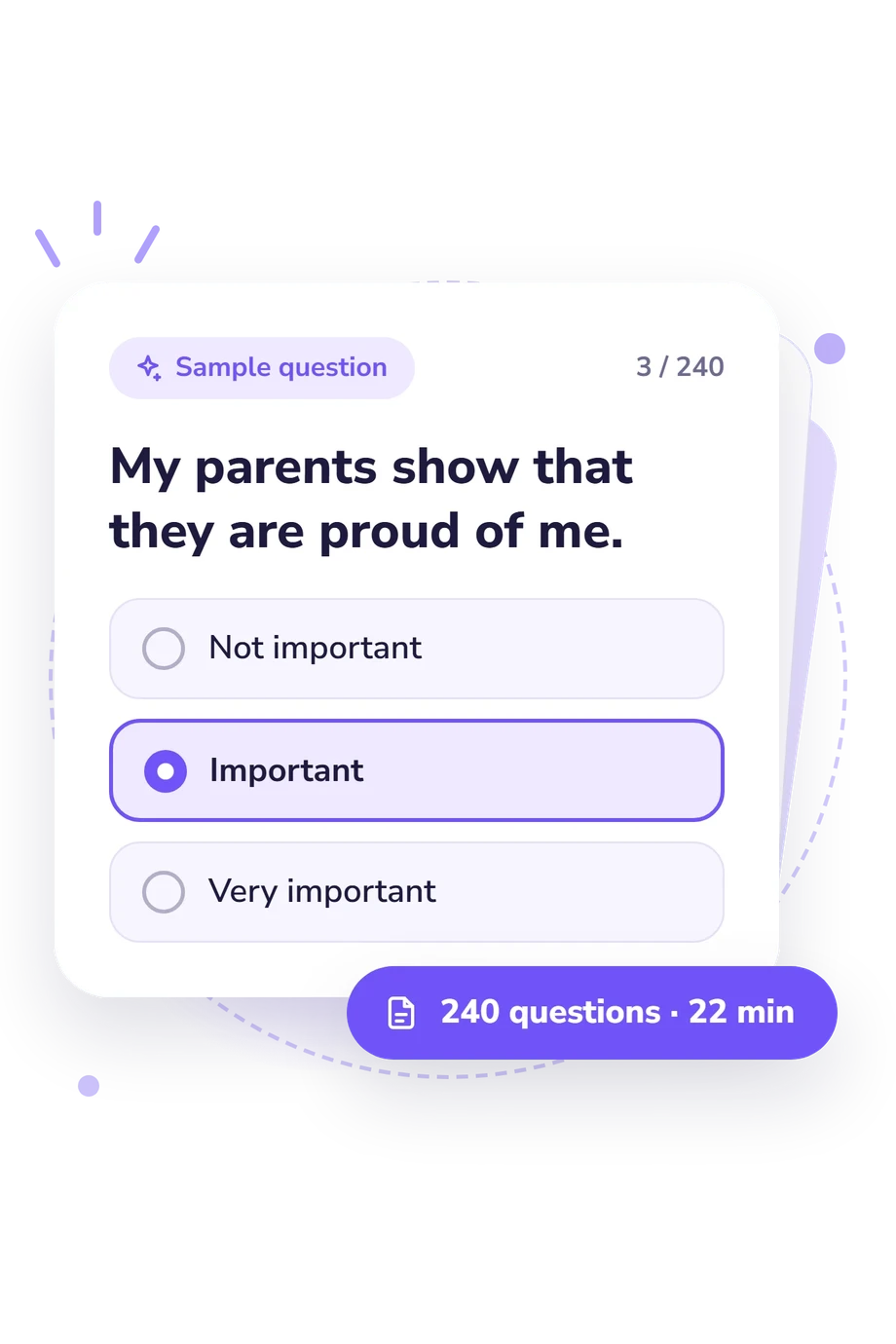
On the following pages, you will be asked to respond to statements about different types of support or help you receive from your parents, teachers, classmates, a close friend, and other people around you at school. Please read each statement carefully and answer as honestly as possible. Remember, there are no right or wrong answers. For each statement, you will provide two responses: first, indicate how often you receive this type of support; second, indicate how important this support is to you.
    • Never
    • Almost never
    • Sometimes
    • Most of the time
    • Almost always
    • Always
    • Not important
    • Important
    • Very important
    • Never
    • Almost never
    • Sometimes
    • Most of the time
    • Almost always
    • Always
WHAT THE TEST MEASURES
About This Assessment
Children and Adolescents Social Support Scale, CASSS Test

Child and Adolescent Social Support Scale (CASSS) Test - Symptoms and Signs

social support

This measure is used to characterize perceived social support in youth across common interpersonal contexts. The Child and Adolescent Social Support Scale (CASSS) provides a structured profile of support as experienced from key sources in the child’s environment.

Respondents rate both the frequency and perceived importance of supportive behaviors, allowing clinicians to differentiate how support is experienced and valued. It yields source-specific information that can inform case conceptualization and intervention planning in clinical, school, or research settings. The instrument includes 120 items and typically requires about 22 minutes to complete.

Developed by Joyce G. Sarason and Barbara R. Sarason, the Child and Adolescent Social Support Scale (CASSS) can help identify areas of relative strength and gaps in perceived support, supporting targeted discussion with the child and relevant caregivers or school personnel.

Author: Barbara R. Sarason, Joyce G. Sarason
Literature: Malecki, C. K., Demaray, M. K., Elliott, S. N., & Nolten, P. W. The child and adolescent social support scale (CASSS): Scale development and psychometric properties. Journal of Psychoeducational Assessment. 1999.
Popular tests
Comments
Leave a Comment