
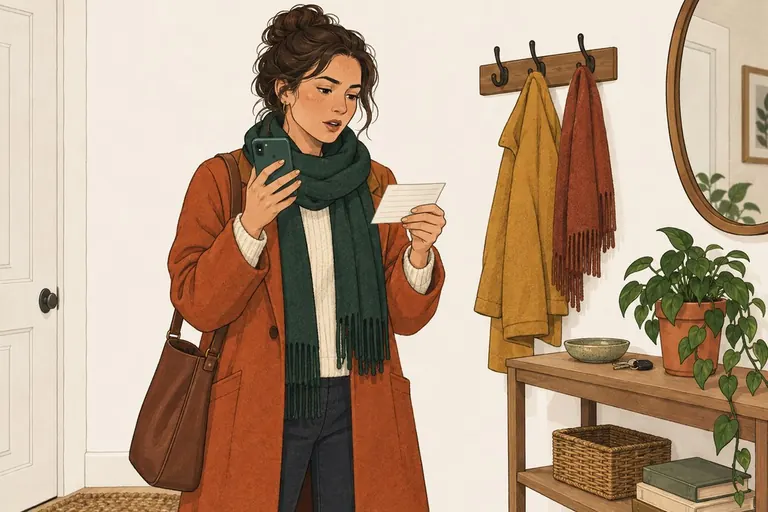
You rehearse conversations
Scripts for phone calls, replaying chats afterwards, wondering for hours if you said something wrong.
Autism test (RAADS-R) · 80 questions · freeRAADS-R · 80 questions · free
Am I autistic? See where your traits fall.
Answer 80 statements from the RAADS-R — the scale clinicians use to screen adults for autism. See your total score against the clinical threshold, and how your traits show up in social life, senses, language and interests.
No sign-up to startAbout 15 minutes · private
Rated 4.8 / 5 by 243,000+ Freudly users
Freudly has been featured on




Sound familiar?
Many adults only start wondering about autism in their 20s, 30s or later — often after years of quietly masking. These are the experiences people describe most often.
Scripts for phone calls, replaying chats afterwards, wondering for hours if you said something wrong.
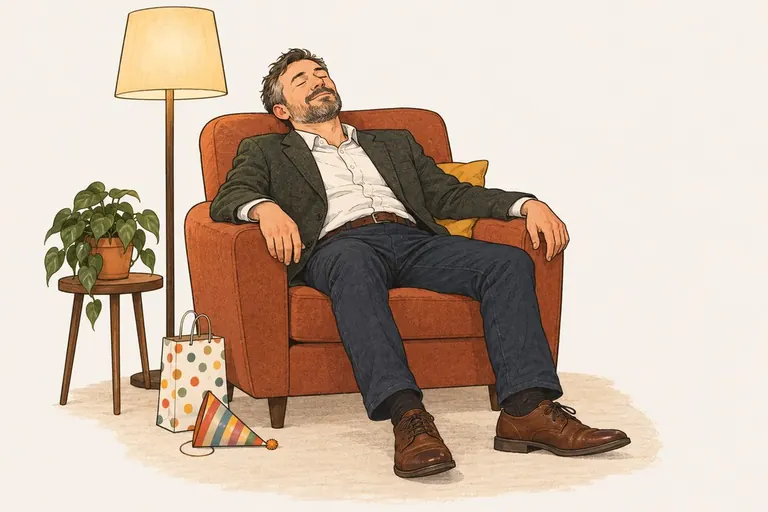
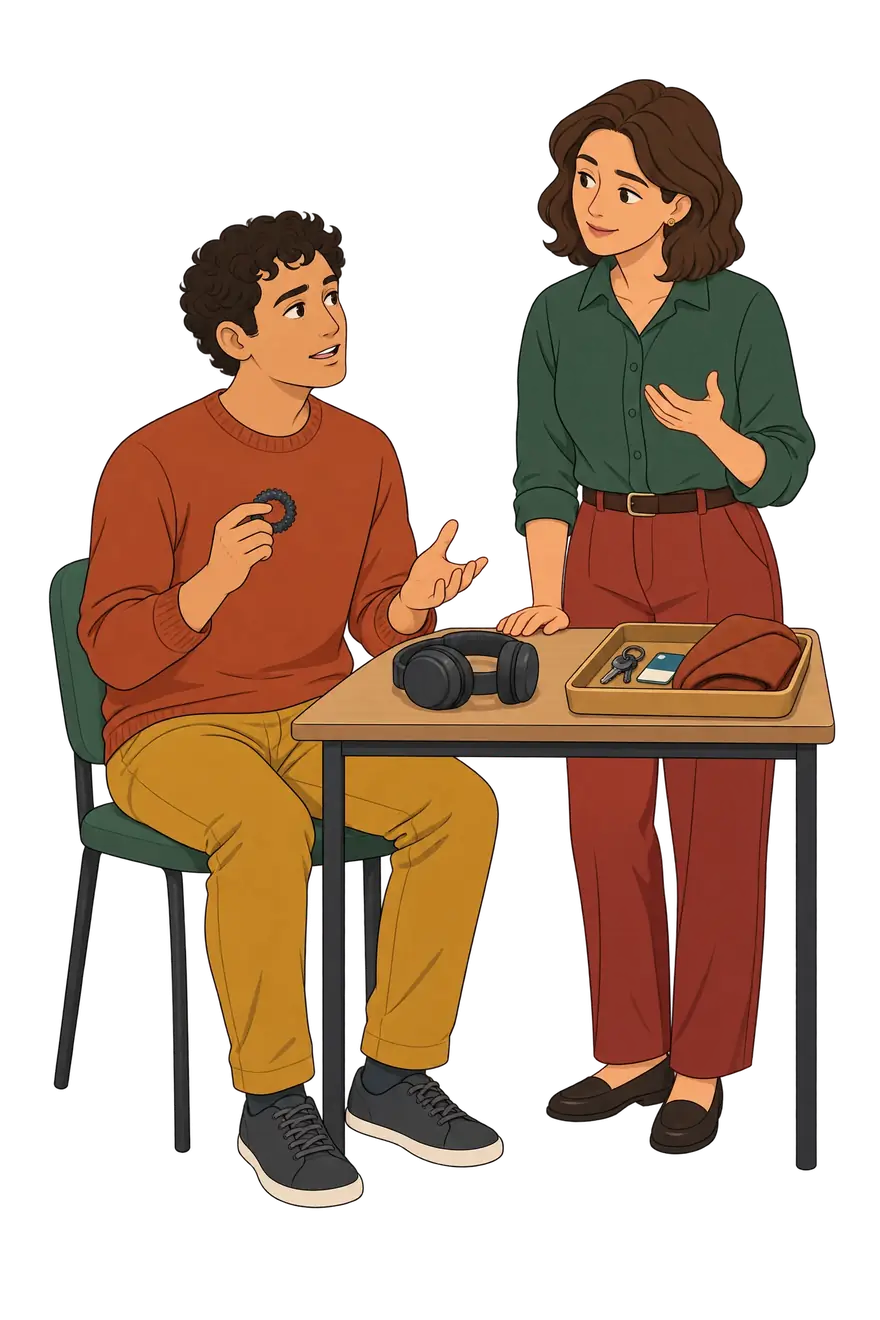
One evening out can mean a whole day to recover — even when you genuinely enjoyed it.

Bright lights, busy shops or a ticking clock can take over everything else in the room.

Copying how others talk, forcing eye contact, hiding what you feel — and feeling exhausted by it.

When something grabs you, hours disappear and you want to know absolutely everything about it.
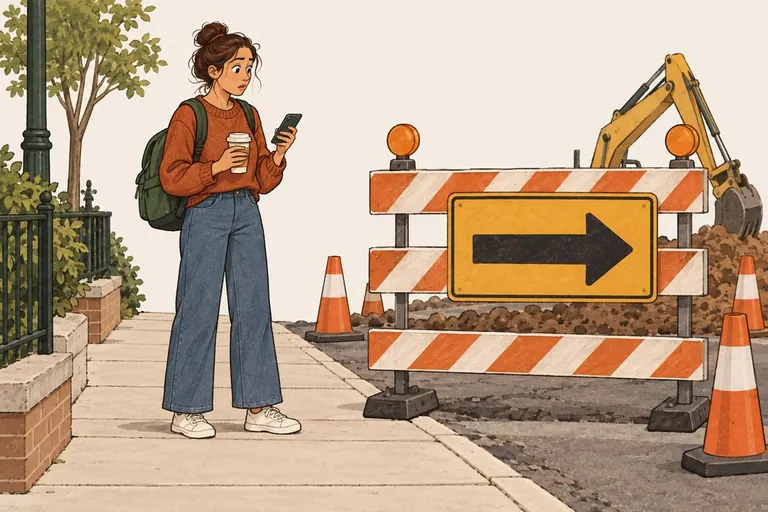
A cancelled plan or a new route to work can unsettle you far more than it seems to bother others.
How it works
Answer honestly, see your profile, then decide what to do next.
For each one, choose whether it is true now, was true before age 16, both or never. No right answers — most people finish in about 15 minutes.
Your total lands on the 0–240 RAADS-R scale next to the clinical threshold of 65, with a breakdown for each of the four areas.
Get a plain-language read of your pattern, then ask Freudly AI what it means for you — and how to bring it up with a specialist.
Your profile
The RAADS-R doesn’t stop at one number. It scores the four areas where autistic traits show up in adult life — each with its own clinical threshold.
One tick, one statement — Social relatedness alone is almost half the test.
Scale 0–117 · threshold 31
How you read people, make and keep friends, and handle the unwritten rules of social life.
What it can look like
Scale 0–60 · threshold 16
How strongly you react to sound, light, textures and smells — and how movement and balance feel.
What it can look like
Scale 0–42 · threshold 15
How deep your interests run, and how much you rely on routine, sameness and detail.
What it can look like
Scale 0–21 · threshold 4
How you use and read words: tone, idioms, sarcasm and taking turns in a conversation.
What it can look like
Thresholds from the RAADS-R validation study (Ritvo et al., 2011). Scoring at or above one means these traits are common among autistic adults — it is not a diagnosis.
Your report
Two people can both score 92 and live very different lives. Your report shows exactly where your traits sit.
Why it asks about childhood
Anxiety, burnout or ADHD can look like autism today. The difference is history — autistic traits are usually there in childhood too. So every statement asks about both.
A lifelong trait — the strongest signal the scale looks for.
Showed up in adulthood. It counts, but carries less weight.
Something you outgrew — or learned to mask over the years.
Not part of your experience, now or growing up.
Scoring as published by Ritvo et al. (2011). 17 statements describe typical behaviour and are scored in reverse.
Benchmarking
See how your score compares with the 5,700+ adults who took this test — and with people in your country.
 Freudly AIKnows your RAADS-R result
But I get along with people fine. So why this result?
Your answers show an interesting combination: you pick up on hints, but in conversation you often play a role and keep checking that you act “the way you’re supposed to.”
From the outside it may look like easy small talk, while in your head it goes: “Make eye contact. Now look away. Am I talking too long?”
You said you understand people. The interesting part is something else: does it come naturally — or did you learn to decode them?
On its own, this doesn’t confirm autism. But it helps you ask a sharper question: how much effort does the kind of socialising others find easy cost you?
I’m a completely different person with people I’m close to. Is that related?
Beyond the score
Ask what your score means, talk through masking or burnout, and get ready to speak with a specialist. It’s all included in your membership.
Sample questions
Answer for now and for before age 16. No right answers — just your experience.
Tap an answer to see how it’s scored
Tap an answer to see how it’s scored
Reverse-scored: here “never true” adds the points
These are 3 of the 80 real statements. No sign-up needed to start.
Who takes it
Why people take the autism test on Freudly, by main reason.
Out of every 100 people who take it on Freudly
Lifelong differences in social life, senses or routine — and they want to know if autism explains them.
Clients working out whether autism, ADHD, anxiety or trauma best explains what they feel.
Professionals using the RAADS-R as a structured adult screen before a full assessment.
Reviews
I’m 34 and spent years thinking I was just bad at people. Scored 118, highest on social and sensory. Seeing it broken down like that made me tear up a bit, honestly. Booked an assessment the same week.
Hannah M. · United Kingdom
80 questions took me closer to 20 minutes because I kept thinking back to school. The “before 16” option is what made it feel thorough and not like a BuzzFeed quiz.
Marcus T. · United States
I took my four area scores and the examples Freudly AI helped me list to my appointment. My doctor knew the RAADS-R and referred me. First time I felt taken seriously.
Chloe B. · Australia
I was sure I’d score high and got 58. The AI walked me through why my answers looked more like social anxiety. Honestly more useful than a simple yes would have been.
Ryan K. · Canada
Late-diagnosed women talk about masking all the time and I never got it — until the statements about copying people and rehearsing conversations. Scored 97. Got my formal diagnosis four months later.
Priya N. · United States
My husband answered and I helped with the childhood part, his memory of school is patchy. The sensory section explained years of arguments about loud restaurants.
Laura S. · Ireland
Pricing
Take the test for free. Unlock your full report and Freudly AI with a 3-day free trial.
Freudly membership
The test is free. Your trial starts only if you choose it after your result and lasts 3 days. Unless you cancel before it ends, it renews at $18.99 every month. Cancel anytime in your account or at hello@freudly.ai.
Secure payment by Stripe
FAQ
A screen is step two of four. Only the last step can give a diagnosis.
Not automatically. A score of 65 or more means your answers look like those of autistic adults in the RAADS-R research. It’s a strong reason to talk to a specialist — only a clinical assessment can diagnose autism.
The Ritvo Autism Asperger Diagnostic Scale–Revised is an 80-statement questionnaire built to help clinicians assess autism in adults. It scores four areas plus a total from 0 to 240.
In the 2011 validation study, 97% of autistic adults scored 65 or above. Later studies found more false positives in people with anxiety, depression or ADHD — so treat your score as a starting point, not a verdict.
About 15 minutes for 80 statements. Take your time with the childhood part — if your memory is patchy, a parent, sibling or partner can help.
100%. Your results are yours alone — nobody sees them unless you decide to share. Rankings are fully anonymous, and your data can be deleted at any moment on request.
That’s one reason it asks about life before 16: it picks up traits you may have learned to hide as an adult. Answer for how things really feel to you, not how they look to others.
They overlap. ADHD, anxiety, trauma and burnout can lift some scores. Your report shows which areas drive your total, and Freudly AI can help you think through what else might explain them.
Save your report, note real examples from childhood and today, and bring them to your doctor or an autism assessment service. Freudly AI can help you prepare what to say.
Yes — take the test for free, no sign-up needed to start. To unlock your full report and Freudly AI, start a 3-day free trial. After that it’s $18.99 per month unless you cancel.
In two clicks, any time — right in your account settings or with one email to hello@freudly.ai. No calls, no hoops. You keep full access until the end of the period you’ve paid for.
What the test measures
The test uses the 80 statements of the Ritvo Autism Asperger Diagnostic Scale–Revised (Ritvo et al., 2011), built to support the assessment of autism in adults. It measures traits, not intelligence or ability — and it is not a diagnosis.
Each statement scores 0–3 depending on whether it was true now, before 16, both or never. 17 statements describe typical behaviour and are reverse-scored. Area scores add up to a total of 0–240.
The RAADS-R was validated in 779 adults, autistic and non-autistic, across several countries. Later studies support it as a screen, with more false positives where anxiety, depression or ADHD are present.
Answer for how you usually are, not on a good or bad day. For the “before 16” part, think of school and home life — and ask someone who knew you then if you’re unsure.
80 statements. About 15 minutes. Your four-area profile at the end.
Free to start · No sign-up needed · Based on the RAADS-R (2011)
Adults examining long-standing differences in communication, relationships, sensory processing, or routines may find this autism test useful as a structured starting point. This autism spectrum test places present experiences alongside memories of development before age 16, so the respondent should expect a domain profile rather than a single undifferentiated impression. The result can help organize which areas deserve closer attention when considering personal history and current functioning.
What this assessment explores is a pattern across social understanding, communication, sensory experience, repetitive behavior, focused interests, and relationships. Items ask about experiences before age 16, making developmental continuity relevant when reflecting on current difficulties. Readers wondering whether they may be autistic may value this am I autistic quiz because it shows several areas instead of forcing one overall impression.
The profile contains four domain scales and a total score:
Each statement offers four choices: true now and before age 16, true only now, true only before age 16, or never true. This considers present functioning and earlier development, helping distinguish enduring patterns from recent change.
Responses are combined into the displayed domain and total scores, but the questionnaire does not specify how each answer maps to points. Interpret the resulting profile across domains rather than treating one number as a complete description.
The 80-item structure and score ranges place this adult autism questionnaire in the revised RAADS-R format, the published adult instrument used to assist diagnostic evaluation. The 2008 RAADS pilot study was its predecessor; the later RAADS-R validation is the closer evidence base for the revised instrument. Neither study establishes independent norms or identical diagnostic performance for this online presentation.
Interpretation should include developmental history, context, and concrete examples. Self-report is influenced by current stress, memory, masking, and self-awareness, so this autism quiz cannot establish a diagnosis or explain every reported trait. It is best used to identify themes for closer consideration.