
Freudly+971 508685814hello@freudly.ai
Freudly
cognitive functions

Dyspraxia Test for Adults
Dyspraxia Test for Adults: Coordination and Planning - FreudlyDyspraxia test for adults: 25 quick questions about childhood coordination, movement today and planning. Get your traits score from 0 to 100 in 5 minutes.en
Do you bump into things, lose your keys and still remember being picked last at school? This dyspraxia test for adults turns 25 everyday statements into one traits score from 0 to 100 and shows where it comes from: childhood coordination, movement today or organisation and planning.
Questions: 255 minutes
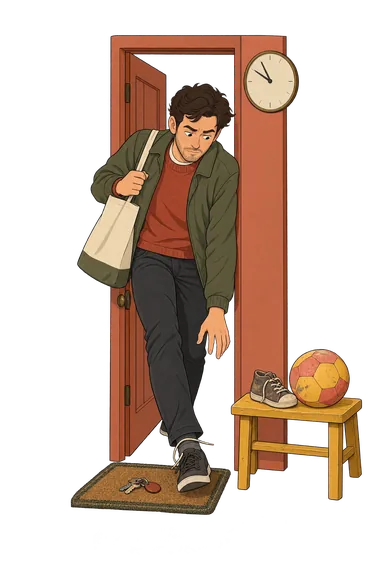
Dyspraxia Test for Adults: doorway bump, dropped keys
October 28, 2026October 28, 2026Material has been updatedOctober 28, 2026Material has been published
8,590 views
761 completion
646 likes
Daniel HallPsychologist · Test reviewer
646 likes
Scale Explorer

How the Scales are Structured

Dyspraxia traitsDt
How many dyspraxia traits show up in your life, from 0 to 100.
example score66/100
66/100Many traitsexample score
0 – 40Few traits
41 – 62Some traits
63 – 100Many traits
Your dyspraxia traits score is 66 out of 100: Many traits.
Childhood coordinationCc
Games, shoelaces, handwriting and falls as a child.
example score18/28
18/28Strongexample score
0 – 9Low
10 – 17Noticeable
18 – 28Strong
You scored 18 out of 28: Strong.
Coordination todayCt
Bumps, drops, fiddly tasks, distance and new movements.
example score23/36
23/36Strongexample score
0 – 12Low
13 – 22Noticeable
23 – 36Strong
You scored 23 out of 36: Strong.
Organisation and planningOap
Planning, lost things, time and forgotten intentions.
example score23/36
23/36Noticeableexample score
0 – 14Low
15 – 23Noticeable
24 – 36Strong
You scored 23 out of 36: Noticeable.
just completed the test
DATA-BASED USER COHORTS

Who Usually Takes This Test?

Always the clumsy one
44%OF USERS
You have bumped and dropped your way through life and want to know why.
Organised chaos
31%OF USERS
Lost keys, late arrivals and half-made plans make you wonder what connects them.
Looking back
25%OF USERS
You struggled with sport and handwriting as a child and want to see if it still shows.
BASED ON AGGREGATED, ANONYMIZED DATA FROM TENS OF THOUSANDS OF FREUDLY USERS.
Benchmarking

See How You Compare

Once you complete the test, your results are compared with real-world data from people in your country.
Below is a preview of how scores are typically distributed across each scale.
Shaded area — where most people score
Dot — the average
You — your score lands on each curve after the test— your score, after the test
Dyspraxia traitsDt
You?
Average35
Typical rangeTypical24.2 – 45.8
Possible0 – 100
Childhood coordinationCc
You?
Average9
Typical rangeTypical5.6 – 12.4
Possible0 – 28
Coordination todayCt
You?
Average12
Typical rangeTypical8 – 16
Possible0 – 36
Organisation and planningOap
You?
Average14
Typical rangeTypical9.6 – 18.4
Possible0 – 36
Featured On
SAMPLE QUESTIONS

Example Questions From the Test

Each statement describes something about movement, coordination or organisation. Choose how often it happens to you, from Never to Very often. Statements that start with your childhood or school ask how often it happened back then; all the others are about your life now. A few statements describe things that go smoothly, so read each one to the end. Answer quickly: your first reaction is usually the most accurate.
    • Never
    • Rarely
    • Sometimes
    • Often
    • Very often
    • Never
    • Rarely
    • Sometimes
    • Often
    • Very often
    • Never
    • Rarely
    • Sometimes
    • Often
    • Very often
WHAT THE TEST MEASURES

Dyspraxia Test for Adults - Description and methodology of the test

cognitive functions
psychopathology

You walk into a door frame you pass every day, your coffee ends up on the desk and the plan you made this morning has already slipped. For years most people file this under clumsiness and move on. This dyspraxia test for adults looks at whether those moments add up to a pattern that started in childhood and still shapes your movement, your time and your plans today.

What the traits score measures

The result opens with one number from 0 to 100, your dyspraxia traits score. It brings together three areas that researchers such as Amanda Kirby describe when they write about developmental coordination disorder in grown-ups. Childhood coordination covers team games, shoelaces, handwriting that teachers commented on and physical skills that arrived later than for friends. Coordination today covers bumping into things, cups slipping out of your hands, fiddly buttons, judging distances, telling left from right and learning a new movement. Organisation and planning covers lost keys, running late, rooms that never stay tidy and errands you remember too late. Lifelong coordination problems rarely stay in the body alone, which is why planning sits next to movement here. Each area gets its own score, so you can see where your traits come from.

How the questionnaire works and how to read it

There are 25 short statements, and most people finish in about 5 minutes. For each one you choose how often it happens, from Never to Very often; statements about childhood ask how often it happened back then. A few statements describe things that go smoothly, so read each one to the end. Unlike a quick DCD test with a yes or no at the end, this one gives you a scale and a breakdown. Your result includes:

  • your dyspraxia traits score from 0 to 100, from few traits to many traits;
  • your three areas ranked from strongest to weakest;
  • a comparison with other people who took the test;
  • the everyday moments behind your strongest area and what makes them easier.

A score up to 40 means few traits, 41 to 62 some traits, and 63 or above many traits. Many people are surprised less by the number than by the mix: a smooth childhood with a chaotic diary today, or years of bruises with a perfectly organised desk.

Literature:
  • Cousins, M., & Smyth, M. M. (2003). Developmental coordination impairments in adulthood. Human Movement Science, 22(4-5), 433-459.
  • Kirby, A., Sugden, D., Beveridge, S., & Edwards, L. (2008). Developmental co-ordination disorder (DCD) in adolescents and adults in further and higher education. Journal of Research in Special Educational Needs, 8(3), 120-131.
  • Kirby, A., Edwards, L., Sugden, D., & Rosenblum, S. (2010). The development and standardization of the Adult Developmental Co-ordination Disorders/Dyspraxia Checklist (ADC). Research in Developmental Disabilities, 31(1), 131-139.

Updated:

Popular tests
Comments
Leave a Comment