
Hot or Not Female Celebrities Quiz
How the Scales are Structured
Who Usually Takes This Test?
See How You Compare
Below is a preview of how scores are typically distributed across each scale.
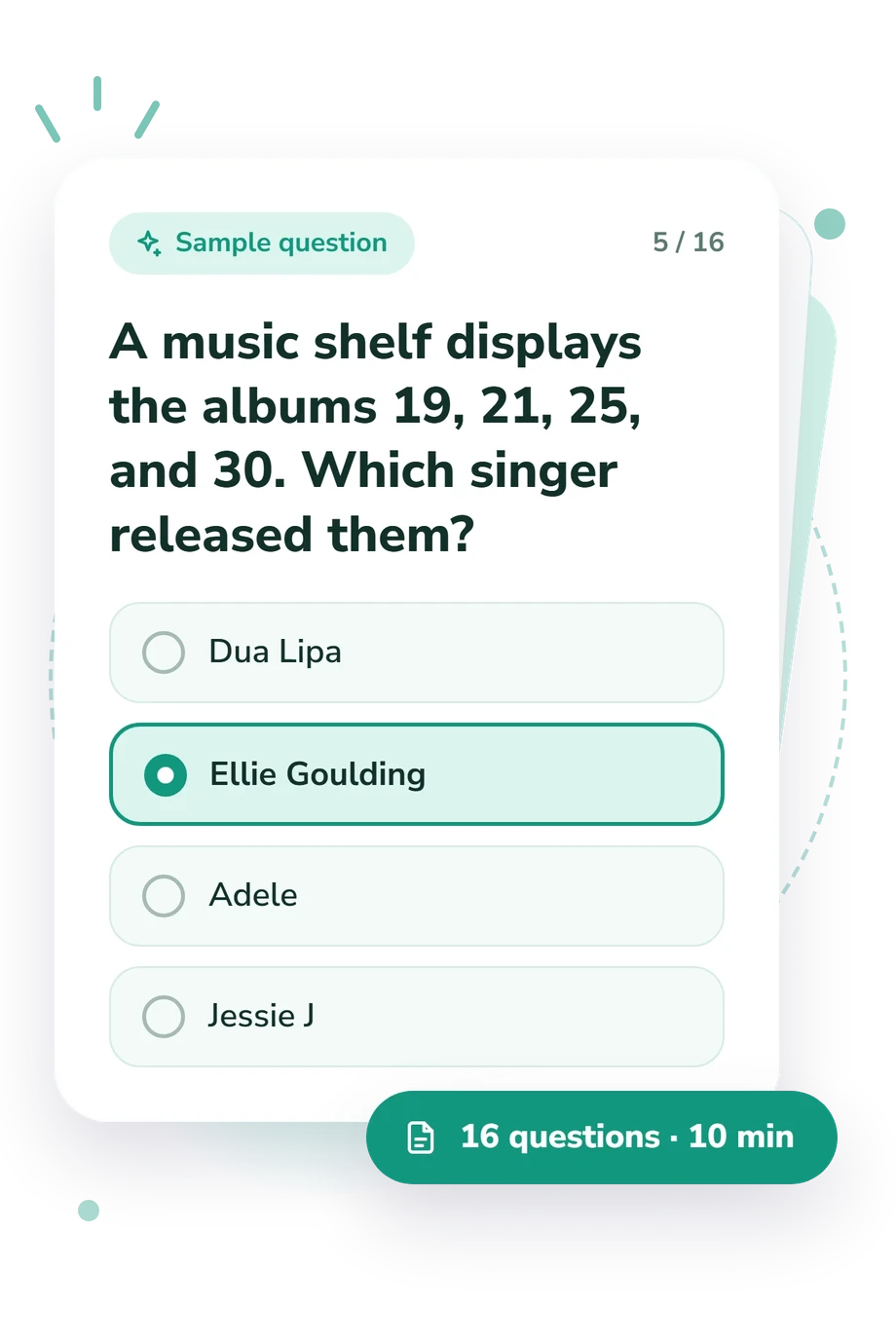
Example Questions From the Test
- Simone Biles
- Gabby Douglas
- Sunisa Lee
- Aly Raisman
- Gwen Stefani
- Selena Gomez
- Ariana Grande
- Rihanna
- Viola Davis
- Lupita Nyong'o
- Naomie Harris
- Octavia Spencer
Hot or Not Female Celebrities Quiz - Description and methodology of the test
Entertainment-trivia fans can use this Hot or Not Female Celebrities Quiz to decide how strong their factual knowledge is. It suits readers seeking an engaging female celebrity trivia test across popular culture. Its playful framing offers a lighthearted challenge built around career clues and notable achievements from familiar public figures.
What This Test Measures
Famous-person knowledge is tested through career achievements, not appearance opinions. Clues span film, television, music, sport, beauty, and entertainment businesses, linking women with roles, songs, albums, awards, records, companies, and biographical facts. As a female celebrity knowledge test, it asks readers to connect each clue with the correct person rather than judge attractiveness.
Female Celebrity Knowledge is the displayed scale, scored from 0-16 and reflecting correct answers across the questionnaire. Starting Out (0-6) reflects recognition of major names; Developing Recall (7-12) reflects broad knowledge with gaps; Celebrity Expert (13-16) reflects consistent links between women and defining works.
These areas shape the result:
- Film and television clues show whether roles are recognized.
- Music clues show whether works match an artist.
- Sport clues show whether major achievements are identified.
- Business and biography clues show whether career facts connect.
Methodology and Evidence Base
Each item presents a short clue and four answer choices. The keyed response identifies the celebrity linked to a role, work, achievement, or fact, so these celebrity trivia questions measure recognition from alternatives rather than unaided name generation. The result reflects correct answers across the questionnaire, while its categories organize performance rather than functioning as diagnostic thresholds.
Its conceptual reference point is a 2007 study by Piolino and colleagues on famous-person knowledge, which distinguishes knowledge about famous people from other memory components. This questionnaire is conceptually consistent with that study, not an adaptation of the published work. A later recognition-and-naming comparison across national and international celebrities by Lima and colleagues, together with work by Stone and Valentine on category organization, offers relevant context for the construct.
Scores may vary with media exposure, cultural familiarity, recency, attention, and guessing. Recognizing a name while missing the associated fact can lower performance, so the result is a snapshot of celebrity recognition in this format rather than a complete measure of memory or general knowledge.
- Piolino, P., Lamidey, V., Desgranges, B., & Eustache, F. (2007). The semantic and episodic subcomponents of famous person knowledge: Dissociation in healthy subjects. Neuropsychology, 21(1), 122-135. 10.1037/0894-4105.21.1.122
- Lima, D., Pinto, R., & Albuquerque, P. B. (2021). Recognition and naming test of the Portuguese population for national and international celebrities. Behavior Research Methods, 53(6), 2326-2337. 10.3758/s13428-021-01572-y
- Stone, A., & Valentine, T. (2007). The categorical structure of knowledge for famous people (and a novel application of Centre-Surround theory). Cognition, 104(3), 535-564. 10.1016/j.cognition.2006.07.014
Updated: