
Climbing Shoe Quiz
How the Scales are Structured
Who Usually Takes This Test?
See How You Compare
Below is a preview of how scores are typically distributed across each scale.
Example Questions From the Test
- An elastic slipper opening
- Laces
- A fixed pull tab without another closure
- A single hook-and-loop strap
- Seal the shoes immediately in an airtight plastic bag
- Place them directly on a radiator to dry as fast as possible
- Open them up and let them air-dry away from strong direct heat
- Run them through a hot washing-machine and dryer cycle
- A flat sole with a broad, relaxed toe box
- A thickly padded ankle cuff
- A loose heel and flexible closure
- A downturned, often asymmetric shape
Climbing Shoe Quiz - Description and methodology of the test
People choosing their first pair or reassessing an existing setup can use this climbing shoe quiz to organize practical decisions about fit, construction, terrain, and care. For anyone asking what climbing shoes should I get, this quiz offers a structured way to connect fit, terrain, features, and maintenance with better-informed footwear choices. The result shows how confidently you recognize the principles behind those decisions and where further learning may help.
What This Assessment Explores
These questions focus on choices affecting how climbing footwear fits, performs, and lasts. The test suits climbers comparing options, learning equipment basics, or checking understanding before purchase. It treats climbing shoe fit as secure contact with tolerable comfort, not maximum tightness.
The result is reported with Starting Out (0-6), Developing Knowledge (7-12), and Strong Knowledge (13-16). It summarizes practical knowledge of how fit, design, terrain, and care affect footwear choices, helping identify topics to explore before choosing a pair.
The practical themes are:
- Fit and comfort show whether you recognize secure contact, harmful pressure, numbness, and heel movement.
- Shape and terrain explain how shoe designs match footholds, route angles, and climbing demands.
- Closures and materials show how adjustment, upper construction, and volume affect use.
- Care and longevity reflect knowledge of drying, resoling, and preserving performance.
Methodology and Evidence Base
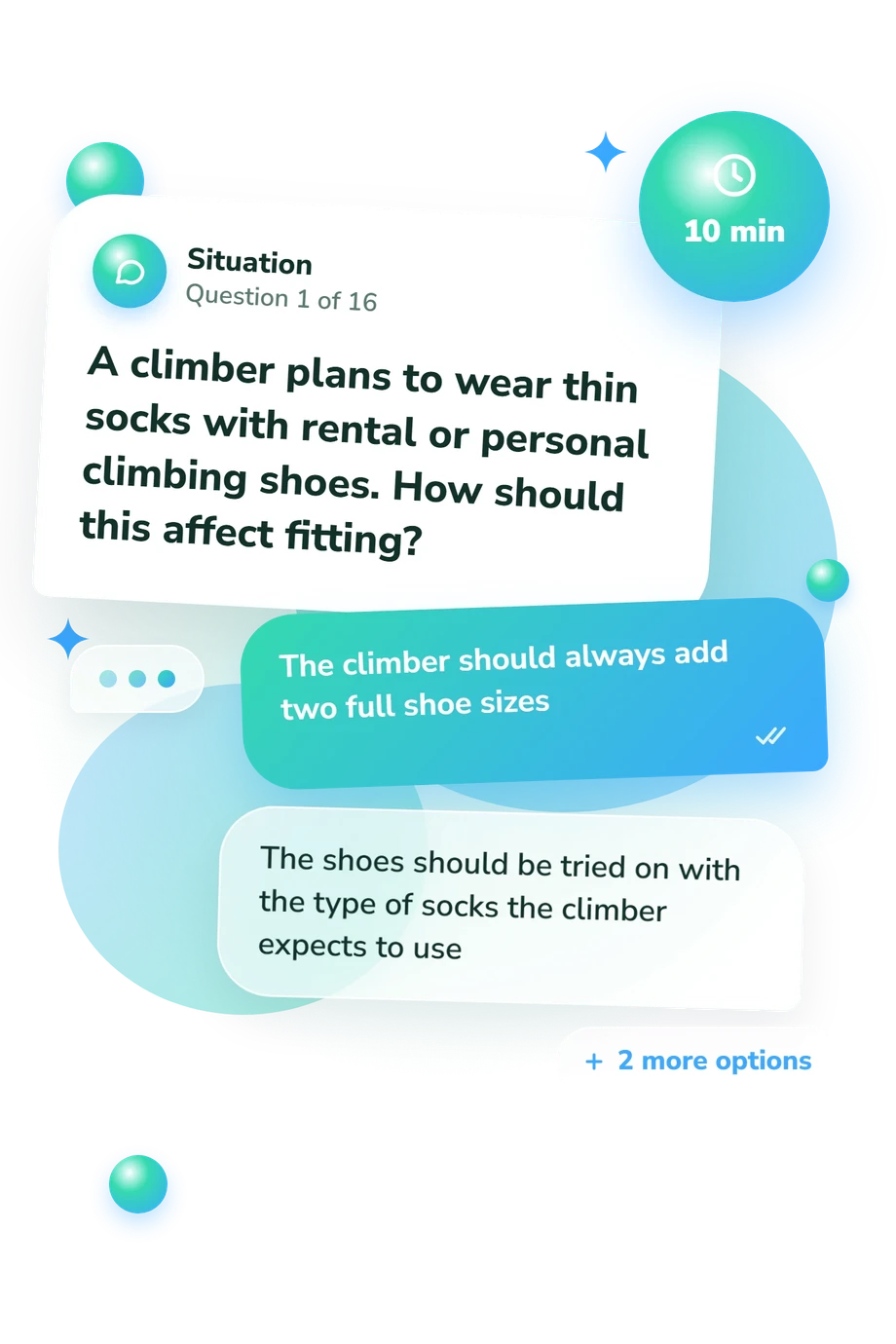
Questions use short climbing scenarios involving socks, closures, pressure, heel lift, terrain, and care. Each scenario offers four response options, with one practical answer resolving the situation. The format is a scenario-based self-report knowledge check.
The displayed educational score is Climbing Shoe Knowledge (0-16) and is assigned to the displayed band. It shows which principles you recognize while directing further learning about fit, terrain, features, and care.
Methodologically, the questionnaire is conceptually consistent with McHenry et al. (2015), whose work discusses fit, construction, performance, and use in climbing footwear, matching questions about secure contact, shoe shape, and terrain. Jenkins et al. (2022) provide an account of climbers’ attitudes and practices, relevant to footwear-use questions, while van der Putten and Snijders (2001) examine design considerations connected with injury prevention, helping frame questions about equipment features.
Read as an educational snapshot, it directs learning about fit, terrain, features, and care. Experience, attention, and self-report bias can shape answers. It cannot determine whether a particular shoe fits your foot; persistent pain, numbness, or injury concerns warrant removing the shoe and seeking professional advice.
- McHenry RD, Arnold GP, Wang W, Abboud RJ. Footwear in rock climbing: Current practice. The Foot. 2015;25(3):152-158. 10.1016/j.foot.2015.07.007
- Jenkins DW, Page JC, Stein A, Wissman L, Rowe BA, Rowe FE. Rock-Climbing Shoes: A Survey of Attitudes and Practices. Journal of the American Podiatric Medical Association. 2022;112(3). 10.7547/20-177
- van der Putten EP, Snijders CJ. Shoe design for prevention of injuries in sport climbing. Applied Ergonomics. 2001;32(4):379-387. 10.1016/S0003-6870(01)00004-7
Updated: