
Am I Dark or Light Feminine Quiz
How the Scales are Structured
Who Usually Takes This Test?
See How You Compare
Below is a preview of how scores are typically distributed across each scale.
Example Questions From the Test
- Sitting privately with the full complexity of what I feel
- Turning my attention toward a concrete plan for tomorrow
- Sharing the experience with someone kind and receptive
- Finding a hopeful perspective or small source of beauty
- Taking on a demanding solo activity that makes me feel powerful
- Following a loose plan with room to change direction
- Creating a comforting ritual for myself or someone close to me
- Visiting an airy café, garden, market, or other cheerful place
- Luminous colors, soft details, and an inviting overall effect
- A playful look that changes with my mood
- An understated foundation with one commanding detail
- A dramatic, controlled look with strong contrast or structure
Am I Dark or Light Feminine Quiz - Description and methodology of the test
People who want to understand whether their self-expression feels more private and intense, open and welcoming, or deliberately blended may use the Am I Dark or Light Feminine Quiz as a guided reflection. As a dark or light feminine energy quiz, it gives language to preferences around boundaries, closeness, visibility, power, and warmth without treating any style as a fixed identity.
What This Assessment Explores
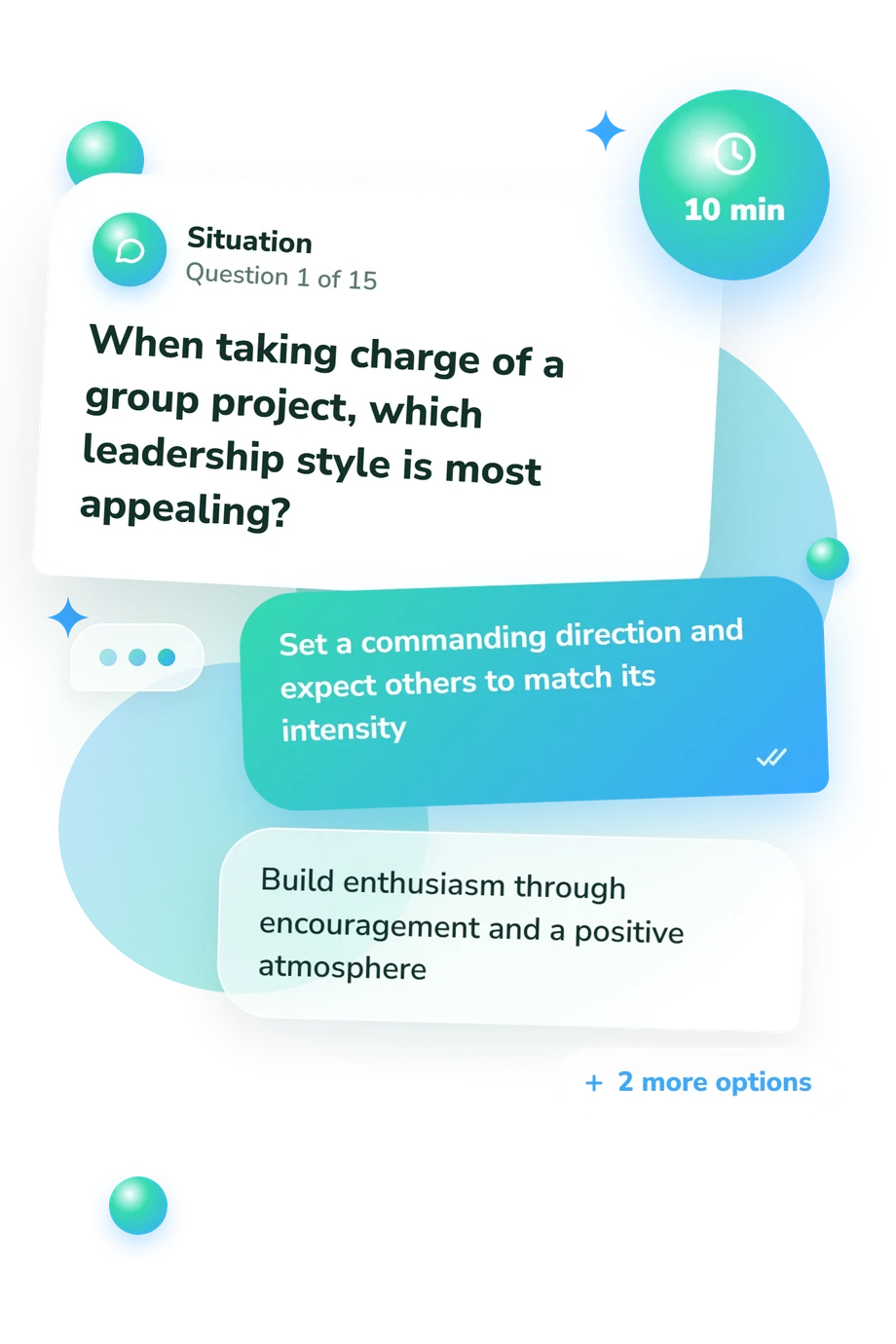
Scenarios cover leadership, conflict, boundaries, ambition, appearance, friendship, vulnerability, and affection. Questions compare light, dark, and integrated styles, so this light feminine dark feminine quiz describes contextual preferences rather than assigning identity.
The result contains three affinities:
- Dark Feminine Affinity (0-15) tracks how strongly privacy, intensity, mystery, and firm boundaries appeal across three levels: Subtle 0-5, Present 6-10, Strong 11-15.
- Integrated Feminine Affinity (0-15) tracks whether you prefer a distinct mode, shift with context, or actively combine softness with authority and openness with privacy: Distinct Mode 0-5, Contextual Blend 6-10, Active Integration 11-15.
- Light Feminine Affinity (0-15) tracks how strongly warmth, playfulness, radiance, hope, and open connection appeal across three levels: Subtle 0-5, Present 6-10, Strong 11-15.
The highest score is strongest; scores within one point blend, and affinity describes style, not character.
Methodology and Scientific Basis
Each item is a four-choice self-report scenario. It presents a social, emotional, aesthetic, or relational situation and asks which response feels most appealing. The items sample leadership, unfamiliar social settings, conflict, vulnerability, boundaries, and affection. In this light or dark feminine quiz, the options represent contrasting, context-sensitive, and integrative directions.
Responses produce three displayed affinities whose scores are compared. The highest indicates the strongest tendency, while scores within one point suggest a blended result. The questionnaire does not state a point value for each option or provide population norms, so the bands are descriptive categories.
The questionnaire uses symbolic themes conceptually parallel to Lowinsky's 2021 analysis; that work does not establish this online questionnaire's provenance, validation, or scoring.
Self-report makes mood, context, and self-awareness relevant to interpretation; the format captures preferences, not objective behavior. When scores are close, compare the profile's dark-feminine dimension-one part of this dark feminine energy quiz-with recurring lived examples.
- Lowinsky, Naomi Ruth. "The Dark Feminine." Psychological Perspectives, vol. 64, no. 2, 2021, pp. 159-162. 10.1080/00332925.2021.1959178
- Hurwitz, Siegmund. Lilith, the First Eve: Historical and Psychological Aspects of the Dark Feminine. 3rd ed., Daimon Verlag, 2009. ISBN 978-3-85630-732-5
- Jung, C. G. The Archetypes and the Collective Unconscious. 2nd ed., Princeton University Press, 1968
- Laughlin, Charles D., and Vincenza A. Tiberia. "Archetypes: Toward a Jungian Anthropology of Consciousness." Anthropology of Consciousness, vol. 23, no. 2, 2012, pp. 127-157. 10.1111/j.1556-3537.2012.01063.x
Updated: