
Cold or Sinus Infection Quiz
How the Scales are Structured
Who Usually Takes This Test?
See How You Compare
Below is a preview of how scores are typically distributed across each scale.
Example Questions From the Test
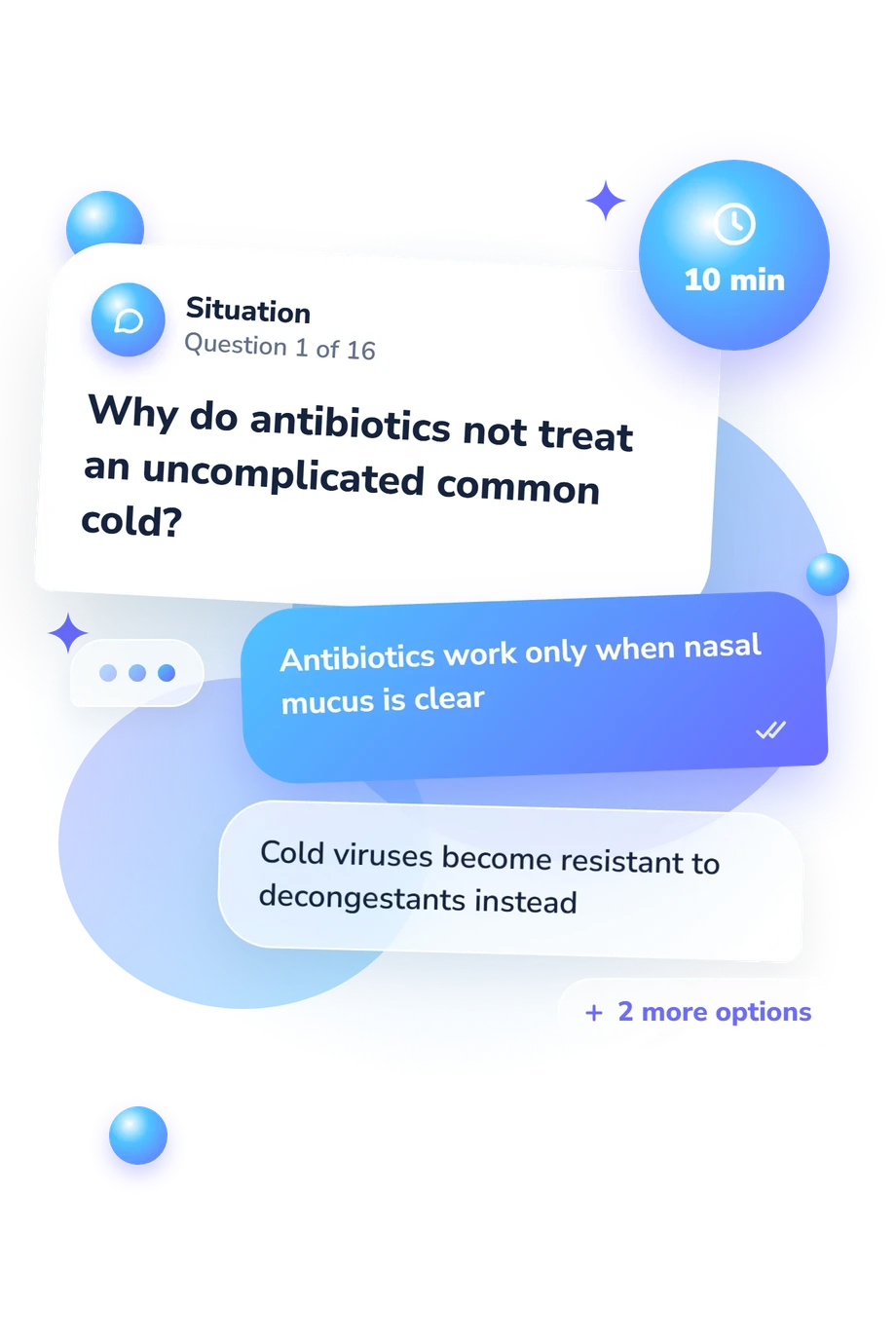
- Antibiotics work only when nasal mucus is clear
- Cold viruses become resistant to decongestants instead
- Antibiotics act on bacteria, while colds are caused by viruses
- Colds occur outside the parts of the body antibiotics can reach
- Only through direct contact with nasal mucus
- Through respiratory particles and contaminated hands or surfaces
- Primarily through drinking cold beverages
- Only after the infected person develops a fever
- Respiratory viruses
- Bacteria growing in the sinuses
- Exposure to cold outdoor air
- Seasonal pollen alone
Cold or Sinus Infection Quiz - Description and methodology of the test
People who want to distinguish everyday cold symptoms from sinus inflammation can use this assessment to organize what they know. It is a cold-versus-sinus symptom knowledge check for readers who want a structured way to sort health information. The cold or sinus infection quiz is intended for general readers who want to approach health information more systematically.
What This Assessment Explores
Rather than taking a medical history, the questionnaire checks whether readers recognize patterns in viral colds, sinus inflammation, allergies, and possible bacterial complications. It suits anyone seeking a framework for respiratory symptoms and deciding what to review.
Questions about sinus symptoms and overlapping respiratory patterns use scenarios about cause, timing, and warning signs. They provide a check of sinus symptom knowledge, while the overall result gives broad guidance about what to review rather than separate subscores.
The main thematic groups are:
- Causes and spread explain why colds are viral and antibiotics do not treat uncomplicated colds.
- Symptom timing shows how improvement, persistence, double worsening, fever, facial pain, and mucus changes affect interpretation.
- Allergy clues identify itching, watery eyes, and repeated sneezing after exposure as a different pattern.
- Self-care and safety cover saline-rinse water, rebound congestion, ear pressure, and urgent warning signs.
Methodology and Scientific Basis
Each item uses a clinical scenario or direct question followed by answer choices. The respondent selects the best-supported statement rather than rating feelings. Topics include viral causes, symptom duration, double worsening, medication myths, saline preparation, and situations requiring prompt care. This makes the questionnaire an applied knowledge check, not a symptom diary.
Content is conceptually consistent with the IDSA rhinosinusitis guideline, which emphasizes duration, severity, and worsening course when distinguishing bacterial from viral rhinosinusitis. It also aligns with adult sinusitis guidance and a review of the common cold. It is not an adaptation of those publications; they provide a clinical framework for its educational themes. Some questions compare sinus infection and allergy symptoms without treating them as interchangeable or creating formal result groups.
The score is reported as Cold or Sinus Infection Knowledge (0-16): Foundations to build (0-6), Developing knowledge (7-12), or Well-grounded knowledge (13-16). This is an unvalidated educational score, influenced by prior exposure, reading of the wording, and guessing. It cannot establish the cause of current symptoms; severe, worsening, persistent, or dangerous symptoms require medical attention.
- Chow AW, Benninger MS, Brook I, Brozek JL, Goldstein EJC, Hicks LA, Pankey GA, Seleznick M, Volturo G, Wald ER, File TM Jr. IDSA Clinical Practice Guideline for Acute Bacterial Rhinosinusitis in Children and Adults. Clinical Infectious Diseases. 2012;54(8):e72-e112. 10.1093/cid/cis370
- Rosenfeld RM, Piccirillo JF, Chandrasekhar SS, Brook I, Ashok Kumar K, Kramper M, Orlandi RR, Palmer JN, Patel ZM, Peters A, Walsh SA, Corrigan MD. Clinical Practice Guideline (Update): Adult Sinusitis. Otolaryngology-Head and Neck Surgery. 2015;152(Suppl 2):S1-S39. 10.1177/0194599815572097
- Heikkinen T, Järvinen A. The common cold. The Lancet. 2003;361(9351):51-59. 10.1016/S0140-6736(03)12162-9
Updated: