
Teen Quiz
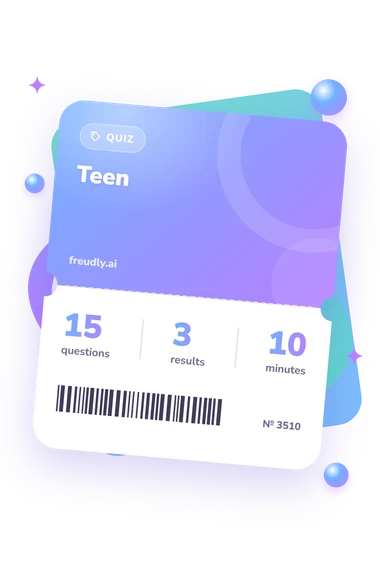
How the Scales are Structured
Who Usually Takes This Test?
See How You Compare
Below is a preview of how scores are typically distributed across each scale.
Example Questions From the Test
- I often recognize it only when someone comments or I can no longer ignore it.
- I notice a mood or physical change after the stress has been present for a while.
- I know several early signs that commonly appear for me.
- I can often distinguish different kinds of stress and the needs connected with them.
- I focus on whether getting it would help me feel included right now.
- I wait to see whether the interest lasts before deciding.
- I compare the cost and usefulness with other things I want.
- I also ask whether the purchase fits what I want my money, attention, or lifestyle to support.
- I wait for someone else to decide whether I belong.
- I adapt closely to the first group that welcomes me.
- I start a few conversations and notice where I feel comfortable.
- I stay open to different people while paying attention to whether I can be myself around them.
Teen Quiz - Description and methodology of the test
For teenagers facing choices about friendships, family expectations, activities, and future plans, this teen identity assessment creates a structured pause. The teen quiz helps you reflect on how you respond when belonging, personal preferences, and other people's views pull in different directions. It can give you useful language for discussing decisions and patterns that are difficult to explain.
What This Assessment Explores
Teenagers can use this assessment to reflect on stress, goals, social pressure, boundaries, feedback, and everyday choices. This quiz for teenagers examines how you interpret situations and act within relationships.
The profile groups these themes into three dimensions:
- Connected Independence (0-15) shows how you balance belonging, support, preferences, and boundaries: Belonging First (0-5), Testing Your Voice (6-10), or Connected Agency (11-15).
- Self-Understanding (0-15) shows recognition of emotions, needs, strengths, limits, and patterns: Early Signals (0-5), Growing Insight (6-10), or Clearer Self-View (11-15).
- Values in Action (0-15) shows how choices connect with meaningful principles: Context-Led Choices (0-5), Emerging Direction (6-10), or Values-Guided (11-15).
Together, they describe current tendencies, not maturity, worth, or superior values.
Methodology and Evidence Base
Each of the 15 situations offers four response options, moving from externally guided or less examined reactions toward more differentiated self-observation, choice, and communication. Scenarios involve friendship, family expectations, school rules, spending, plans, and disagreement. Results are reported across three displayed scales, and the bands offer descriptive interpretations of the patterns.
The framework is conceptually consistent with U-MICS, a published measure of identity formation through commitment, exploration, and reconsideration. It is also conceptually consistent with Campbell's self-concept clarity measure, Ryan and Deci's theory of autonomy and relatedness, and Schwartz's model of personal values. These measures and theories offer comparison points, but validation or standardization of this questionnaire has not been established.
Read this self-reflection questionnaire for teens as a way to consider how belonging, insight, and principles influence decisions today. Self-report answers can shift with mood, recent events, social pressure, and self-awareness, so the profile is best used to notice patterns and compare them with lived experience.
- Crocetti, Elisabetta, Monica Rubini, and Wim Meeus. "Capturing the dynamics of identity formation in various ethnic groups: development and validation of a three-dimensional model." Journal of Adolescence 31, no. 2 (2008): 207-222. 10.1016/j.adolescence.2007.09.002
- Campbell, Jennifer D., Paul D. Trapnell, Steven J. Heine, Ilana M. Katz, Loraine F. Lavallee, and Darrin R. Lehman. "Self-concept clarity: Measurement, personality correlates, and cultural boundaries." Journal of Personality and Social Psychology 70, no. 1 (1996): 141-156. 10.1037/0022-3514.70.1.141
- Ryan, Richard M., and Edward L. Deci. "Self-determination theory and the facilitation of intrinsic motivation, social development, and well-being." American Psychologist 55, no. 1 (2000): 68-78. 10.1037/0003-066X.55.1.68
- Schwartz, Shalom H., Gila Melech, Arielle Lehmann, Steven Burgess, Mari Harris, and Vicki Owens. "Extending the cross-cultural validity of the theory of basic human values with a different method of measurement." Journal of Cross-Cultural Psychology 32, no. 5 (2001): 519-542. 10.1177/0022022101032005001