
What Frog Am I Quiz
How the Scales are Structured
Who Usually Takes This Test?
See How You Compare
Below is a preview of how scores are typically distributed across each scale.
Example Questions From the Test
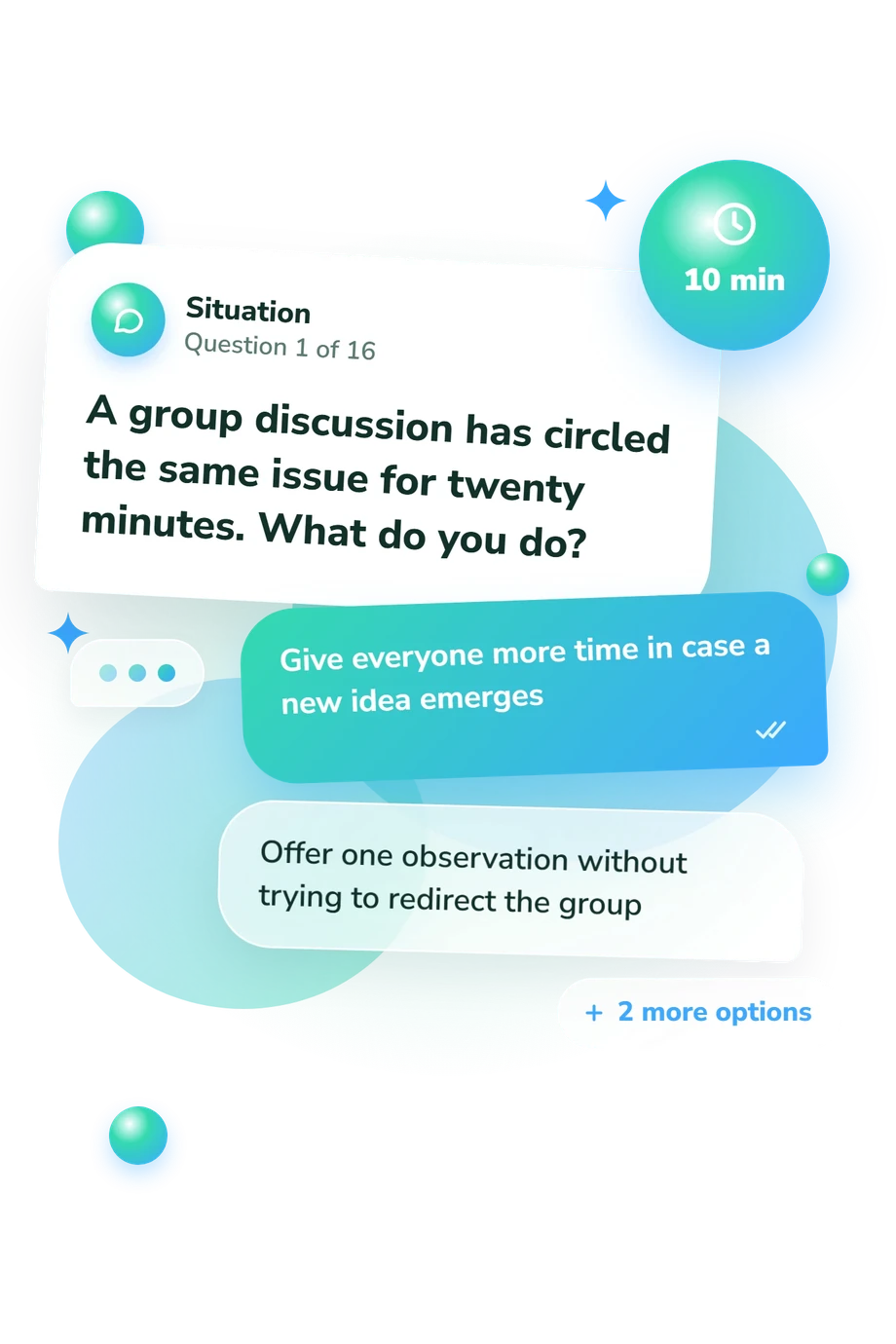
- Give everyone more time in case a new idea emerges
- Offer one observation without trying to redirect the group
- Summarize the main options and suggest a practical next step
- State the direction I support and invite the group to decide
- I choose promptly and stand firmly behind my judgment
- I seek several perspectives before settling on anything
- I reflect privately until the choice feels settled
- I make the call while remaining open to one final adjustment
- Mostly for function, with little visual decoration
- With a few meaningful objects that make it feel personal
- Around a deliberate palette, theme, or collection
- As an evolving display of colors, ideas, and unusual finds
What Frog Am I Quiz - Description and methodology of the test
People seeking a playful way to examine everyday interpersonal patterns may find the What Frog Am I Quiz useful. This frog personality test suits readers curious about how they influence discussions, handle emotional ambiguity, present themselves, and adjust when circumstances shift. Together, the four dimensions make recurring choices easier to recognize across social and personal situations.
What This Assessment Explores
Questions use social, expressive, and changing situations: deciding whether to lead, disclosing feelings, noticing shifts, presenting yourself, and responding when plans change. These themes describe tendencies rather than fixed types. The questionnaire compares frog personality types through four dimensions.
The four dimensions are:
- Bullfrog (0-12) reflects steadiness, decisiveness, and willingness to occupy space: Quiet Bank (0-4), Steady Voice (5-8), or Resonant Presence (9-12) show increasing firmness.
- Glass Frog (0-12) reflects emotional transparency and nuanced observation: Private Leaf (0-4), Clear Observer (5-8), or Transparent Spirit (9-12) show increasing openness.
- Poison Dart Frog (0-12) reflects vivid self-expression and creative detail: Subtle Color (0-4), Bright Accent (5-8), or Vivid Original (9-12); the name is symbolic, not about danger.
- Tree Frog (0-12) reflects curiosity, flexibility, and comfort across settings: Familiar Perch (0-4), Ready Climber (5-8), or Canopy Explorer (9-12) show increasing flexibility.
Methodology and Scientific Basis
Each item presents an everyday situation with four descriptive choices. Options vary in leadership, emotional disclosure, social observation, creative presentation, and adaptability, so choose the response closest to typical behavior rather than an ideal self-image.
The result of this frog personality quiz consists of four affinity scores rather than one global total. Scoring is comparative: the highest score is the strongest affinity, and any score within one point of it contributes to a blended result. Bands indicate relative strength, not a hierarchy of better or worse personalities.
Two publications offer limited conceptual parallels rather than a method or validation source: the Big Five Inventory-2 relates to broad personality traits, while Gross and John’s 1997 study relates to emotional expressivity. This four-affinity format is its own comparative structure and is not an adaptation or validated version of either work.
Because responses can shift with current context, self-awareness, and impression management, read the displayed bands as relative affinities within this questionnaire rather than standardized population norms or a clinical measure.
- Soto, Christopher J., and John, Oliver P. (2017). The next Big Five Inventory (BFI-2): Developing and assessing a hierarchical model with 15 facets to enhance bandwidth, fidelity, and predictive power. Journal of Personality and Social Psychology, 113(1), 117-143. 10.1037/pspp0000096
- Gross, James J., and John, Oliver P. (1997). Revealing feelings: Facets of emotional expressivity in self-reports, peer ratings, and behavior. Journal of Personality and Social Psychology, 72(2), 435-448. 10.1037/0022-3514.72.2.435
Updated: