
SRC Quiz
How the Scales are Structured
Who Usually Takes This Test?
See How You Compare
Below is a preview of how scores are typically distributed across each scale.
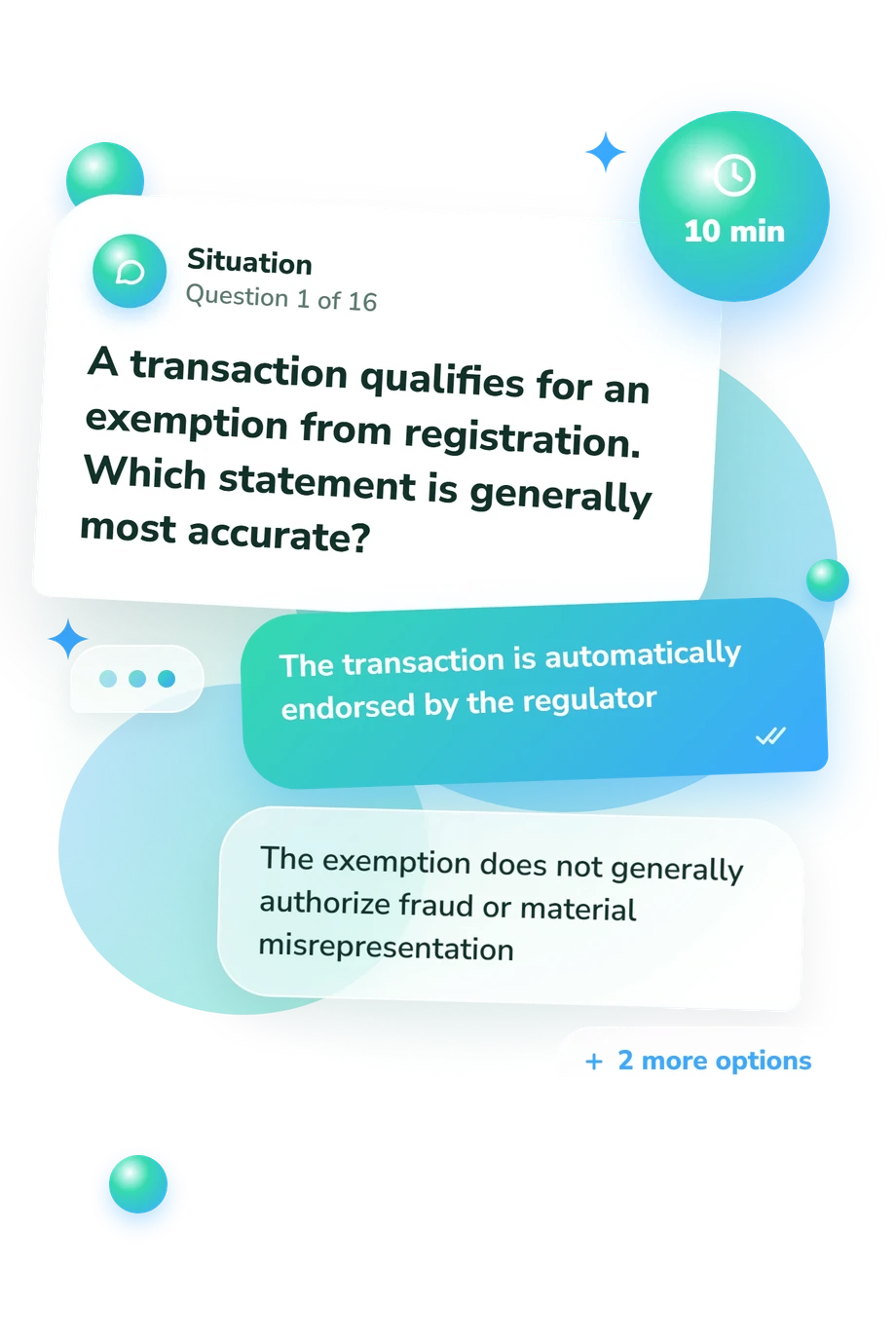
Example Questions From the Test
- The transaction is automatically endorsed by the regulator
- The exemption does not generally authorize fraud or material misrepresentation
- The seller no longer needs to provide any truthful information
- The security is guaranteed to be suitable for every investor
- The trader sold shares for a gain
- The statement appeared on social media rather than in a prospectus
- The trader used a false material statement to influence market activity
- The company’s shares were already publicly traded
- An ordinary consumer purchase
- A secured bank deposit
- A charitable contribution
- An investment contract
SRC Quiz - Description and methodology of the test
Students, early-career professionals, and readers revising Philippine securities law can use the SRC Quiz to check how confidently they recognize core regulatory concepts. The assessment focuses on active recall through short fact patterns rather than personal opinion, helping learners identify rules that deserve another review. As a securities regulation study tool, it is useful before coursework, discussion, or practical study of the Securities Regulation Code.
What This Assessment Explores
At its core, the assessment checks whether readers can recognize Philippine securities rules in practical scenarios. It covers registration and disclosure, investor protection, market participants, trading venues, and conduct that can distort prices or misuse information. As a Philippine securities law quiz, it turns these topics into a learning profile rather than a personal or clinical measure.
The result is reported on Securities Regulation Knowledge (0-16): Foundation Needed (0-6), Developing Knowledge (7-12), and Strong Knowledge (13-16). The bands show performance on this educational content and point to topics for review.
The tested areas include:
- Registration and disclosure show whether public offerings require compliance and why registration does not guarantee performance.
- Market roles and transactions distinguish issuers, underwriters, brokers, dealers, exchanges, markets, and tender offers.
- Investor protection examines material information and fair, transparent markets.
- Market conduct identifies false statements, insider trading, and wash trades.
Methodology and Evidence Base
Each item presents a short scenario or direct concept question with four answer choices. The respondent selects the best answer, and the result is a 0-16 count of correct responses. When reviewing answers to SRC questions, connect each choice to the underlying rule rather than memorizing letters; the format rewards recognition and application.
Securities Regulation Code (Republic Act No. 8799) supplies the governing framework, while Dizon (2011) explains its core concepts. The questionnaire is conceptually consistent with these sources, not a reproduction or validated adaptation of them.
Valera and Velasco-Lao (2009) address insider trading and market efficiency, while Aggarwal and Wu (2006) examine manipulative trading that creates misleading activity. Their work supports the relevance of these topics, not claims about standardized norms, reliability, or validation for this online questionnaire.
Because performance can vary with attention, prior coursework, guessing, and current recall, use the result to target revision. It does not provide legal or investment advice.
- Republic of the Philippines. (2000). Republic Act No. 8799: The Securities Regulation Code.
- Dizon, Efren Vincent M. (2011). Securities Regulation Code. Quezon City, Philippines: Rex Book Store. ISBN 9789712360800.
- Valera, Karla Regina D., and Francesca Marie Velasco-Lao. (2009). Towards Investor Confidence: Insider Trading Laws and Its Implications on Market Efficiency. Philippine Law Journal, 84(2), 421.
- Aggarwal, Rajesh K., and Guojun Wu. (2006). Stock Market Manipulations. The Journal of Business, 79(4), 1915-1953. 10.1086/503652.
Updated: