
Sewing Machine Quiz
How the Scales are Structured
Who Usually Takes This Test?
See How You Compare
Below is a preview of how scores are typically distributed across each scale.
Example Questions From the Test
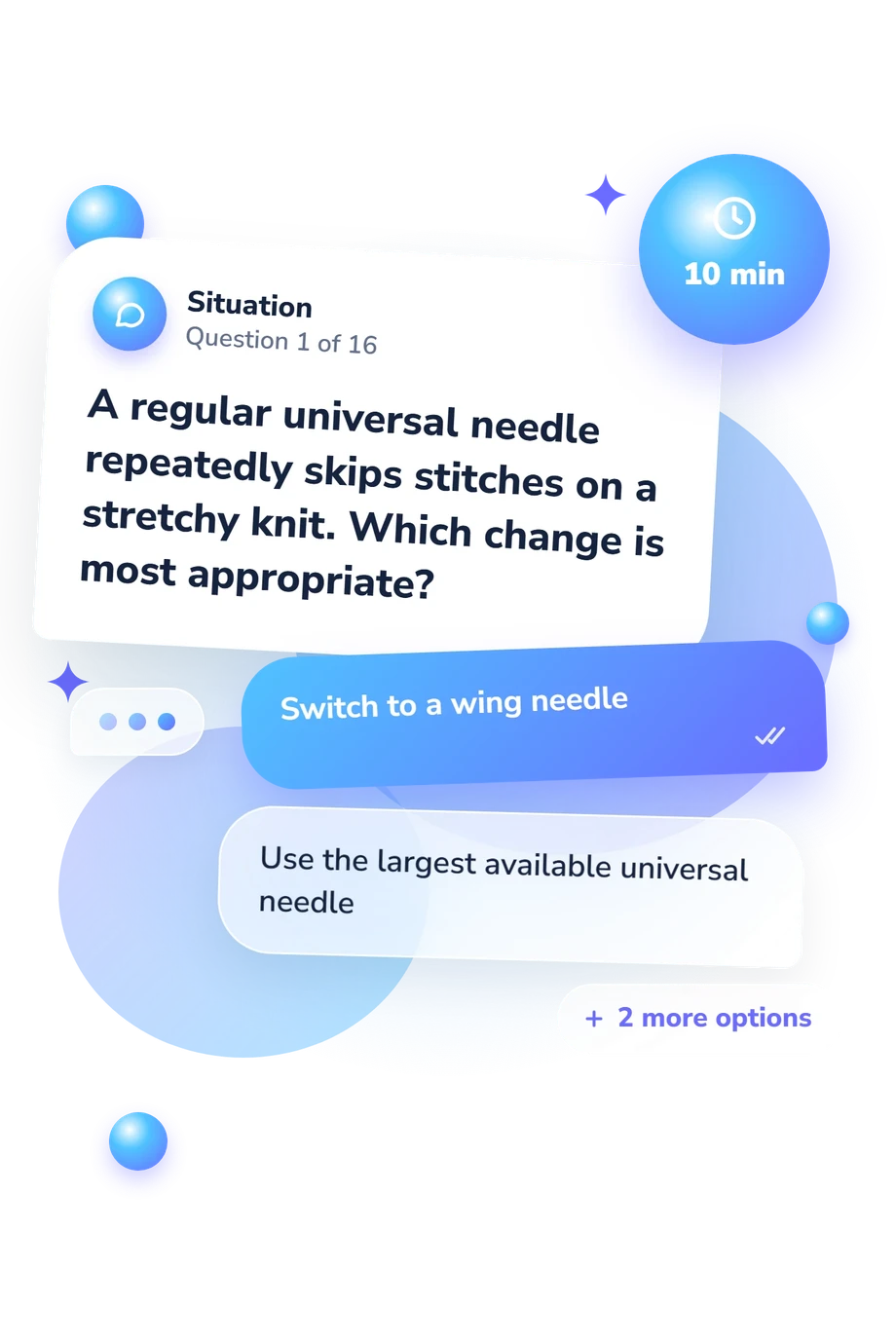
- Switch to a wing needle
- Use the largest available universal needle
- Lower the feed dogs for the entire seam
- Try a ballpoint, jersey, or stretch needle suited to the fabric
- Regulate the amount of thread released by the spool
- Move the fabric under the presser foot between stitches
- Keep the needle from bending sideways
- Wind the lower thread onto the bobbin
- Zipper foot
- Darning foot
- Blind-hem foot
- Button-sewing foot
Sewing Machine Quiz - Description and methodology of the test
People who want to handle routine sewing tasks with more confidence can use this assessment to check practical knowledge before beginning a project or troubleshooting a seam. The sewing machine quiz concentrates on decisions involving needles, threading, fabric movement, stitch formation, safety, and care. This sewing machine knowledge test can show how well you recognize appropriate responses to common operating and maintenance situations.
What This Assessment Explores
The assessment measures practical sewing-machine knowledge rather than taste, brand loyalty, or shopping preference. Its items examine how a machine forms a lockstitch and how an operator responds when fabric, thread, needles, or settings create a problem. This makes it suitable for anyone building confidence with everyday machine use. Beginners can use the result to identify which sewing machine basics need more practice.
The Sewing Machine Knowledge scale runs from 0-16, with one point for each correct answer. The result bands explain the score:
- Foundations to build (0-6) indicates that machine parts, setup, and troubleshooting need structured review.
- Developing knowledge (7-12) indicates that many everyday functions are understood, while some practical decisions need strengthening.
- Strong command (13-16) indicates a solid grasp of operation, maintenance, and common sewing situations.
Methodology and Evidence Base
The questionnaire uses four-option multiple-choice items. Questions cover needle choice for knit or denim, presser feet, threading, tension symptoms, seam guides, stitch length, bobbins, tangles, cleaning, and safe handling. Each item has one best answer, and the total counts correct responses, so the result reflects knowledge of common situations rather than hands-on performance.
Ross's 1965 sewing-machine testing study offers the closest educational precedent: written questions were paired with performance assessment in sewing-machine instruction. This questionnaire is conceptually consistent with that work. Holbrook and Krewatch, together with Wright and Limacher, support its emphasis on cleaning, adjustment, and maintenance.
Model or brand selection is not measured; the total score reflects operating knowledge and shows which principles deserve practice. Because several items concern sewing machine troubleshooting, the result can point to concepts worth practicing; terminology, prior familiarity, uncertainty, or guessing can affect item performance, while hands-on control is not measured. The result is educational feedback rather than certification of technical competence.
- Ross, Carolyn Elizabeth. Development of a Paper and Pencil Test and a Performance Test to Accompany a Self-Instructional Program on the Sewing Machine. Master's thesis, The University of North Carolina at Greensboro, 1965.
- Holbrook, Helen S., and Albert V. Krewatch. Sewing Machines: Cleaning and Adjusting. U.S. Department of Agriculture, Farmers' Bulletin No. 1944, August 1943, 24 pp.
- Wright, Susan, and Jewell M. Limacher. Sewing Machine Maintenance. Guide C-102, New Mexico State University Cooperative Extension Service, revised 2017.
- Rashid, Zahid, and Matthias Rötting. Evaluation of Manual Skill Degradation Due to Automation in Apparel Manufacturing. Applied Sciences, 2021, 11(23), 11098. 10.3390/app112311098
Updated: