
Wedding Pub Quiz
How the Scales are Structured
Who Usually Takes This Test?
See How You Compare
Below is a preview of how scores are typically distributed across each scale.
Example Questions From the Test
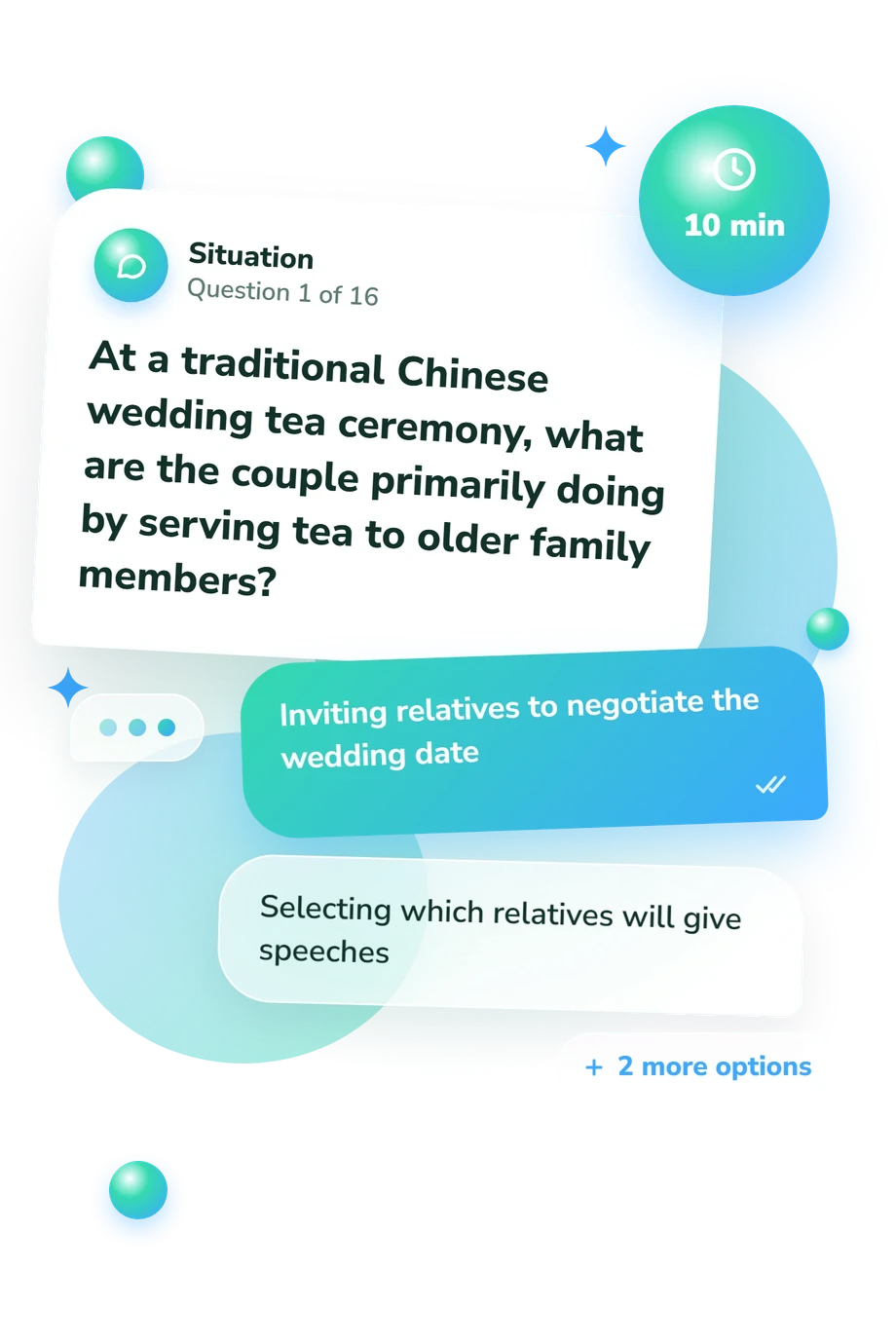
- Inviting relatives to negotiate the wedding date
- Selecting which relatives will give speeches
- Announcing the order of the reception meal
- Showing respect and formally honoring their families
- Sangeet
- Baraat
- Mehndi
- Vidaai
- A marriage contract
- A ceremonial canopy
- A blessing over wine
- A celebratory circle dance
Wedding Pub Quiz - Description and methodology of the test
People drawn to wedding traditions, reception etiquette, and cultural history can use this assessment to check how confidently they recognize familiar terms and rituals. The wedding pub quiz turns that knowledge into a clear result rather than a vague impression. The overall result can help someone preparing for a celebration choose topics to review. It also works well as a wedding table quiz for relaxed group discussion.
What This Assessment Explores
Items cover customs, terminology, etiquette, attire, history, and reception details. The format is a wedding trivia quiz built around recognition, not personal attitudes or relationship experiences.
The main thematic groups are:
- Rituals, customs, and ceremony symbols show whether you recognize tea ceremonies, mehndi, handfasting, the chuppah canopy, and saptapadi.
- Terminology and etiquette show whether you can distinguish contracts, announcements, seating cards, dress codes, and reception roles.
- History and conventions show how well you know anniversary names, invitation expressions, bouquet traditions, and wedding-related origins.
Together, these groups form the Knowledge scale (0-16): Foundational (0-6) reflects some recognition of wedding ideas but less familiarity with specialist terms and international customs; Developing (7-12) reflects broad knowledge with traditions or etiquette details to explore; Pub Quiz Ready (13-16) reflects strong command of wedding terminology, customs, history, and practical etiquette.
Methodology and Evidence Base
Each item presents one question with four answer choices. The respondent selects the option that best fits the custom, term, or etiquette situation. The displayed result summarizes performance across the questions, so a higher band reflects greater familiarity with the material tested rather than a personal quality or fixed ability.
The cross-cultural content is conceptually consistent with Nelson and Deshpande (2003), whose discussion of wedding rituals supports including practices from several traditions. Monger (2004) supplies comparative context for marriage customs, while Otnes and Pleck (2003) place weddings within wider social expectations and celebration practices. Together, these works offer context for the questionnaire’s coverage of rituals, terminology, etiquette, and social expectations.
For a wedding trivia activity, interpret the result as performance within this set of questions. Familiarity can reflect travel, family traditions, reading, media exposure, or prior attendance at weddings, and customs vary within communities. The bands describe this question set and do not establish broader expertise or standing relative to a population; use them as a guide to topics worth exploring.
- Nelson, Michelle R., and Sameer Deshpande. "Love Without Borders: An Examination of Cross-Cultural Wedding Rituals." In Contemporary Consumption Rituals: A Research Anthology, edited by Cele C. Otnes and Tina M. Lowrey, 125-148. Lawrence Erlbaum Associates, 2003. 10.4324/9781410610720-16
- Monger, George P. Marriage Customs of the World: From Henna to Honeymoons. ABC-CLIO, 2004.
- Otnes, Cele C., and Elizabeth H. Pleck. Cinderella Dreams: The Allure of the Lavish Wedding. University of California Press, 2003. 10.1525/california/9780520236615.001.0001
Updated: