
Top 200 Drugs Quiz
How the Scales are Structured
Who Usually Takes This Test?
See How You Compare
Below is a preview of how scores are typically distributed across each scale.
Example Questions From the Test
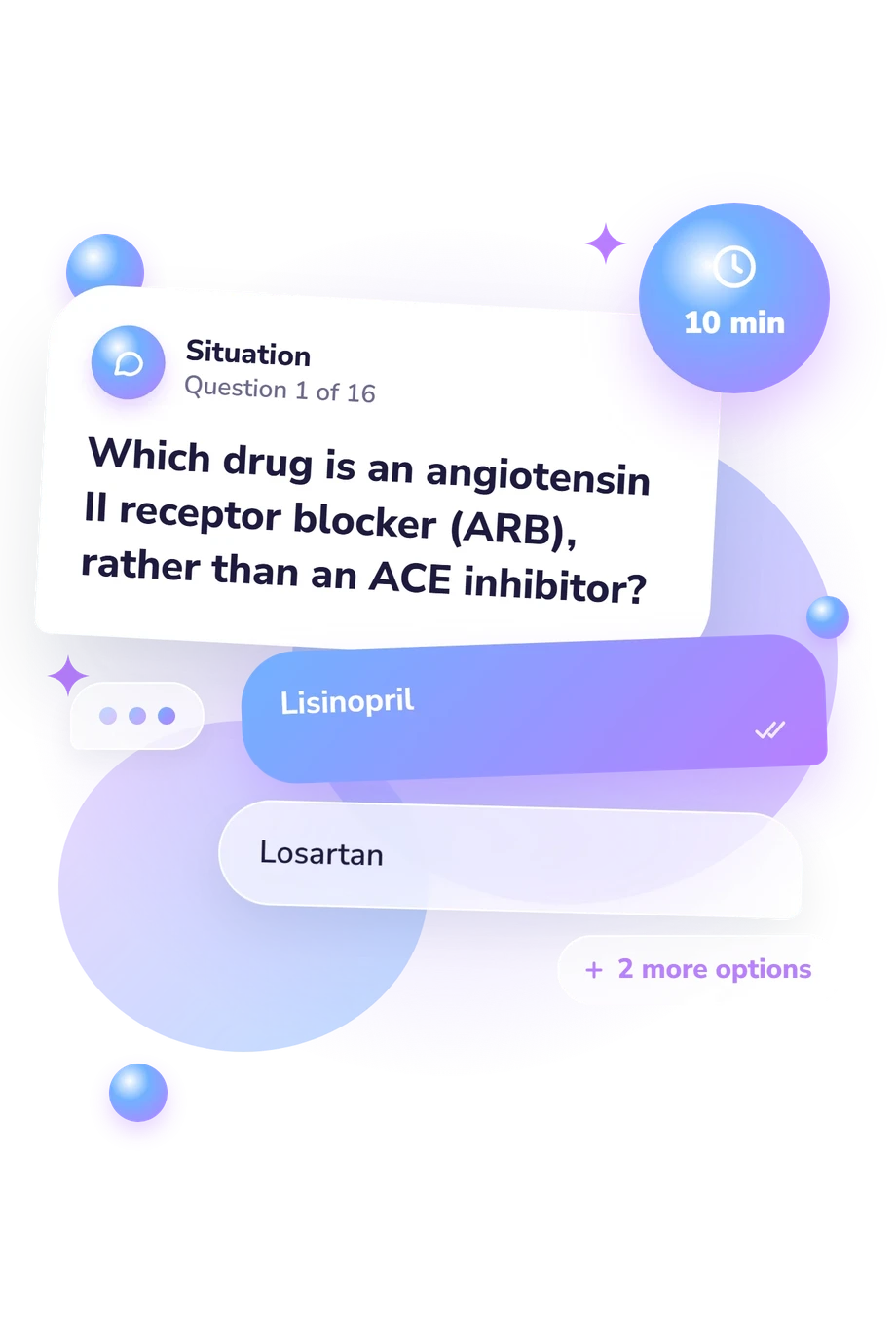
- Lisinopril
- Losartan
- Enalapril
- Benazepril
- A sulfonylurea that directly stimulates insulin release
- A statin used primarily to lower LDL cholesterol
- A biguanide commonly used to manage type 2 diabetes
- A rapid-acting insulin used at mealtimes
- Prednisone
- Methimazole
- Metformin
- Levothyroxine
Top 200 Drugs Quiz - Description and methodology of the test
For anyone reviewing everyday medication knowledge, the Top 200 Drugs Quiz offers a focused way to check recognition of common medicines and the reasoning needed to distinguish their classes, uses, and basic safety issues. The result can help learners decide which topics deserve further study, while this 200 drugs quiz keeps the emphasis on practical recall rather than abstract terminology.
What This Assessment Explores
People checking familiarity with common medicines can use this medication knowledge test for study or medication-related self-reflection. It covers recognition, drug classes, common uses, treatment goals, adverse effects, and basic safety decisions, not personal symptoms or treatment choices.
The questions focus on contrasts such as ACE inhibitors and ARBs, basal and rapid-acting insulin, antiplatelets and anticoagulants, and rescue and maintenance inhalers. Medication names are connected to what each medicine does.
The question themes contributing to the single knowledge score are:
- Medication recognition shows whether generic names are linked to the correct drug and its role.
- Drug classes and actions show whether a medicine is linked to its group or basic effect.
- Uses and goals indicate whether its common purpose is understood.
- Safety and application reflect attention to adverse effects, monitoring, duplicate ingredients, and urgency.
Methodology and Evidence Base
Each item presents a medication-focused prompt with four answer options and asks for the best response. Questions cover identification, classification, treatment goals, monitoring, adverse effects, and safe use. Safety scenarios give this medication safety quiz a practical focus without testing dose calculation or treatment planning.
The single displayed scale, Top 200 Drugs Knowledge (0-16), has three bands: Foundation to build (0-6), Developing knowledge (7-12), and Strong knowledge (13-16). The labels describe performance on these questions; the score is an unvalidated educational measure, not a standardized clinical scale.
The content is conceptually consistent with the Top 200 prescribed drugs study by Fuentes and colleagues, which places common medicines in pharmacy education. Work by Santee, Winit-Watjana and colleagues, and Sando and Feng describes web-based, teaching, and game-based approaches; these sources provide context, not an adaptation claim.
Guessing, prior coursework, and familiarity with selected medicines can affect performance. The result does not establish prescribing competence or provide medical advice; medication changes belong with a pharmacist or prescriber, while suspected overdose or severe reaction requires urgent help.
- Fuentes, Andrea V., Moises D. Pineda, and Kalyan C. Nagulapalli Venkata. "Comprehension of Top 200 Prescribed Drugs in the US as a Resource for Pharmacy Teaching, Training and Practice." Pharmacy (Basel) 6, no. 2 (2018): 43. 10.3390/pharmacy6020043
- Santee, Jennifer. "A Web-Based Practice Examination to Improve Student Performance Concerning the 200 Most Prescribed Drugs." American Journal of Pharmaceutical Education 67, no. 4 (2003): Article 102. 10.5688/aj6704102
- Winit-Watjana, Win, Deanne Francis, and Hui M. Ho. "Top 200 Prescribed Drugs as a Tool for Pharmacy Teaching and Training." Pharmacy Education 11, no. 1 (2011): 46-53.
- Sando, Karen R., and Xiaoying Feng. "Use of an Online Spaced-Education Game to Study Top 200 Drugs in a Skills Laboratory Course." American Journal of Pharmaceutical Education 82, no. 7 (2018): 6324. 10.5688/ajpe6324
Updated: